REVIEW · ATHENS
Ancient Corinth Half Day Tour
Book on Viator →Operated by H.P.Tours - Hellenic Private Tours · Bookable on Viator
Corinth is a shortcut to ancient Greece’s drama. This private half-day route pairs Corinth Canal with Acrocorinth so you get big views and real scale fast. I especially like the way the stops fit together—shipping and myths at the canal, city life at Ancient Corinth, then that fortress feeling on the rock. One caution: the main site entrance (Ancient Corinth) is extra, and if you want full inside-the-sites commentary, you may need an optional licensed guide.
What makes this work well for a first trip is the comfort and the format. You get round-trip air-conditioned transport from your Athens hotel or Piraeus cruise pickup, plus bottled water and WiFi on board, all for a small group (up to 2). I also appreciate the human touch—one review singled out Frank Kotsiopoulos for going out of his way, even helping arrange a rapid antigen test, and another praised driver Planos for storytelling and myth talk.
If you’re planning your day tightly, the pacing is friendly but not slow. You’ll spend about five hours total, and you’ll want sturdy shoes for the uneven terrain—especially with that medieval fortress climb at Acrocorinth.
In This Review
- Key highlights and why they matter
- The smart value of a private Corinth half-day
- Corinth Canal: the shipping shortcut and the human ambition behind it
- Ancient Corinth: Temple of Apollo, the Agora walk, and streets that still feel Roman
- Temple of Apollo: why those columns catch your eye
- The Agora and the Lechaion Street “shopping mile”
- Peirene spring, Stoa, and the sound of public buildings
- Odeion and theatre: buildings that show Corinth’s entertainment side
- Acrocorinth: the medieval fortress on a monolithic rock
- Kechries port remains: a short stop with a sea-based viewpoint
- How your driver explains it all (and when you’d want a licensed guide)
- Price and logistics: what you’re paying for, and what’s extra
- Should you book the Ancient Corinth half-day tour?
- FAQ
- How long is the Ancient Corinth half-day tour?
- Is pickup from Athens or Piraeus included?
- What entrance fees should I expect?
- Is there an English guide during the site visits?
- What’s included in the tour price?
- Can I cancel for free?
Key highlights and why they matter
- Private, up-to-2 group: you set the pace and avoid the stop-and-go feeling of bigger buses
- Corinth Canal drive-by + storytelling: you see the modern cut and learn why ancient ships wanted it
- Ancient Corinth walking plan: big-ticket ruins like the Temple of Apollo and Lechaion Street are built for wandering
- Acrocorinth fortress views: the rock-top perspective helps everything click
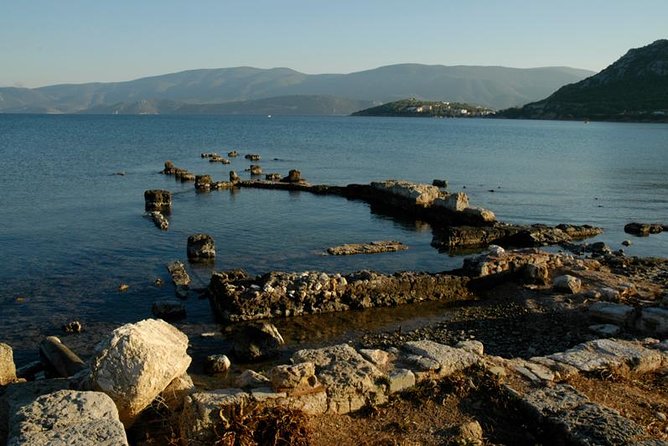
- Kechries port remains after lunch: a quieter add-on that connects Corinth to the sea
- English explanations from your driver: useful on the road, with an option for a licensed guide inside sites
The smart value of a private Corinth half-day
At this price level, the question is simple: do you get enough for the time? Here, you do—because the tour is designed for a tight schedule and includes transportation the whole way. For a couple (or solo traveler booking for two), the cost per group often feels easier to swallow than paying per-person transfers and then layering on guides and tickets.
I also like the no-hassle setup. You don’t have to coordinate multiple buses, and pickup is built in from either the Athens hotel area or Piraeus port. Add bottled water and WiFi, and the day feels smoother than a DIY sprint.
Still, remember the tour isn’t pretending to be a deep archaeological seminar. It’s a well-paced highlight loop, where the driver explains while you move, then you explore on foot.
You can also read our reviews of more tours and experiences in Athens.

Corinth Canal: the shipping shortcut and the human ambition behind it
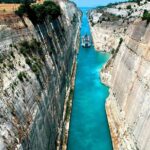
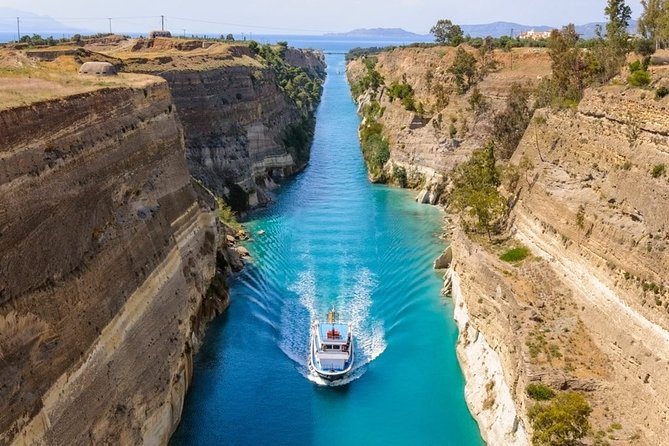
The day starts with a drive—about 45 miles along the national route—until you reach the canal section that links the Saronic Sea and the Corinthian Sea. Even if you’ve only seen photos, the canal’s real power is how obviously it changes geography. Before the canal, ships effectively had to go the long way around the Peloponnese—extra distance and extra time.
I love the way the canal stop is framed. You’re not just looking at water cut through rock; you’re hearing about the long-standing dream of a shortcut. The idea is credited to Periander, the tyrant of Corinth, and the story that comes with it explains a key detail: people once built a stone road called the diolkós, so ships could be transferred over land rather than sailed around the Peloponnese.
You also get the bigger “why” about the later attempts. Emperor Nero tried a plan in 67 AD with thousands of workers, but he was murdered before it could finish. The canal finally reached completion in the late 19th century. That timeline makes the stop feel like a real bridge between ancient planning and modern engineering.
Practical note: this is a short stop (about 20 minutes), and admission is listed as free for this part. If the canal is a major priority for your trip, you’ll still probably want a couple photos and then keep moving.
Ancient Corinth: Temple of Apollo, the Agora walk, and streets that still feel Roman
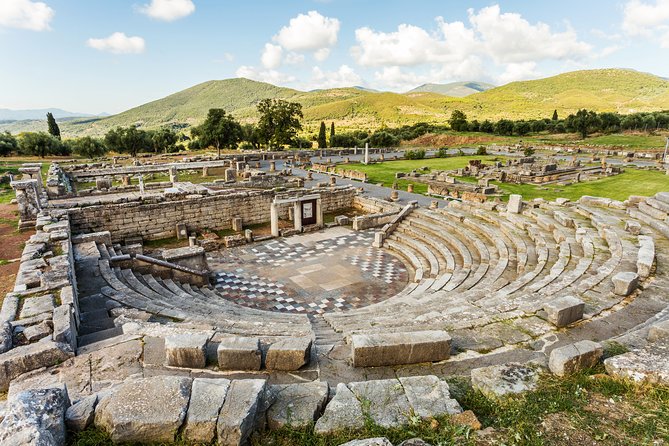
This is the heart of the day, and it’s why the tour is worth it even if you’re pressed for time. Ancient Corinth is the kind of site where you can get lost in the layout—acropolis above, city grid below—and your job is to pick a route that makes sense. Here, the tour gives you the main anchors so you don’t miss the heavy hitters.
Temple of Apollo: why those columns catch your eye
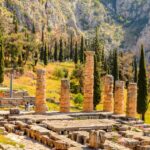
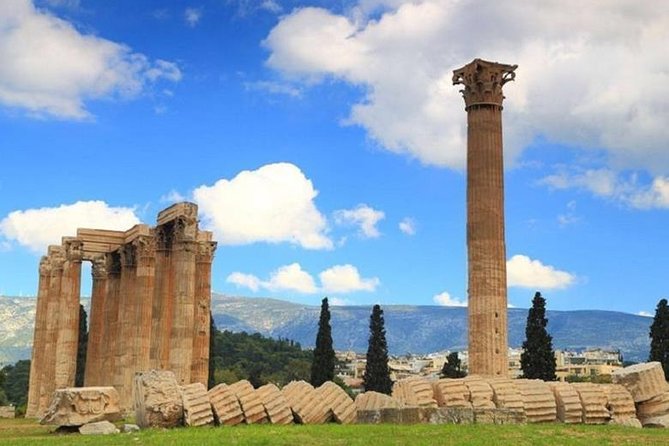
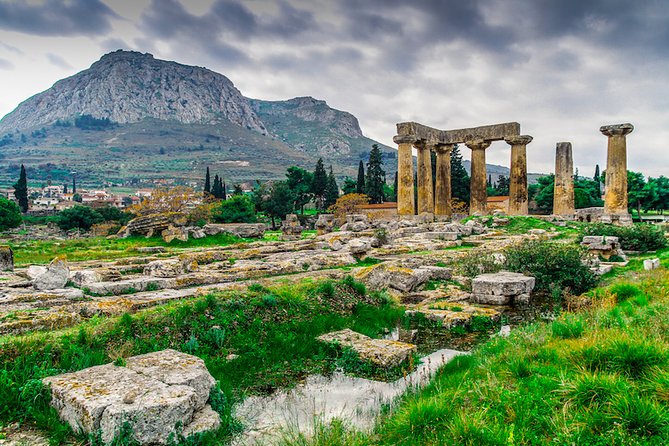
One of the standout structures is the Temple of Apollo, built around the middle of the 6th century BC. What I find striking is the architectural detail: it used monolithic columns rather than column drums. Today, seven columns remain standing, and that surviving rhythm is enough to help you picture the original scale.
Even if only part of the ruins has been excavated, the surviving layout still gives you a strong sense of what the city once looked like during its Roman peak.
The Agora and the Lechaion Street “shopping mile”
The tour’s walking focus makes sense because it ties religion, politics, and daily life together. The Agora likely dates to the 4th century BC, and it seems to have stayed important through later periods. The central platform called the bèma (also described as a rostrum) is where major announcements were made.
A specific point that matters for visitors: there’s a long-standing claim that Paul was questioned there by Gallio, but archaeological and historical research challenges that connection as unproven. The site was later overbuilt by a church, which is one reason the layers of interpretation can get messy.
Then comes the Lechaion Street—an arched gateway leading into a long, impressive paved stretch that was lined with galleries and shops. It’s especially memorable because it feels like a “Roman main street” rather than just scattered stones. You also get a preserved latrine to look at, which sounds odd until you realize it’s exactly the kind of practical detail that makes ancient cities feel real.
- All Day Cruise -3 Islands to Agistri,Moni, Aegina with lunch and drinks included
★ 5.0 · 4,958 reviews


Peirene spring, Stoa, and the sound of public buildings
Near the Lechaion gateway is the well house of the spring of Peirene, known for clear water. The spring was decorated and tied to a Pegasus-related myth in the local tradition, which is a nice example of how religion and storytelling got built right into daily spaces like water sources.
In the south, the Stoa runs about 154 meters long. It was built by Philip II of Macedon and served as a kind of guesthouse for deputies, then later became tied to administration connected to the Isthmian Games. These are the kinds of buildings where you can see how power moves—through public space.
Odeion and theatre: buildings that show Corinth’s entertainment side
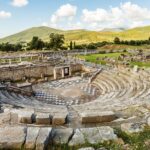
Two more structures are worth your attention in the broader area. There’s an Odeion (concert hall) from the 1st century CE, enlarged in the 2nd century by Herodes Attikos, who is associated with the Odeion in Athens. And there’s a Greek-period theatre that was later replaced in Roman times with an arena-type building, even one designed so that naval battle performances (called Naumachiai) were possible.
If you only have time to focus on a few things, do this: look for the big religious structure (Apollo), the civic center (Agora), and one long street (Lechaion). That combo gives you a complete mental picture fast.
Important logistics: the entrance fee for Ancient Corinth is €15 per adult, and it’s listed as not included. So check your party size before you budget.
Acrocorinth: the medieval fortress on a monolithic rock
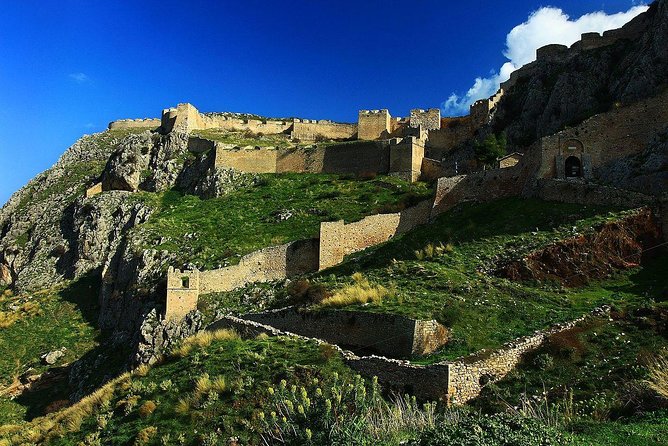
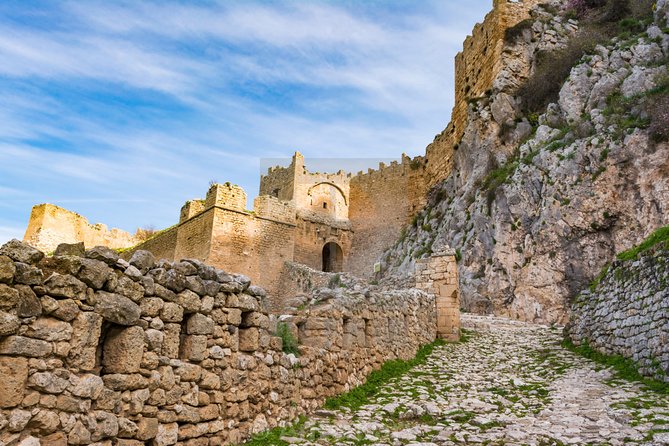
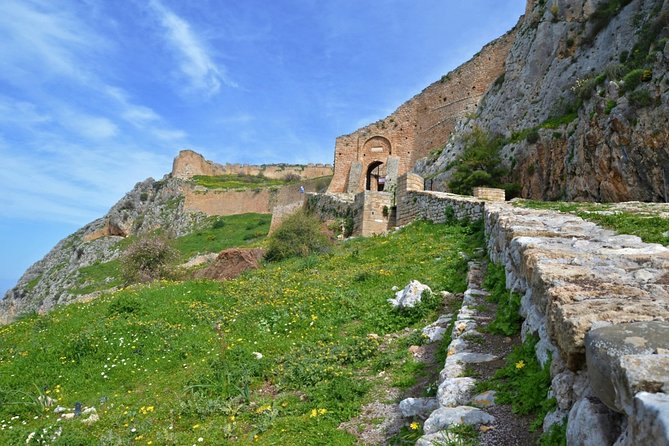
After the city ruins, you head to Acrocorinth, the “Upper Corinth” rock that towers above the ancient settlement. This is one of those places where the view does half the teaching. When you stand up there, you finally understand why Corinth mattered so much: it’s a natural control point.
What I like is the continuity of occupation. Acrocorinth has been used from archaic times all the way to the early 19th century, and today it’s one of Greece’s important medieval castle sites. That long span shows in the feel of the place—layers of purpose, from ancient settlement advantage to later fortification.
The stop is about an hour, and entrance fees are not included. Wear shoes you trust on uneven surfaces. Even if you’re not aiming for every viewpoint, give yourself time to walk to whatever overlooks feel most open.
Kechries port remains: a short stop with a sea-based viewpoint
Once you leave Ancient Corinth, the tour offers the option to visit the remains of the ancient port at Kechries. It’s a brief add-on—around 15 minutes—and it’s listed with free admission.
This stop is valuable because it shifts the story from land power to sea trade. Corinth had two ports, and Kechries handled eastern trade routes via the Saronic Gulf. It also ties into the arrival of the Apostle Paul during his second missionary, which adds a familiar “religious geography” element without turning the day into a lecture.
Because it’s short, manage expectations: you’re not getting a long deep dive here. Instead, you’re getting a quick grounding point that helps explain Corinth’s wealth and why control of movement mattered.
How your driver explains it all (and when you’d want a licensed guide)
This tour runs with professional drivers, but there’s an important rule: the driver is not allowed by law to accompany you into the sites. In plain terms, your driver will explain on the road and give context before you walk in, then you explore at the monuments themselves.
If you want a fully licensed guide inside the archaeological areas, the tour offers an optional add-on: an English-speaking licensed tour guide, payable in cash (listed as 260 euros) based on availability. For me, the decision comes down to your style. If you like to read, look, and ask a few questions, the driver briefing can be enough. If you want nonstop interpretation at every ruin, plan for the licensed guide option.
Also note that the listed tour includes an English-speaking driver for explanations, but it does not label an inside licensed tour guide as automatic.
Price and logistics: what you’re paying for, and what’s extra
The price is shown as $363.71 per group (up to 2) for about 5 hours. That matters because it’s private transportation value, not per-person pricing. For two people, you’re basically buying a comfortable day-drive and a structured route without the hassle of arranging taxis or renting a car.
What’s included:
- Air-conditioned vehicle
- Bottled water
- WiFi on board
- Private pickup and drop-off from Athens hotel or Piraeus port
- Mobile ticket
- English explanations from your driver (as described)
What’s not included:
- Snacks
- The optional licensed guide (260 euros, cash, if you add it)
- Entrance fees, specifically €15 per adult for Ancient Corinth
- Anything not listed for pickup (airport pickup/drop-off is on request with an extra fee)
One more practical bonus: the format is built for cruise days and airport arrivals. Your driver meets you with an H.P. Tours sign at the arrivals exit at Athens airport, or at the right Piraeus terminal exit. Piraeus has terminals A, B, and C, and if gates are closed at B or C, you’ll take a shuttle to Terminal A (listed as about 3 minutes). That kind of detail is exactly what can save time on a tight schedule.
If you’re trying to plan a stress-free half day from Athens, this structure is a big part of the value.
Should you book the Ancient Corinth half-day tour?
I’d book this if you want a focused “best of Corinth” day with minimal logistics. It’s a good match for:
- Couples or solo travelers who want private transport
- People with limited time in Athens or a cruise stop
- Anyone who likes seeing how geography and history connect (canal, city, fortress, then a port view)
I’d think twice if:
- You dislike extra costs for site entry, especially since Ancient Corinth is €15 per adult
- You want a fully guided, inside-every-site experience without paying for a licensed guide add-on
- You need a very slow, museum-style pace (this is a route built for movement)
If you’re the type who enjoys stepping into ancient spaces and then letting the place do the talking, this tour fits nicely. And if you score a driver like Planos or Frank Kotsiopoulos, you’ll likely get more than facts—you’ll get stories that make the ruins easier to visualize.
FAQ
How long is the Ancient Corinth half-day tour?
It runs for about 5 hours (approx.).
Is pickup from Athens or Piraeus included?
Yes. The tour includes private pickup and drop-off from Athens hotel areas or the Piraeus cruise port.
What entrance fees should I expect?
Ancient Corinth entrance is listed as €15 per adult and is not included. The Corinth Canal stop is listed as free, and Kechries is also listed as free.
Is there an English guide during the site visits?
Your English-speaking driver can explain about the monuments and history, but drivers are not allowed by law to accompany you inside the sites. A licensed English-speaking tour guide inside the sites is optional (260 euros payable in cash, subject to availability).
What’s included in the tour price?
Included items are bottled water, an air-conditioned vehicle, WiFi on board, private transportation from your pickup point, and mobile tickets. Snacks are not included.
Can I cancel for free?
Yes. You can cancel up to 24 hours in advance for a full refund. Canceling with less than 24 hours notice isn’t refundable.
You Might Also Enjoy


More Tours in Athens


More Tour Reviews in Athens
- All Day Cruise -3 Islands to Agistri,Moni, Aegina with lunch and drinks included
★ 5.0 · 4,958 reviews