REVIEW · ATHENS
Athens & Acropolis Highlights: Greek Mythology Small-Group Tour
Book on Viator →Operated by Alternative Athens · Bookable on Viator
Myths rise with you in Athens. This small-group walk turns the Acropolis from ruins into a living story, and I really like how guides connect architecture to the myths people actually told in ancient Greece. The downside: you’ll still need to budget extra for Acropolis and Ancient Agora entry, and the Acropolis route involves a steep, stair-heavy climb.
You’ll start at the Arch of Hadrian / Leof. Vasilisis Amalias area at the Temple of Olympian Zeus, then finish near the Ancient Agora. Most of what’s “tour” here is the guided interpretation, so having the included Athens map and a tight group size matters a lot for staying oriented fast and keeping momentum.
In This Review
- Key highlights that make this tour worth your time
- Starting at the Temple of Olympian Zeus: your myth primer
- Acropolis walk and Parthenon time: what you should expect
- The one thing to plan for: tickets and the climb
- How guides help you at the top
- Theatre of Dionysus: where drama and wine intersect
- Athena Nike and the wingless victory idea
- Erechtheion and the Parthenon’s neighbor temple effect
- Ancient Agora: how Athens worked day to day
- Ending at the Temple of Hephaestus: the best-preserved finale
- Price and value: what you’re really paying for
- Pacing, walking, and comfort tips that make or break the day
- Guide quality: why the “story teller” part matters here
- Who this tour suits best (and who might want a different plan)
- Should you book this Athens & Acropolis Highlights tour?
- FAQ
- How long is the Athens & Acropolis Highlights tour?
- What’s the price per person?
- Is the Acropolis admission included?
- Is the Ancient Agora admission included?
- What’s included in the tour price?
- Where do I meet the guide, and where does the tour end?
- What ticket type do I receive?
- Is the tour offered in English?
- Do I need to bring ID?
- Is the tour physically demanding?
- Is there free cancellation?
Key highlights that make this tour worth your time
- Myth + stone in the same breath: you learn how the places link to Athena, Zeus, Dionysus, Nike, and Hephaestus.
- Small group size (max 15): easier questions, easier pacing, and less getting lost in the crowd.
- Focus on the Acropolis without rushing: Parthenon time plus quick-but-meaningful stops like Athena Nike and the Theatre of Dionysus.
- Agora stop that explains civic Athens: politics, trade, social life, justice—then you end at the Temple of Hephaestus.
- Guide style can make or break the day: many guides on this route are known for story-telling, visual aids, and adapting pace for heat and crowds.
Starting at the Temple of Olympian Zeus: your myth primer
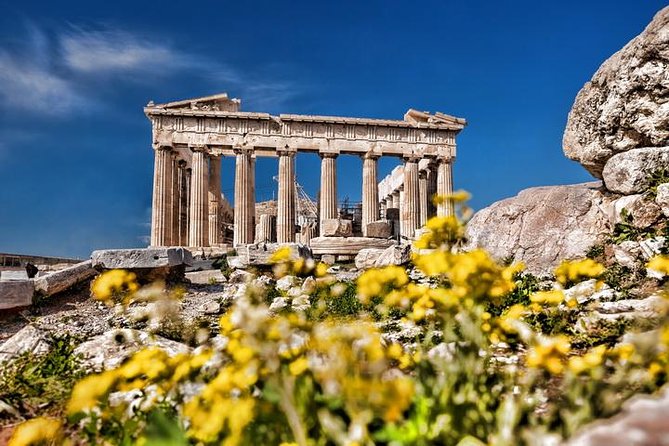
You don’t begin at the Acropolis gate. You meet in the area of the Arch of Hadrian by the Temple of Olympian Zeus, and that choice helps. Zeus is the king of the gods, and starting here gives your brain a framework before you climb into Athena’s territory.
From outside, you’re introduced to the Olympeion—one of the grand marble temples of the ancient world. It’s not the part most people post online, but it works as a warm-up. You’ll connect Zeus to the larger religious world of Athens instead of treating each ruin as a standalone postcard.
This is also where the tour’s rhythm starts: short walk, quick context, then you move on. Even at the start, the guide is setting the tone—turning legends into names you can actually recognize as you see statues, temples, and architectural details.
One practical detail I like: the meeting point is near public transportation. That matters in Athens, where “easy to reach” often turns into “easy to stress” if you pick the wrong starting location.
You can also read our reviews of more tours and experiences in Athens.


Acropolis walk and Parthenon time: what you should expect
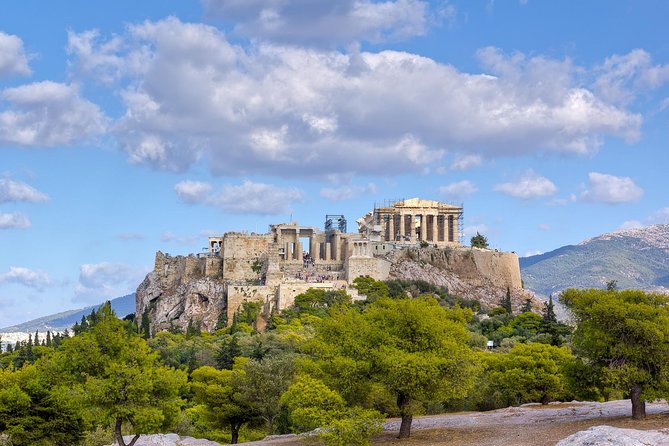
The Acropolis is the star, but it’s also the place where visitors lose the thread. That’s exactly why a guided format pays off. You’ll spend about 1.5 hours on the Acropolis area, and the guide’s job is to help you read what you’re looking at.
The route centers on major monuments you’ll recognize even if you don’t know Greek history:
- Parthenon
- Temple of Athena Nike
- Erechtheion
- Plus viewpoints connected to other landmark buildings on the hill
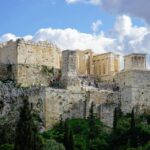
The Parthenon is the big moment. You’ll hear what it was dedicated to—Athena Parthenos, meaning Athena the Virgin—and why the building is seen as a high point in the Doric order. Even if your architecture notes are rusty, the guide can help you notice the kinds of design choices that made the structure influential for centuries.
The one thing to plan for: tickets and the climb
Here’s the key consideration: Acropolis admission isn’t included. For the 2-hour and 4-hour options, you’ll need that separate entry fee. Also, the Acropolis route is steep with uneven footing. Many guides manage the pace by pausing often, but you should still come ready for stairs.
And please take the site rules seriously. At the Acropolis, strollers and big bags/backpacks aren’t allowed, so plan your day around that. If you travel with luggage, consider wearing a small day bag and leaving the bulky stuff behind.
How guides help you at the top
This tour really depends on guide delivery. Names that come up for this experience include Irene/Irini, Dani, Michael, Theo, Chrysanthi, Kristina, and Sophia. A common thread in the way these guides work: they make you stop and look, and they translate Greek mythology into something you can picture.
Some guides also use printed visuals. That can be a big deal on the Acropolis, because it’s hard to imagine the original look of structures when you’re staring at fragments and reconstructions.
A small heads-up: on some days there may not be a microphone. In crowded spaces, standing too far from the guide can make it harder to catch every detail. If you care about the stories, position yourself where you can hear.
Theatre of Dionysus: where drama and wine intersect
After the Acropolis, you’ll head to the Theatre of Dionysus Eleuthereus. It’s a short stop, but it adds an important missing piece: Athens wasn’t just temples and politics. It was also performance—plays that helped define Greek culture.
The tour explains Dionysus as the god connected with wine and grape harvest. Then you see the theatre as one of the oldest in Athens. This matters because major playwrights tied to Greek drama—Aeschylus, Sophocles, Euripides, and Aristophanes—are linked to first performances there.
You don’t need to be a theatre buff to enjoy this stop. What you gain is context: the myths weren’t “someday stories.” They were part of how people gathered, argued, laughed, and processed life.
If you’re thinking, Okay, but what does this have to do with the Acropolis? That’s the point. It connects the mythic world to public culture.


Athena Nike and the wingless victory idea
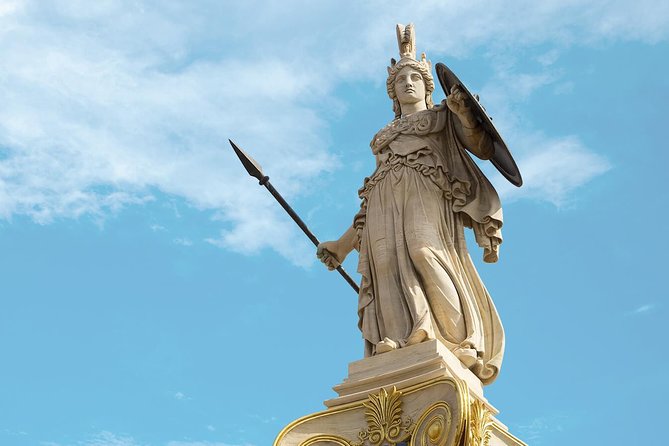
Next comes Temple of Athena Nike. This stop is shorter, but it’s memorable because of the story you’ll hear around Nike—the goddess of victory—and Athena worshipped in that form.
The tour’s framing includes a popular detail: the cult statue at this temple was said to have no wings, so victory wouldn’t leave Athens. It’s a small mythic nugget, but it gives the whole place a “meaning lens.” Instead of seeing a tiny temple among giants, you start to see how the Athenians wanted victory to feel permanent.
Expect to spend about 10 minutes here. It’s enough time to absorb the idea and take in the setting without turning this into a stop-and-start marathon.
Erechtheion and the Parthenon’s neighbor temple effect
The Erechtheion is one of those places where you’ll likely feel the shift from “main attraction” to “meaningful side story.” Built on the Acropolis, it’s connected to housing a sacred wooden cult statue of Athena.
The guide’s value here is helping you understand why this temple existed in this specific location. In other words, it’s not just a pretty building; it ties to worship practice and civic identity when Athens was at the height of its power.
This stop is usually about 10 minutes, so don’t expect long wandering. Do expect the guide to point out the kinds of features you might otherwise overlook.
Ancient Agora: how Athens worked day to day
Then you move down from religious Athens to civic Athens at the Ancient Agora. This is one of my favorite transitions on any Athens tour, because it changes the “myth vibe” from gods on high to people handling real life.
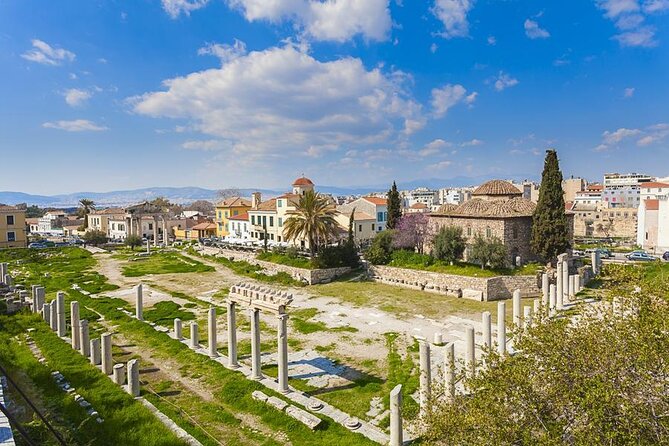
You spend about 1 hour at the Agora, and you’ll learn it was the heart of the city:
- political activity
- commercial life
- administration and social gatherings
- religious and cultural center
- seat of justice
Even if you only catch a few of those words while walking, the guide turns it into a mental map. You start imagining a day in the ancient city: where arguments happened, where deals were made, and where people gathered around shared beliefs.
Ending at the Temple of Hephaestus: the best-preserved finale
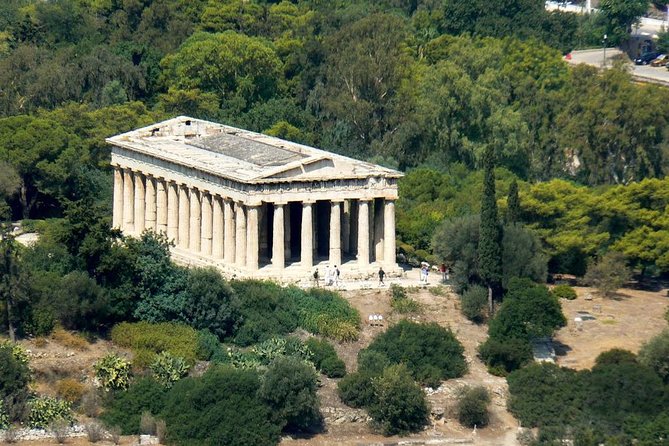
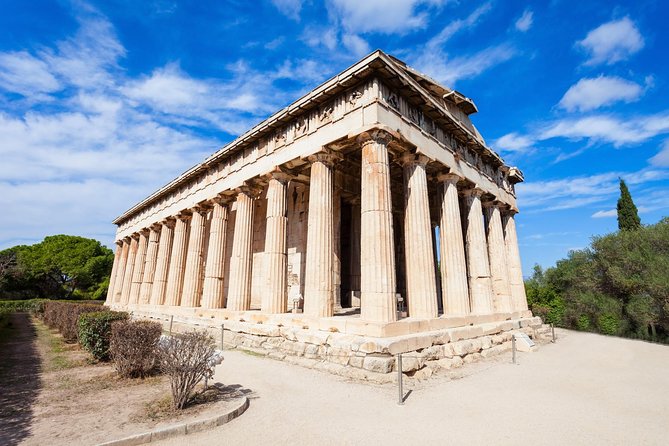
To cap it off, you end at the Temple of Hephaestus, highlighted as one of the best-preserved ancient temples in the world. That preservation matters. When a structure survives this well, it gives you clearer cues about how the space functioned.
This temple is tied to worship for Hephaestus, protector of metallurgists, and Athena Ergani, protecting potters and cottage industries. That’s a clever closing frame because the Agora was about work and trade as much as it was about politics.
Expect about 20 minutes here. It’s a satisfying finish: you’re not leaving with only one big temple in your head. You’re leaving with a full picture of how different parts of Athens connected.
Price and value: what you’re really paying for
The tour price is $54.42 per person for about 4 hours. That’s not a lot on its own, but it’s important to understand what’s included versus what you still pay separately.
- Included: an expert certified guide, small group experience, and a fun Athens map.
- Not included: entrance fees to archaeological sites, including Acropolis and the Ancient Agora for the 4-hour option.
For the separate site fees, the tour data lists:
- Acropolis admission: €30.00 per person
- Ancient Agora admission (necessary for the 4-hour option): €20.00 per person
So the “real” budget becomes tour price plus those entries. The value question is whether a guided story-focused route is worth those extra euros.
For most people, it is—because the guide doesn’t just point at monuments. You’re getting myth connections that help you remember what you see. And on a steep, crowded day, a guide also saves time and reduces the chance you’ll wander the wrong way or miss the key viewpoints.
Also, the group cap is 15 travelers. In Athens, that’s a meaningful number. Larger groups mean slower pacing, more noise, and less personal connection with the stories.
Pacing, walking, and comfort tips that make or break the day
This tour includes real walking and some uneven surfaces. On top of that, the Acropolis climb is steep.
So here’s what I’d plan around:
- Wear good walking shoes. Don’t treat this like a sightseeing stroll.
- Bring water and a hat, especially in warm weather.
- Expect stairs and uneven ground.
- At the Acropolis, remember: strollers and big backpacks aren’t allowed.
One thing that shows up in guide styles for this tour: many of them manage the climb in stages and stop in shaded spots when heat is an issue. That’s huge, because it keeps the day fun instead of turning it into a fight with your breathing.
If you’re prone to getting separated in crowds, this tour is generally easier because the group size is small. Still, stay close in the tight areas. Acropolis crowds can swallow you fast if you drift.
Guide quality: why the “story teller” part matters here
Greek mythology in Athens is one of those topics where facts matter, but storytelling is what makes it stick. That’s why the best part of this tour tends to be the guide’s delivery.
Guides associated with this experience include Dani, Michael, Alexandros, Angie, Maria, Demi, Theo, Marika, Chrysanthi, Kristina, and Anastasia. A lot of these guides are praised for:
- weaving mythology into the architecture
- answering niche questions
- using visual aids like printed photos
- keeping the group together and maintaining a steady pace
A word of balance: there is at least one account of a guide not keeping everyone together, which made the experience stressful. It’s rare, but it’s a reminder to pick this tour for the guide style—and to stay attentive at meeting points and turns.
If your priority is learning the stories behind the stones, choose this format. It’s made for that.
Who this tour suits best (and who might want a different plan)
This tour is a great match if you want:
- Acropolis highlights with myth context
- A guided route that covers the big blocks without turning into a museum sprint
- Small-group attention where you can ask questions
- A finish at the Agora that makes Athens feel human again
You might want a different plan if:
- You dislike steep climbs and uneven stone
- You need a completely accessible, low-stair route (the tour says most travelers can participate, but the Acropolis terrain is still real)
- You’re looking for long free time. This is structured, and most stops are timed.
Should you book this Athens & Acropolis Highlights tour?
If you want the Acropolis to make sense—beyond photos and names—book this. The added site fees are part of the equation, but the guide-led myth connections are exactly what make the day feel like more than a checklist.
I’d especially recommend it if:
- you’re visiting Athens for the first time
- you love mythology but want the basics turned into memorable images
- you prefer a small group (max 15) over a busload
One last practical note: staying light on your bag helps a lot at the Acropolis. Bring water and a hat, wear shoes you trust, and you’ll spend the day seeing Athens instead of fighting it.
FAQ
How long is the Athens & Acropolis Highlights tour?
It’s about 4 hours (approximately).
What’s the price per person?
The price is $54.42 per person.
Is the Acropolis admission included?
No. Acropolis entry is not included and costs €30.00 per person for the 2-hour and 4-hour options.
Is the Ancient Agora admission included?
No. Ancient Agora entry is not included and costs €20.00 per person for the 4-hour option.
What’s included in the tour price?
You get an expert certified guide, a small group for an optimal experience, and a fun ancient Athens map.
Where do I meet the guide, and where does the tour end?
You start at the Arch of Hadrian / Leof. Vasilisis Amalias 50 area. The tour ends at the Ancient Agora of Athens (Athens 105 55, Greece).
What ticket type do I receive?
You’ll use a mobile ticket.
Is the tour offered in English?
Yes, it’s offered in English.
Do I need to bring ID?
If you’re under age 25, you may need an ID card or passport for possible discounts.
Is the tour physically demanding?
It includes walking and stairs on uneven surfaces, and it’s described as a steep climb at the Acropolis. Good walking shoes are important.
Is there free cancellation?
Yes, free cancellation is available up to 24 hours in advance for a full refund, and the experience depends on good weather.
You Might Also Enjoy


More Tours in Athens


More Tour Reviews in Athens
- All Day Cruise -3 Islands to Agistri,Moni, Aegina with lunch and drinks included
★ 5.0 · 4,958 reviews