REVIEW · ATHENS
Athens: Acropolis Guided Tour in Spanish-Option Tickets
Book on GetYourGuide →Operated by TOP TOURS GREECE · Bookable on GetYourGuide
That first climb always feels like time travel. This 2-hour Spanish-guided Acropolis tour hits the big sights fast, with headphones to keep every detail clear. I especially love how you walk the Acropolis in one guided loop, so you’re not piecing the meaning together alone. One thing to consider: the route isn’t for people with mobility impairments, and the stops are on uneven ancient ground.
What makes this tour click is the way the guide ties each place to a human story—performance, medicine, ceremonies of power—so the ruins don’t feel like random stones. You also get a practical, structured pace (short visits at each stop), which is great if you have limited time in Athens. The main drawback is simple: it’s 2 hours, so there’s little time for long photo breaks or wandering off-script.
In This Review
- Key highlights to look forward to
- Why a Spanish-guided Acropolis walk makes the site easier
- Meeting point and timing: keeping your start from turning into a chase
- Theatre of Dionysus: where performance takes center stage
- Asklepieion of Athens: ancient medicine made human
- Odeon of Herodes Atticus: a theater that still has a calendar
- Moving through Propylaea and the gallery: getting your bearings
- Athena Nike Temple to Parthenon: the view moment you’ll remember
- Erechtheion and the Porch of Caryatids: finishing with iconic details
- What’s included, and what you need to handle on your own
- Who this tour fits best (and who should pick something else)
- Should you book this Acropolis guided tour?
- FAQ
- How long is the Athens Acropolis guided tour?
- Is the tour offered in Spanish?
- Are headphones included?
- Is the entrance ticket included in the price?
- Where does the tour start?
- Is the tour suitable for people with mobility impairments?
- What should I bring, and what isn’t allowed?
Key highlights to look forward to
- Spanish licensed guide who leads the full walking route and keeps the story connected
- Theatre of Dionysus as the birthplace of theater, with context as you move through the site
- Temple of Asclepius focused on ancient medicine
- Odeon of Herodes Atticus, a venue still used for major concerts and performances
- Athena Nike Temple to Parthenon run, finishing with standout views over Athens
- Short stop format (about 10–20 minutes per section) that fits a tight schedule
Why a Spanish-guided Acropolis walk makes the site easier

The Acropolis can feel overwhelming. There’s a lot to see, and a lot of it is fragmentary. A Spanish-speaking licensed guide changes that fast. You don’t just look at structures—you get the “why” behind them while you’re standing there.
I like tours like this because the pacing helps your brain. You move from the Theater of Dionysus into the Asclepius area, then over toward Herodes Atticus and the temple zone. That sequence matters because each stop points to a different side of ancient Athenian life: ideas and performance, health and belief, public gatherings and culture.
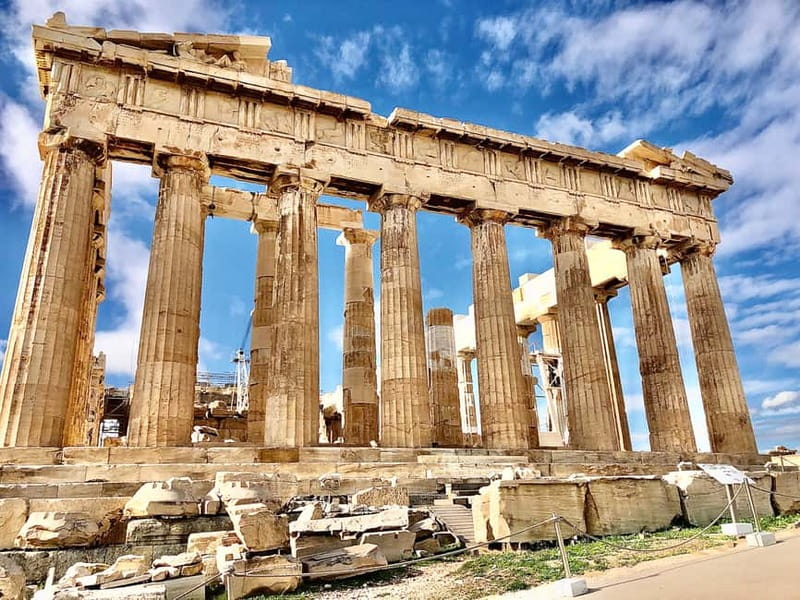
And yes, the big visual hits land hard. The Parthenon is the obvious one, but the route also builds toward it—especially once you reach the Athena Nike Temple and the view over Athens starts to open up.
You can also read our reviews of more tours and experiences in Athens


Meeting point and timing: keeping your start from turning into a chase

This tour is about 2 hours, with starting times based on availability. The first meeting point can vary depending on the option you book, but one listed start is the Tourist Information Center Athens, Dionysiou Areopagitou 18.
That matters because the Acropolis area can get busy. If you’re late, the guide can’t slow down for the group. My advice: be there a few minutes early, and check your exact ticket details the day before so you’re not trying to “figure it out” at street level.
You’ll also want to plan for sun and walking. The tour recommends comfortable shoes and a sun hat, and that’s good advice—this is a place where shade comes and goes.
Theatre of Dionysus: where performance takes center stage

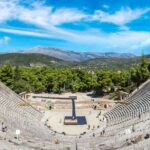
You start your guided walk at the Theatre of Dionysus. The time here is short—around 10 minutes—but it’s a smart opener because it frames the entire experience. The tour highlights this spot as the birthplace of theater, and the guide’s job is to help you connect the idea of performance to the people and values of ancient Athens.
Even if you’ve seen photos of amphitheaters, it hits differently when you’re hearing the story at the site. You’re not just staring at seating rows—you’re learning how theater mattered enough to be part of the Acropolis complex.
A small caution: with only about ten minutes, you’ll need to listen first and take photos second. If you want lots of time for photography, you’ll probably prefer a longer independent visit after the tour.
Asklepieion of Athens: ancient medicine made human
Next comes the Asklepieion of Athens, also visited for about 10 minutes. This is the stop where the tour switches gears: from the arts to ancient medicine.
That contrast is one reason I like this itinerary. It helps you see the Acropolis as more than an architectural museum. Medicine, belief, and public life all belonged in the same civic center.
You’ll walk among the remains while your guide explains why the Temple area mattered. Since the tour is only two hours total, the goal here isn’t a textbook lecture—it’s getting the core ideas in place so you can recognize what you’re seeing as you continue.
Odeon of Herodes Atticus: a theater that still has a calendar
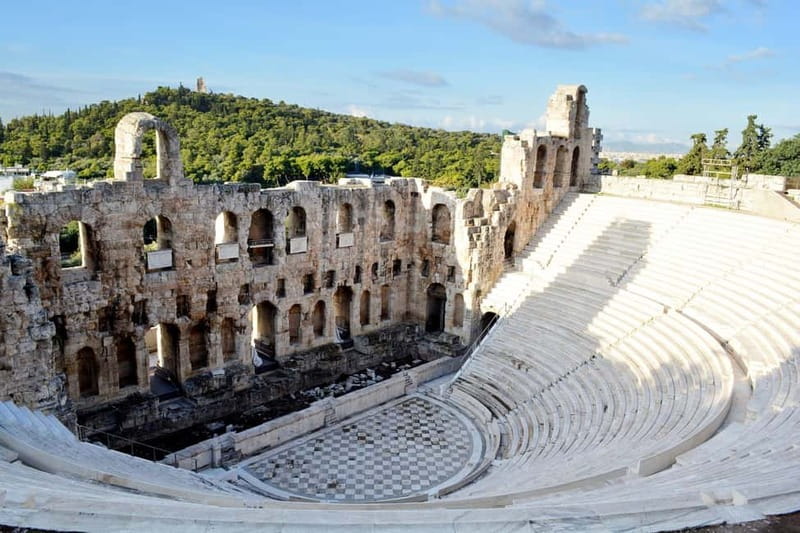
Then you reach the Odeon of Herodes Atticus for another brief 10 minutes. This is one of the most satisfying moments because the tour points out that it’s still used for Athens’ most important concerts and performances.
That fact changes how you look at the structure. It stops being only “ancient history” and becomes a living venue with an ongoing role in the city’s cultural life. You get to connect the old with what’s happening now—without needing to know every technical detail.
As with the other stops, expect a quick visit. Use the time to get the big picture, and if you’re the type who loves architecture, save extra time after the tour for a longer look on your own.
You can also read our reviews of more guided tours in Athens


Moving through Propylaea and the gallery: getting your bearings
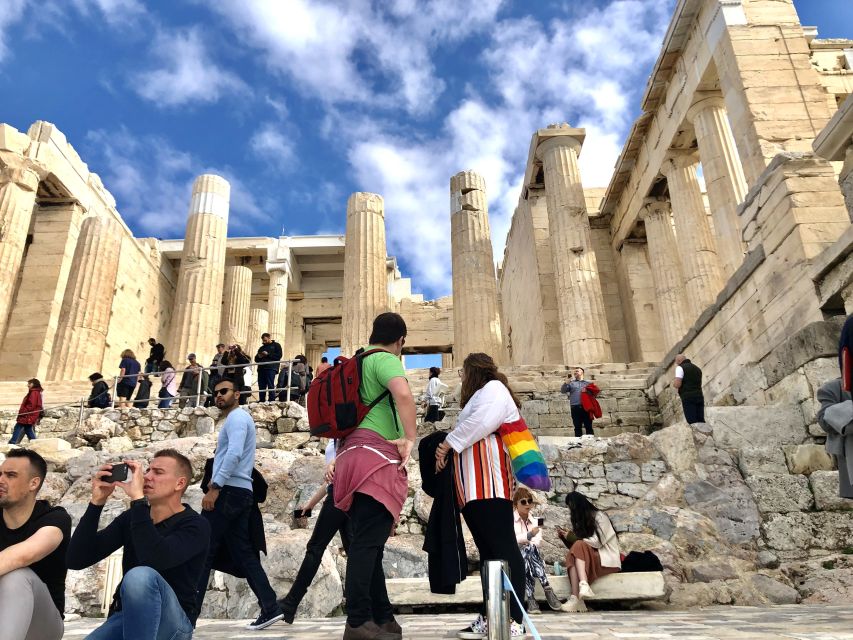
After the Odeon, the route brings you through the Propylaea area (about 10 minutes). The overview also mentions passing through the gallery of Eumenes, then walking among the remains with explanations of the Acropolis’ importance to Athenian identity.
This is the “navigation” phase of the walk. You’re learning how the spaces relate, which makes the later stops—Athena Nike and the Parthenon—feel less random. When you can connect the route in your head, you enjoy the site more.
One practical note: this portion can involve some steps and uneven ground. The tour isn’t listed as suitable for mobility impairments, so if that’s relevant for you, plan accordingly and choose an alternative format that matches your needs.
Athena Nike Temple to Parthenon: the view moment you’ll remember
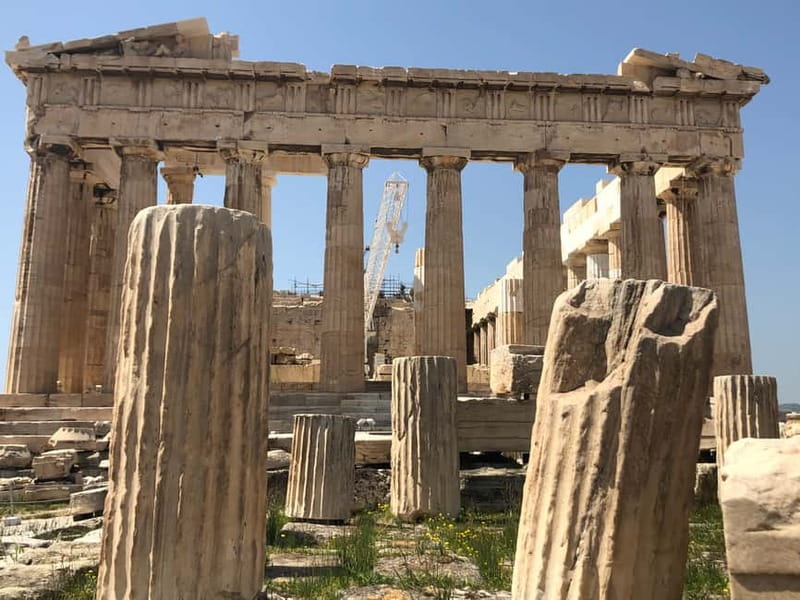
The highlight sequence starts at the Temple of Athena Nike (about 5 minutes). The tour calls this out as the high point before you move on to the Parthenon.
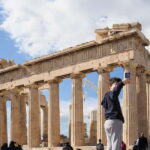
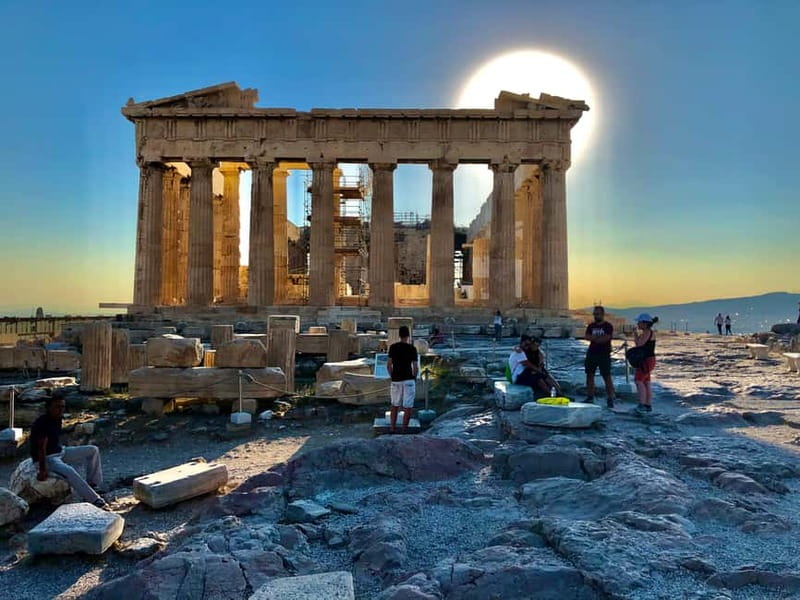
Those few minutes at Athena Nike matter because they set you up for the Parthenon reveal. Then you arrive at the Parthenon for about 20 minutes, and that’s where the tour earns its name. The Parthenon isn’t just the structure—you’re also there for the stunning view of Athens that comes with it.
This is the point where I’d say you should slow down—just a little. If you rush, you’ll miss the way the city spreads out around the Acropolis. If you linger, you’ll understand why so many people make the climb.
And because the tour is structured, you get time here without having to micromanage your schedule.
Erechtheion and the Porch of Caryatids: finishing with iconic details
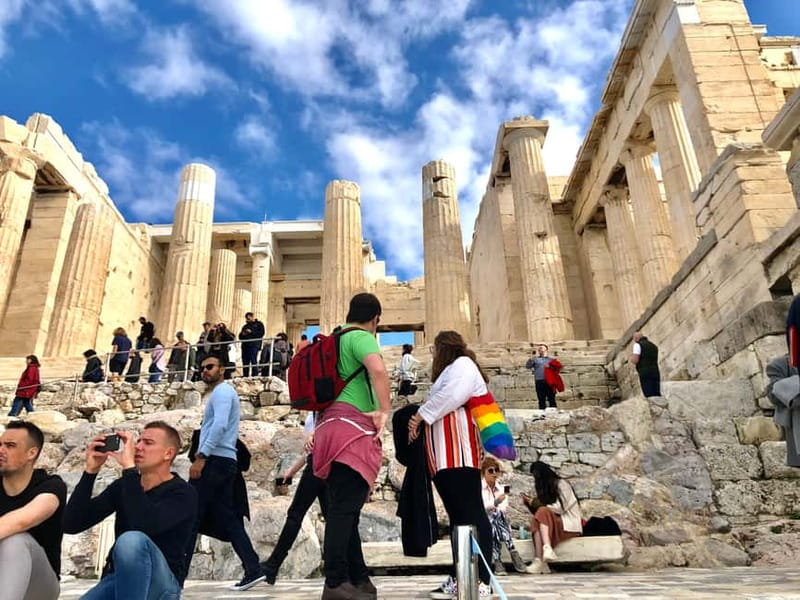
After the Parthenon, the final stretch focuses on two named areas.
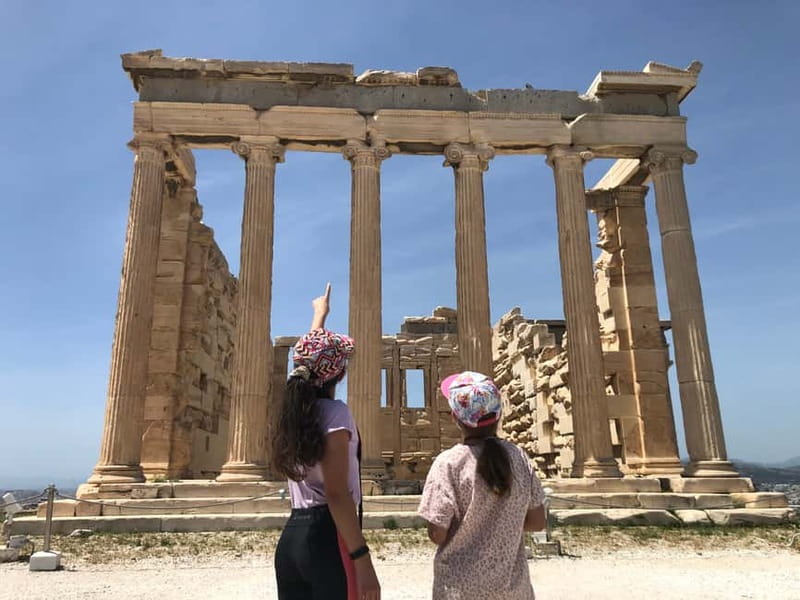
First is the Erechtheion for about 10 minutes, followed by the Porch of the Caryatids for around 10 minutes. These stops complete the walking loop, giving you a rounded look at the complex rather than only hitting the absolute headline monument.
The tour doesn’t frame these as “quick sightseeing.” It treats them as part of a single narrative of sacred architecture on the Acropolis. Even with short time windows, the guide’s explanations help you understand what role these parts play in the overall complex.
If you love taking photos, this is also where you’ll want to choose: either capture now or focus on listening. You can do both, but not at the same speed.
What’s included, and what you need to handle on your own
Here’s what the tour covers:
- Licensed guide (Spanish)
- Headphones (so you don’t miss words over crowds or wind)
- Entrance ticket if you choose that option
What’s not included:
- Hotel pickup/drop-off
- Food and drinks
You also can’t bring baby strollers and food and drinks aren’t allowed during the tour.
For value, the key is the combination: a Spanish guide plus headphones plus the option to include your entrance ticket. If you’d rather not fight with lines or unclear ticket steps, having the entrance ticket arranged is usually worth considering.
Who this tour fits best (and who should pick something else)
This is a great pick if:
- You want a guided Spanish walk through the main Acropolis stops
- You’re short on time and want a structured loop over about two hours
- You prefer explanations while you’re looking at the real thing, not reading about it later
It’s probably not the best fit if:
- You need mobility-friendly access (it’s listed as not suitable for people with mobility impairments)
- You want a slow, hours-long exploration with lots of free wandering
If you speak Spanish or you just want the guidance in that language, this tour’s format is particularly efficient.
Should you book this Acropolis guided tour?
I’d book it if you want to leave with a real sense of the Acropolis, not just photos. The itinerary is built around major themes—theater, medicine, and a cultural venue that still hosts performances—then it climaxes with the Parthenon and Athens views. For the price (about $36.14 per person), you’re paying for a licensed guide and a streamlined route that saves you time and confusion.
Skip it if you need long breaks for wandering, or if your mobility situation makes the Acropolis route tough. In those cases, you’ll likely be happier with a different format designed for slower movement.
FAQ
How long is the Athens Acropolis guided tour?
The tour lasts about 2 hours.
Is the tour offered in Spanish?
Yes. The guide provides the tour in Spanish.
Are headphones included?
Yes, headphones are included so you can hear the guide clearly.
Is the entrance ticket included in the price?
An entrance ticket is included only if you select that option. Otherwise, you may need to purchase your ticket separately.
Where does the tour start?
The meeting point can vary depending on the option booked. One listed starting location is the Tourist Information Center Athens, Dionysiou Areopagitou 18.
Is the tour suitable for people with mobility impairments?
No, it is not suitable for people with mobility impairments.
What should I bring, and what isn’t allowed?
Bring comfortable shoes and a sun hat. Baby strollers are not allowed, and food and drinks aren’t allowed during the tour.
You Might Also Enjoy



More Tickets in Athens

More Tours in Athens



More Tour Reviews in Athens
- All Day Cruise -3 Islands to Agistri,Moni, Aegina with lunch and drinks included
★ 5.0 · 4,958 reviews