REVIEW · ACROPOLIS OF ATHENS
Acropolis & Acropolis Museum PRIVATE Expert led Guided Tour
Book on GetYourGuide →Operated by WARMPENGUIN · Bookable on GetYourGuide
A cliff-top city of stone comes alive fast. This private walking tour strings together the Acropolis monuments and the Acropolis Museum so you don’t just stare at ruins—you understand why they mattered. I like that you move in a logical route with an expert who can answer your questions on the spot.
What I like most is the tour’s tight focus on the big moments: the Parthenon zone plus the museum’s story of what was found there. You’ll also get built-in context for Greek mythology and everyday life, not just a list of names and dates.
One consideration: the headline price is for the guide, while admission tickets are not included, so you’ll want to plan a little extra for entry.
In This Review
- Key highlights (what makes this tour worth your time)
- Private timing on Athens’s most crowded hill
- Starting at Makrigianni 7 and settling in before the climb
- Theatre of Dionysus: the start of the story, not just another ruin
- Propylaea and Athena: how the Acropolis had a “designed” viewpoint
- Temple of Athena Nike and the Erechtheion myths
- Parthenon time: architecture that finally gets its meaning
- Odeon of Herodes Atticus: still in use each summer
- Acropolis Museum: where the artifacts start to explain the ruins
- Finishing near Ancient Agora if you choose the combo
- Price and what it really covers at $163 per person
- What you’ll feel during the walk: pace, shade, and smart stops
- Who should book this private Acropolis and Museum tour
- Should you book this tour?
- FAQ
- How long is the tour?
- Is this a private tour?
- Where do we meet the guide?
- Are admission tickets included?
- Does the tour include a skip-the-line option?
- What sights are included besides the Acropolis?
- Can I choose to see only the Acropolis or add the Ancient Agora?
- Is the tour offered in English?
- Can the guide meet you at your hotel?
- Is the tour wheelchair-friendly and are pets allowed?
- What’s the cancellation policy?
Key highlights (what makes this tour worth your time)
- State-accredited licensed archaeological expert guiding every stop so myths and architecture make sense
- Private pace with room for questions, ideal when you want the meaning behind what you’re seeing
- Acropolis plus museum in one outing, so the artifacts snap into place after the walk
- Iconic sights hit efficiently, including the Theater of Dionysus, Propylaea, Athena Nike, Parthenon, Erechtheion, and Odeon of Herodes Atticus
- Photo and viewpoint strategy, with guides aiming to help you find the best angles and less-stressed timing
Private timing on Athens’s most crowded hill
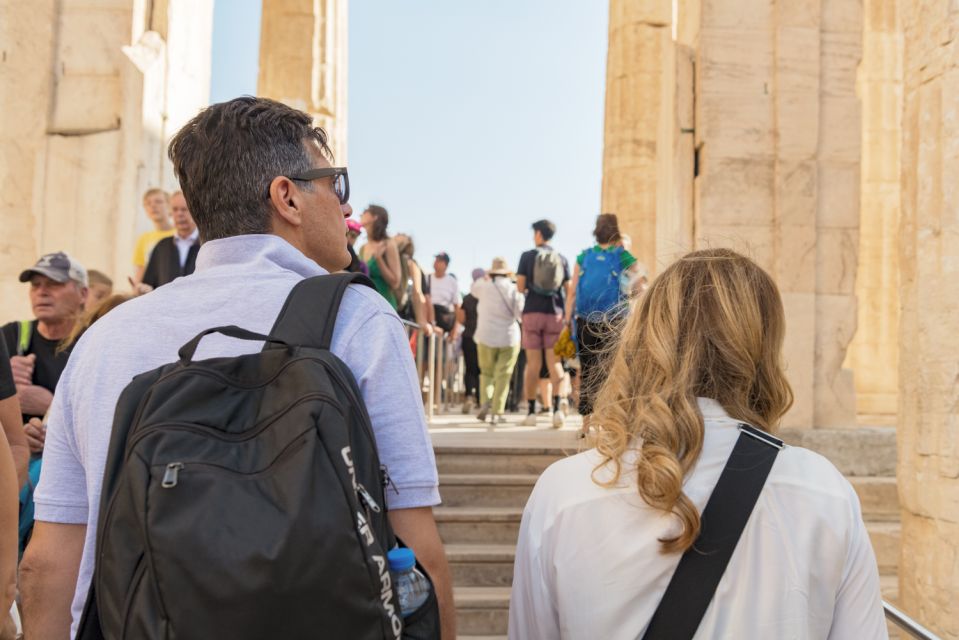
The Acropolis is one of those places where crowds can turn your visit into a shuffle. A private format helps because you’re not stuck listening from the back row or waiting for someone else’s pace. You can slow down at the spots that click for you—details on carvings, the layout of temples, or why a certain myth gets attached to a certain building.
This tour also makes a smart choice: it connects the site to the museum. Many people bounce between the two and never fully connect the dots. Here, your guide can point out how what you see outdoors relates to what’s preserved inside, which makes the whole day feel more coherent.
You’re paying for time and interpretation, not just “access.” With a licensed expert in your group, you get the kind of context that turns a quick photo stop into a real understanding of how Athens built its identity.
You can also read our reviews of more guided tours in Acropolis Of Athens


Starting at Makrigianni 7 and settling in before the climb
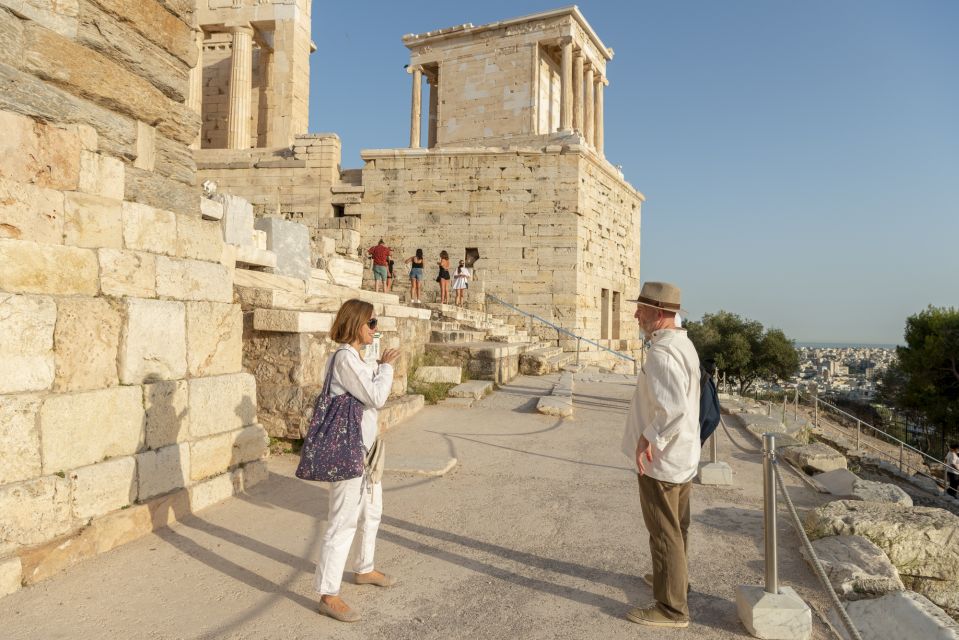
You meet at Makrigianni 7, near the Acropolis Museum. Your guide has a sign with your name, which is a small detail that saves time when streets are busy and you’re hunting the right meeting point.
If you’re staying nearby, you may be able to meet the guide at your hotel—only if it’s an easy walk to the Acropolis area. That flexibility is handy because it can reduce stress before you start climbing and negotiating ticket lines.
From the start, you should expect a guided flow: stop, explain, look, connect. The best part is that the guide can pace the group based on what you’re curious about, so the time doesn’t feel like it’s being burned on rushing.
Theatre of Dionysus: the start of the story, not just another ruin
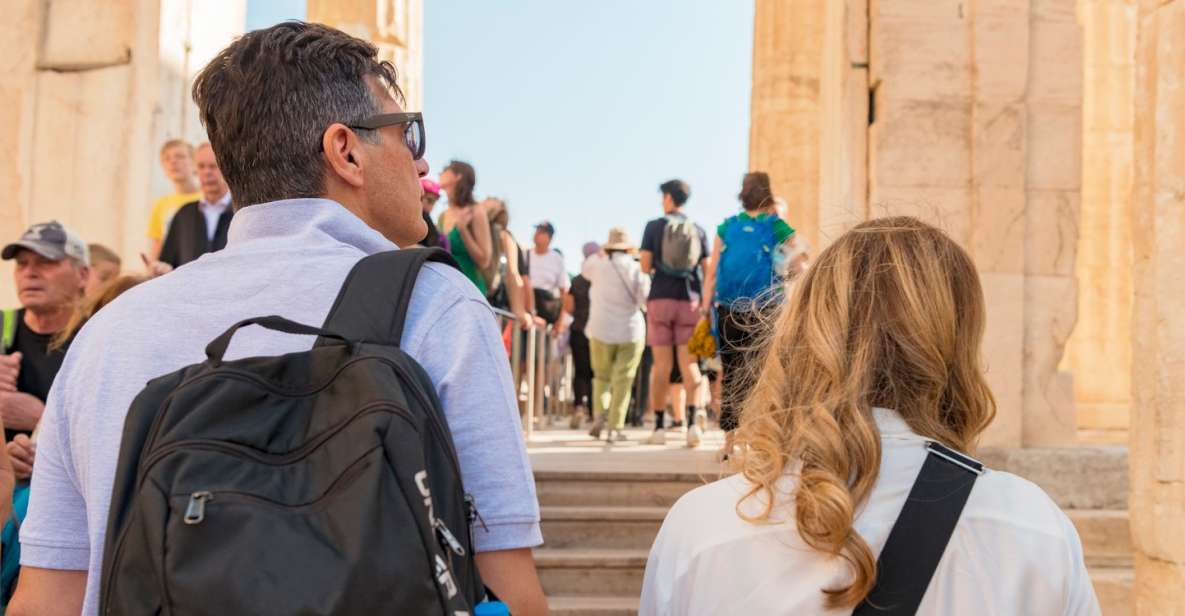
The visit begins at the Acropolis area and includes a quick, focused stop at the Theatre of Dionysus. This is more than a “cool ancient spot.” It’s described as the world’s oldest theatre, and that detail matters because it changes how you view the space. You can picture performances happening here around 3,000 years ago, long before modern audiences existed.
A good guide helps you see the theatre as a cultural machine: entertainment, religion, politics, and community all tangled together. When someone explains what kind of plays were first performed on its stage, the stone seating stops being background and becomes part of the larger Greek worldview.
There are a couple practical things to keep in mind. The time here is short, so if you love theatre and want extra context, tell your guide early and ask for a slightly deeper explanation at that stop.
Propylaea and Athena: how the Acropolis had a “designed” viewpoint
Next up is the Propylaea, the monumental gateway. This part of the experience is built around how the site worked visually. The tour focuses on the idea that the sun would have glinted from a bronze spear tip on a gigantic statue of Athena that stood there—like a final flare sailors would have seen when departing far away for war and trade.
That kind of detail is why a private guide adds value. If you walk through without context, the gateway can feel like a grand threshold with no narrative. With the explanation, it becomes a carefully staged moment meant to shape memory, pride, and identity.
Then you move toward the temple area with myth-driven connections. The guide’s goal is to make the “why” feel as important as the “what.”
Temple of Athena Nike and the Erechtheion myths
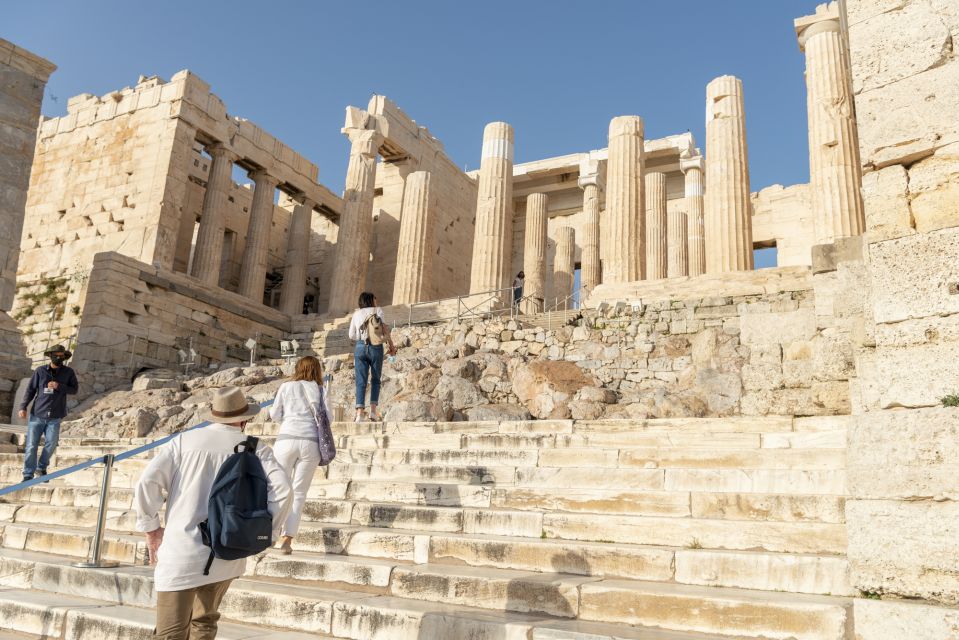
The Temple of Athena Nike gets attention for its symbolism. Even if you don’t read every architectural term, you’ll come away with a clearer idea of why victory, divine power, and civic pride were linked on this hill.
From there, you’ll hear the mythology of the Erechtheion and the struggle between Poseidon and Athena. This is a smart use of tour time because myths are not random stories pasted onto stones. In Athens, they’re part of how people explained origins, authority, and who belonged where.
At the Erechtheion stop, you’re also likely to notice how the building’s identity is tied to the story. A guide can point out what elements matter and what you should focus on while you’re standing there, which helps you avoid the classic mistake of staring at the whole structure at once.

Parthenon time: architecture that finally gets its meaning
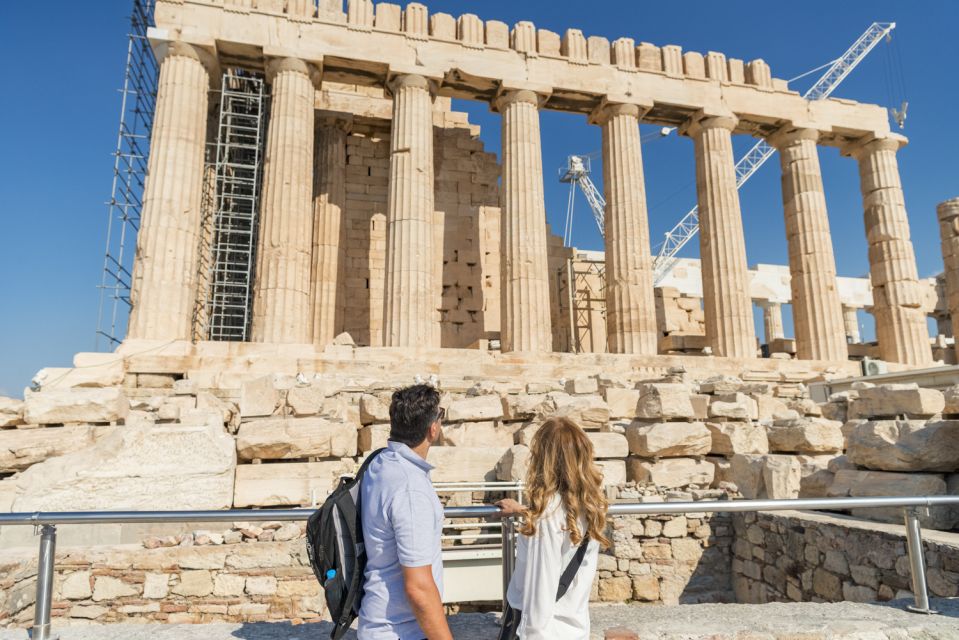
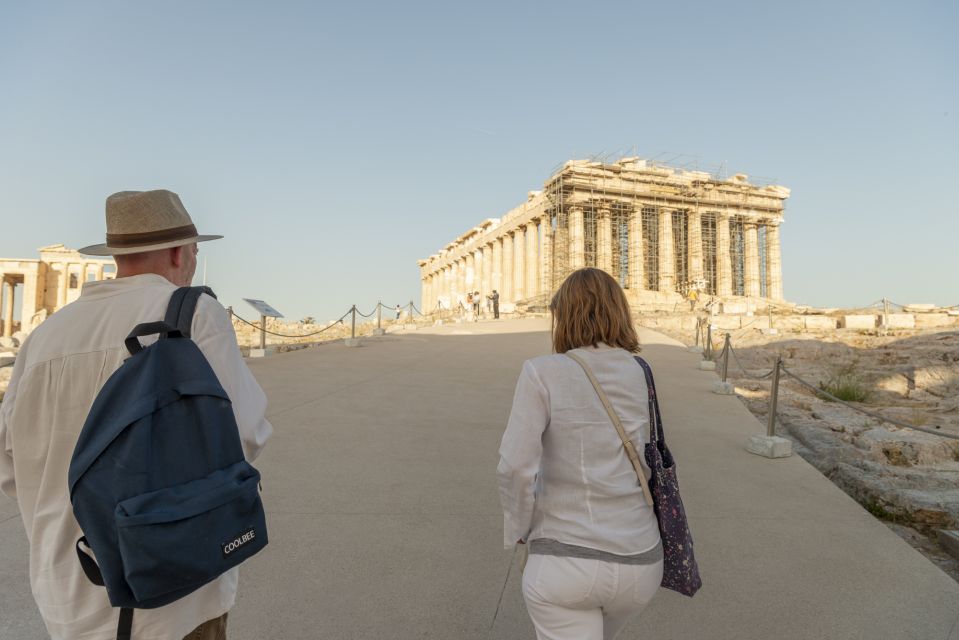
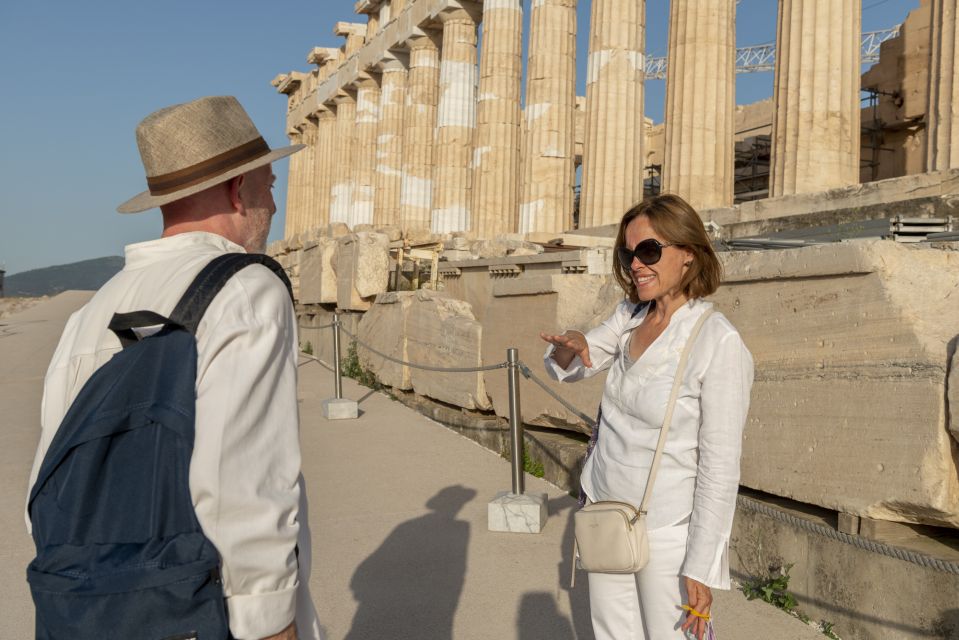
The Parthenon is the moment most people come for. The difference is whether you understand it as a whole system or just a famous facade. This tour aims to do the second part: it treats the Parthenon as a masterpiece of art and architecture, then connects it back to Greek beliefs and the world around it.
A guide’s explanations can help you see the Parthenon as a statement. It’s not only about engineering and design. It’s also about how Athens wanted to be remembered during its classical height—through stone, proportion, and divine symbolism.
The Parthenon area is usually busy. Your private format gives you a little more control over where you pause and how long you linger at the views that matter most to you.
Odeon of Herodes Atticus: still in use each summer
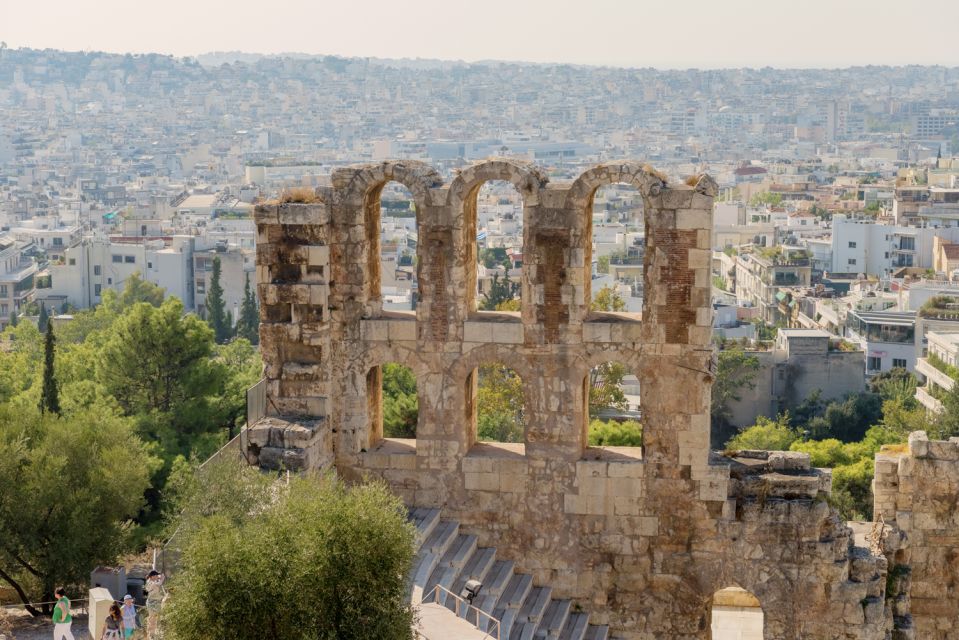
After the temple zone, the route continues and you descend through olive trees toward the Odeon of Herodes Atticus. This stop is short, but it hits with an important fact: it’s still in use each Summer.
That’s the kind of detail that makes ancient Athens feel alive without pretending it’s the same today. You’re seeing how a cultural space kept working across centuries, shifting from ancient performances to modern ones while keeping the underlying purpose: gathering people for drama and sound.
If you care about photos, this is a good moment to ask your guide where they recommend standing. Some guides also handle logistics like timing and shade to help you stay comfortable, especially when the day gets hot.
Acropolis Museum: where the artifacts start to explain the ruins
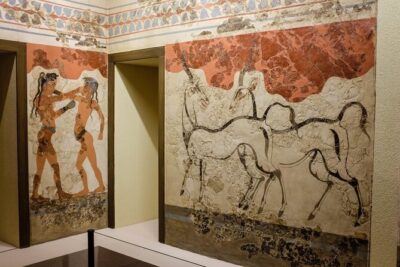
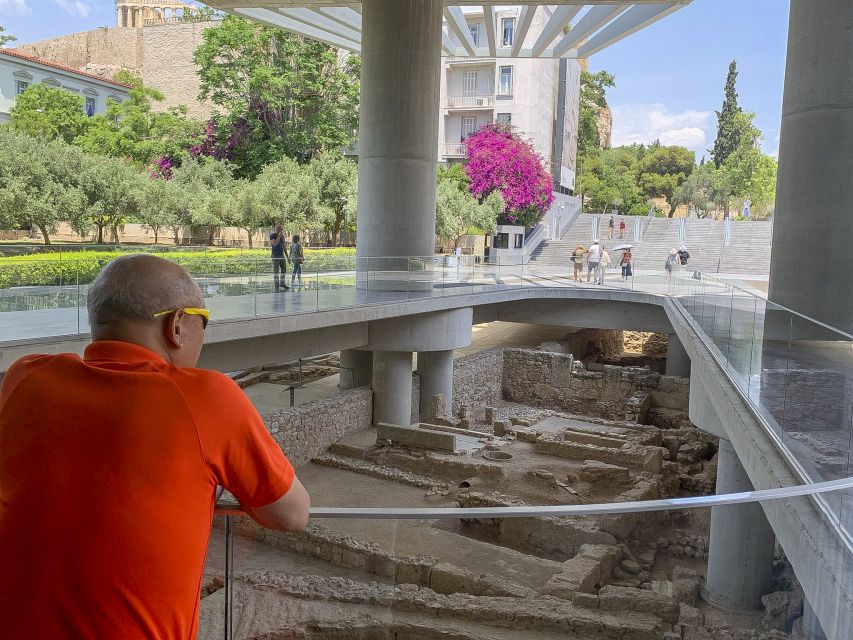
The final major block is the Acropolis Museum, where you get a guided tour for about 1.5 hours. The museum is described as state-of-the-art and designed to house and preserve significant finds from the Acropolis, while also using models, videos, and interactive installations to help you understand the Golden Age of Classical Greece.
Here’s the key value: the museum helps you interpret what you saw outside. Outdoors, you’re looking at temples, gateways, and layout. Inside, you’re learning about associated masterpieces and artifacts, plus how the spaces relate to real life on the hill.
I like that the guide doesn’t treat the museum like a warehouse. The emphasis is on context—what the pieces were, how they connect to what’s missing outdoors, and how the story changes when you see the fragments and reconstructions side by side.
If you’re choosing a tour option, museum time is one of the biggest “quality upgrades.” If you skip it, you still get the hill—but you lose a big chunk of the “now I get it” feeling.
Finishing near Ancient Agora if you choose the combo
Some versions of this experience can end at the Ancient Agora of Athens. The Agora is associated with philosophers and with the birth of Democracy, and it also contains some of the most complete remains of a classical Greek temple still standing.
If you want a day that links ideas to architecture—thoughts about politics and public life—it’s a strong pairing. Even if you’re not a “history person,” the Agora context can help you see Athens as a society, not just an art scene.
Price and what it really covers at $163 per person
At $163 per person, this sits in the premium category. For that money, you’re not just paying for entry to two famous areas. You’re paying for a private, licensed archaeological guide who can turn a busy walking route into a meaningful narrative.
Also note what’s not included: admission tickets. The tour notes that tickets are handled on request after booking so your guide has skip-the-line access ready. That can reduce wasted time once you arrive, but it still means you should budget for entry fees separately.
So is it good value? I think it is, if any of these are true for you:
- You want the stories and the “why,” not only the photo spots.
- You care about architecture, mythology, or how artifacts connect to ruins.
- You’d rather spend time asking questions than reading signs that fight for your attention.
If you’re the type who enjoys historical places mainly as scenery and you don’t want interpretation, you might feel the cost more sharply.
What you’ll feel during the walk: pace, shade, and smart stops
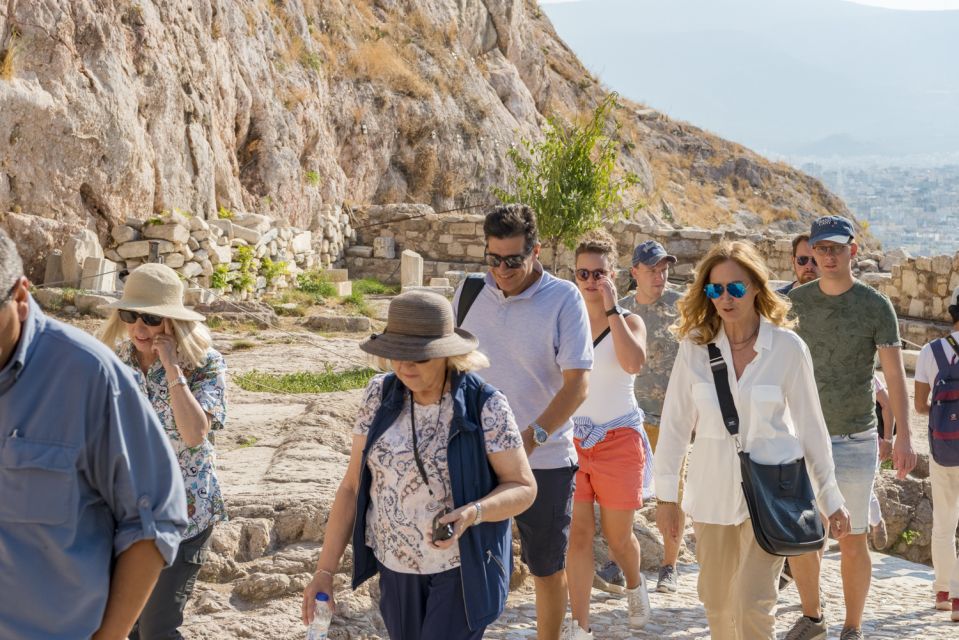
This is a walking tour, and it helps to treat it like a guided route up a meaningful hill rather than an endurance hike. The time is listed as 1.5–3 hours, depending on the option you choose, and a private guide can adjust pace to match your group.
Some guides also focus on practical comfort: finding shade on hot paths, keeping people hydrated, suggesting where to find restrooms, and managing logistics so entry feels smoother. That kind of behind-the-scenes care matters on the Acropolis, where heat and crowding can steal your attention.
If you want your best experience, bring water, wear comfortable shoes, and plan to move at a pace you can sustain. Tell your guide if you want more pauses for photos or if you prefer to keep momentum and save slower museum time for later.
Who should book this private Acropolis and Museum tour
This tour fits best if you want more than highlights.
You’ll likely love it if:
- You’re visiting Athens for the first time and want the Acropolis explained in a way that makes the museum click.
- You’re bringing kids or friends who need stories, not lectures. Several guides in this program are described as keeping groups engaged and answering lots of questions.
- You want a private format so you can go beyond what signage can do.
You might reconsider if:
- You use a wheelchair, because the tour is marked not suitable for wheelchair users.
- You’re traveling with pets, since pets aren’t allowed.
Guide names that come up often in feedback include Aleksandra, Vicky, Komissa, Marina, and Elina. The bigger pattern is consistent: clear explanations, helpful pacing, and guides who make both outdoors and museum pieces connect into one story.
Should you book this tour?
If you’re asking yourself whether a private guide is worth it, here’s my practical take: book it if you want the Acropolis to make sense on the first visit. The combination of temple highlights plus museum context is where the value lives, and the private format is what makes that context feel personal instead of rushed.
Skip it only if you know you’ll be satisfied with a self-guided lap and you don’t care about mythology, architecture, or artifact meaning. For most people, though, this style of guided visit is the difference between seeing the Acropolis and understanding it.
FAQ
How long is the tour?
The duration is listed as 1.5 to 3 hours, depending on the option you choose.
Is this a private tour?
Yes. It’s a private group tour exclusive to your group.
Where do we meet the guide?
The meeting point is Makrigianni 7, Athina 117 42, near the Acropolis Museum. The guide has a sign with your name.
Are admission tickets included?
No. Ticket costs and admission fees are not included, and you’ll be contacted after booking regarding ticket purchase timing.
Does the tour include a skip-the-line option?
Yes. The tour notes skip-the-line, and it says your guide can have tickets ready based on your message after booking.
What sights are included besides the Acropolis?
You’ll also cover the Theatre of Dionysus, Propylaea, Temple of Athena Nike, Parthenon, Erechtheion, Odeon of Herodes Atticus, and the Acropolis Museum.
Can I choose to see only the Acropolis or add the Ancient Agora?
Yes. The tour offers flexible booking options, including Acropolis only, or combining the Acropolis with the Ancient Agora.
Is the tour offered in English?
Yes. The tour is listed in English, German, Italian, and Greek.
Can the guide meet you at your hotel?
The information says the guide can meet you at your hotel if it’s an easy walk of the Acropolis.
Is the tour wheelchair-friendly and are pets allowed?
It’s marked not suitable for wheelchair users, and pets are not allowed.
What’s the cancellation policy?
Free cancellation is available up to 24 hours in advance for a full refund.