REVIEW · ATHENS
3-day classical Spanish guided tour in Peloponesse & Delphi
Book on GetYourGuide →Operated by ARTYTOURS · Bookable on GetYourGuide
Three days, three big myths, one clear path. This tour is built around Spanish-speaking guides who keep the story moving from stop to stop, with Epidaurus ancient theatre as a standout moment thanks to its legendary acoustics. You’re not just seeing ruins; you’re learning how the places connect.
I also really like the “real life” side: you get breakfast and dinner included both nights, plus hotel stays in the middle of the action. One thing to watch: this is an ancient-sites pace with lots of walking, so it’s not suitable for wheelchair users or people with mobility impairments.
In This Review
- Key highlights worth planning for
- A Spanish-language route that makes ancient sites feel logical
- Day 1: Athens to Olympia via Corinth Canal, Mycenae, and Epidaurus theatre
- Corinth Canal stop: a quick gear shift
- Argolis and Mycenae: archaeology plus a museum visit
- Epidaurus: the theatre acoustics moment
- Day 2: Ancient Olympia museum and stadium, then bus to Delphi
- Start with the museum and site
- Optional lunch, then the road to Delphi
- Evening reality check
- Day 3: Delphi’s oracle world and the Navel of the Earth
- The Navel of the Earth: the spiritual centerpiece
- Apollo and Pythia: learning the oracle connection
- Optional traditional lunch, then back to Athens
- Hotels, meals, and what you’re truly paying for
- Price and logistics: does $506 feel fair?
- Who this tour fits best (and who should think twice)
- How to prep so the days feel easy
- Should you book this 3-day Classical Spanish tour of Peloponnese and Delphi?
- FAQ
- What language are the guides?
- Are hotel stays included?
- Is lunch included during the tour?
- Do I need to pay anything at the hotel?
- What sites are included?
- Is transportation included?
- Is this tour suitable for wheelchair users or mobility impairments?
Key highlights worth planning for
- Licensed Spanish-speaking guides with constant explanations (and headsets so you don’t miss a word)
- Skip-the-line access for site and museum entrances
- Epidaurus ancient theatre for the acoustics moment that people remember
- Ancient Olympia’s stadium tied directly to the Olympic Games story
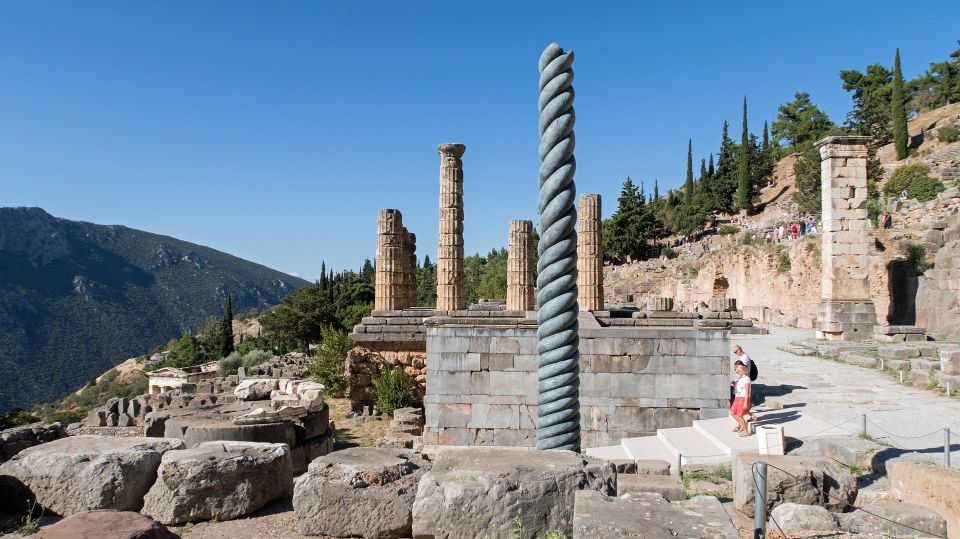
- Delphi’s oracle complex, including the idea of the Navel of the Earth and Apollo’s setting
- A tight route that links Mycenae, Olympia, and Delphi without you figuring logistics
A Spanish-language route that makes ancient sites feel logical
What makes this tour work is the language and the flow. Everything runs in Spanish, and the guide’s job is to translate the site into meaning, not just name-drop stones. When you’re standing in front of something fragmentary, it helps to hear why it mattered to people back then.
The best sign you’re in the right hands is what one guide did with the group’s attention. In my notes, one guide named Faneri is described as giving explanations that were both clear and fun to follow, with a constant thread through mythology, history, and everyday customs of the ancient Greek world. That’s exactly what you want: context that clicks while you still have your feet on the ground.
You’ll get headsets, too. That sounds small, but it changes everything on busy tours. It’s the difference between asking someone to repeat themselves and actually hearing the guide the first time.
You can also read our reviews of more guided tours in Athens

Day 1: Athens to Olympia via Corinth Canal, Mycenae, and Epidaurus theatre
You start in Athens and head toward Ancient Olympia, with a first-day string of stops that does a clever job: it gives you background before you reach the most famous “sports-invented-here” place in Greece.
Corinth Canal stop: a quick gear shift
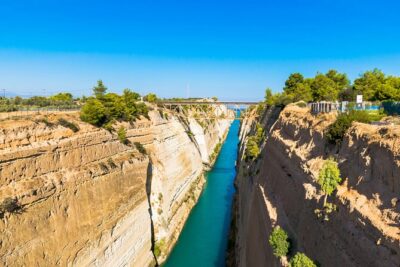
You make a stop at the Corinth Canal early in the day. Even if it’s not your main target, it’s a nice reset point. You get a break from the bus rhythm, stretch your legs, and start seeing the route as a journey rather than a checklist.
Argolis and Mycenae: archaeology plus a museum visit
From there, the tour goes into Argolis and takes you to Mycenae, including both the archaeological site and the museum. This pairing is practical. Ruins alone can feel like puzzle pieces. A museum visit helps you connect what you’re looking at with the bigger picture, so you can recognize themes instead of just counting walls and doorways.
If you like ancient history that feels grounded, this is where the tour starts earning its keep. You’re not just visiting names; you’re building a mental map.
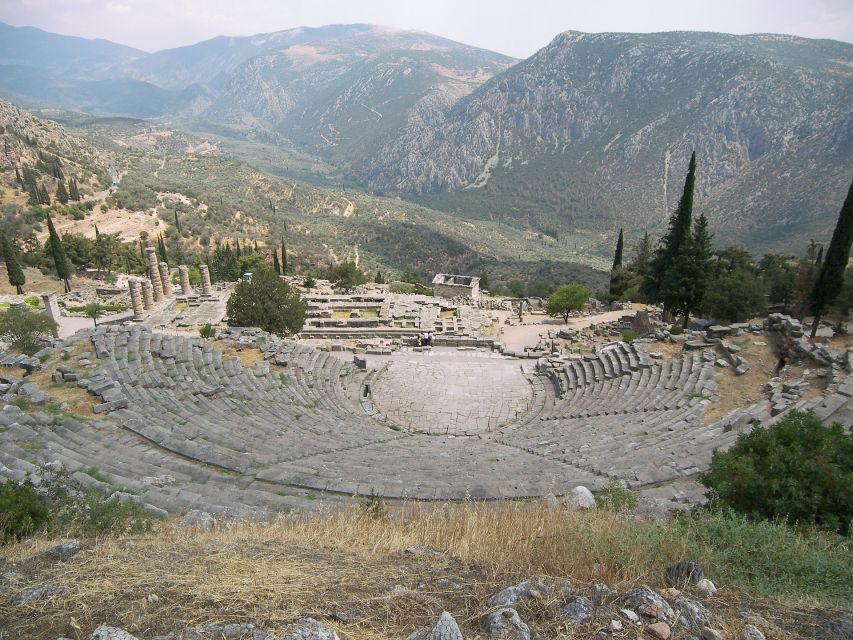
Epidaurus: the theatre acoustics moment
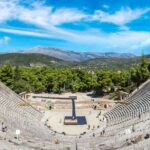
Then comes Epidaurus ancient theatre, one of the highlights for a very specific reason: the tour promises you’ll be enchanted by its acoustics. That’s a rare kind of sightseeing, because you get a sensory payoff. Even if you know nothing about Greek theatre, your brain registers the effect when you’re sitting in the space and hearing how it carries.
One practical tip: wear comfortable shoes. Epidaurus-style sites tend to ask for steady footing, and you’ll want your energy for the performance-space feeling, not for focusing on your next step.
After the Epidaurus stop, you travel onward to Olympia. Dinner and overnight are included, so you’re not forced into hunting for food after a long day.
You can also read our reviews of more tours and experiences in Athens



Day 2: Ancient Olympia museum and stadium, then bus to Delphi
The second day is built around the place where the Olympic Games story begins: Ancient Olympia. It’s not just “see the stadium.” You get the archaeological site and museum in the morning, which matters because it helps you understand what the stadium means inside the wider Olympia setting.
Start with the museum and site
In the morning, you check out and head to Ancient Olympia’s archaeological site and museum. This order helps you. You begin with explanations, then you walk into the space with better context. You’re more likely to notice details that would otherwise slip by.
The tour’s focus here is clear: the stadium is tied to where the Olympic Games were held and where the Games were born. Even if you’ve only heard the phrase “Olympic Games” in modern life, the connection becomes tangible when you’re standing in the ancient setting.
Optional lunch, then the road to Delphi
After Olympia, you have time for an optional lunch (not included). Then you leave Olympia and head by bus to Delphi for dinner and overnight.
This is a long day, but it’s also efficient. You keep your momentum without losing time to independent planning. If you’re the type who likes to see a lot but hates the stress of moving between towns, this day structure is a big advantage.
Evening reality check
Because dinner is included both nights, you don’t have to decide where to eat right away. That’s a simple form of value. You can spend the evening unwinding instead of turning your phone into a navigation tool.
Day 3: Delphi’s oracle world and the Navel of the Earth
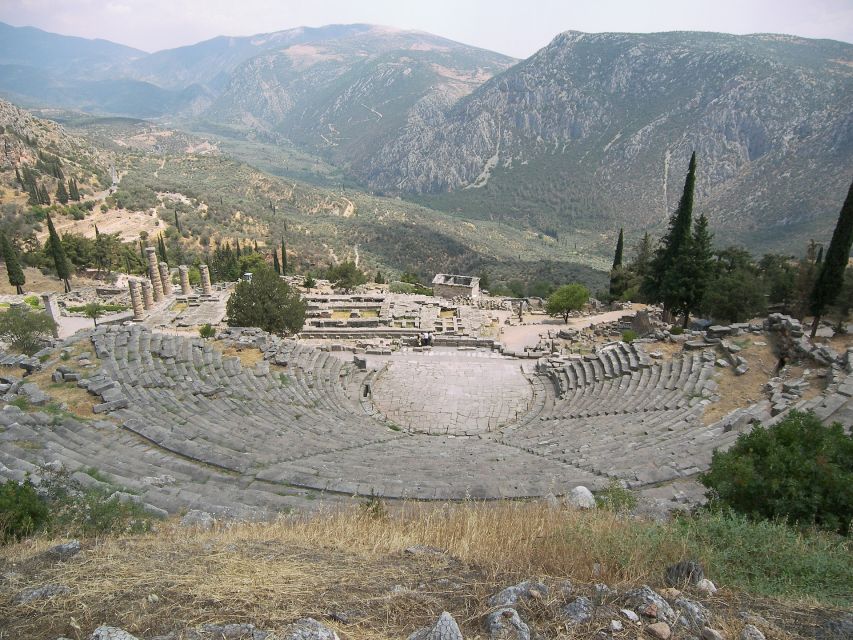
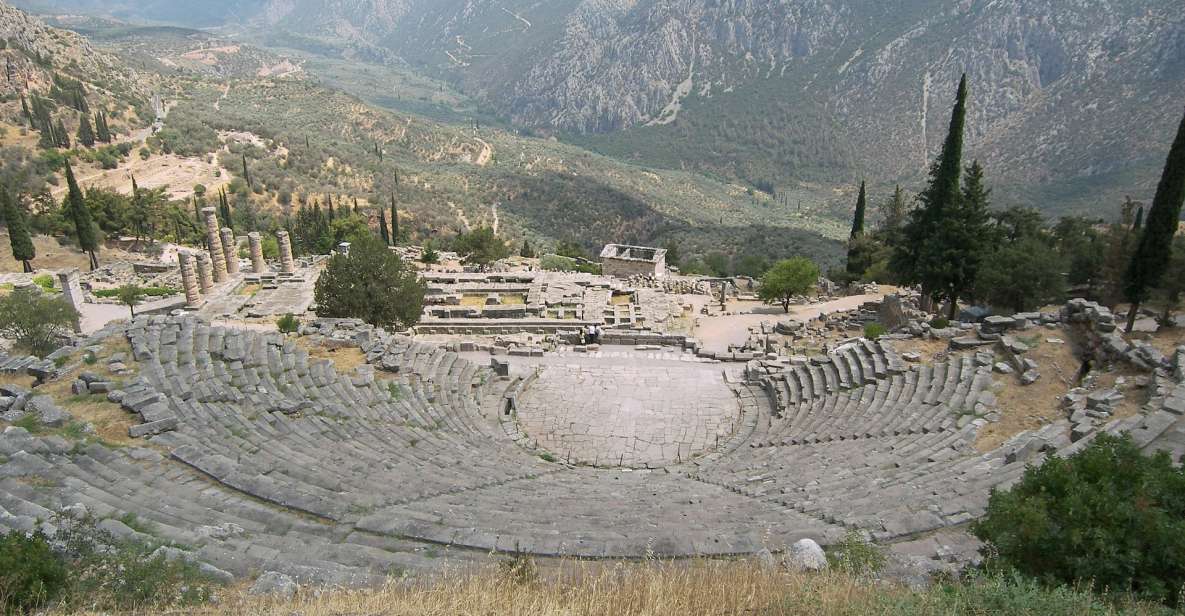
Day three is all about Delphi, and the tour leans hard into the spiritual and myth-world side of the site. You’ll start with breakfast, check out, then tour Delphi’s archaeological site and museum.
The Navel of the Earth: the spiritual centerpiece
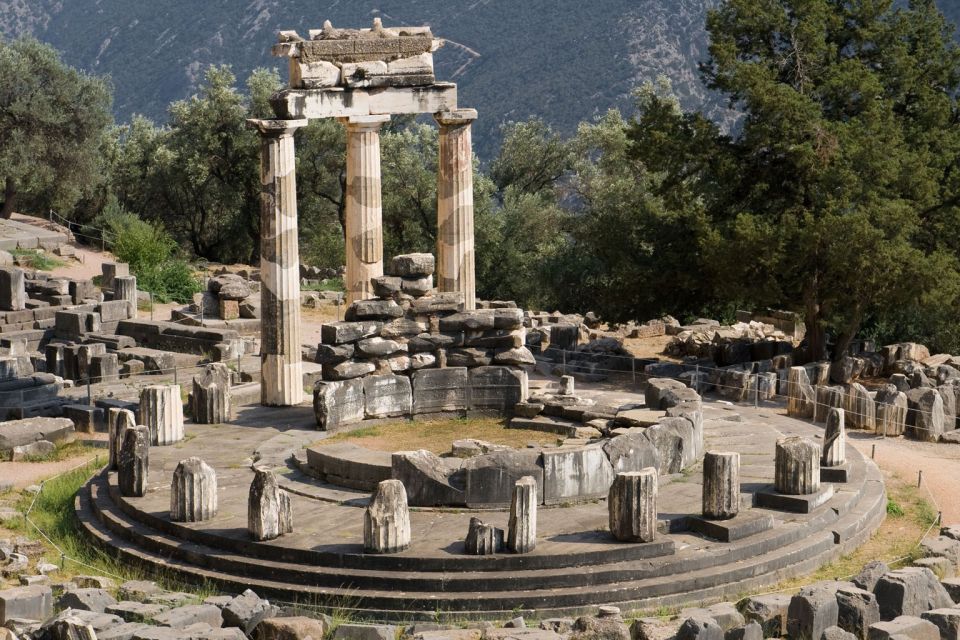
The itinerary specifically highlights the Navel of the Earth, described as a spiritual center for all ancient Greeks. Whether you treat it as literal belief or symbolic meaning, you’ll understand why Delphi was important enough to inspire journeys.
This is where the Spanish-language guiding style matters most. Delphi is layered. The meanings can be easy to miss if you’re only reading signs and rushing through. With headsets and live commentary, you’re more likely to leave with a “why this mattered” feeling instead of “what I saw.”
Apollo and Pythia: learning the oracle connection
The tour also focuses on the history of Delphi’s oracle, dedicated to the god Apollo and Pythia, the High-Priestess. That’s a very specific storyline, and it’s one of the reasons this route is attractive compared to generic sightseeing trips.
You get the setting, and then you get the idea behind the setting. That pairing makes the visit more than background scenery.
Optional traditional lunch, then back to Athens
After the tour, you can have an optional lunch in a traditional Greek tavern (also not included). Then you return to Athens, with about 2.5 hours of journey time.
If you’re sensitive to long travel days, plan for a low-key night in Athens afterward. Your brain will be full, and your feet will probably want to stop bargaining for extra steps.
Hotels, meals, and what you’re truly paying for
This isn’t a bare-bones “pay for buses and tickets” situation. Accommodation in 3 or 4 star hotels is included for the two nights, and both dinners and breakfasts are included.
That combination is a real quality-of-life factor. Ancient sites days can wear you down, and it’s nice not to solve meals from scratch every night. It also helps keep the itinerary on track, which you’ll feel when the days don’t unravel from “what time do we need to eat.”
That said, there are two costs you should treat as part of the plan:
- Lunch and drinks are not included. You’ll have optional lunch stops on day one, day two, and day three.
- Accommodation tax is paid on the spot at hotel reception. The amount depends on star rating and season, listed as:
- 3-star hotels: 4–5€ per room per night (April to October: 5€; November to December: 1.5€)
- 4-star hotels: 10€ per room per night (April to October: 10€; November to December: 3€)
If you budget with that in mind, you won’t feel surprised at check-in. And if you don’t like surprises, that’s basically the same thing as good travel planning.
One more small practical point: you get WiFi on board, which helps during bus rides, but don’t rely on it for heavy work. Think of it as a bonus, not an office.
Price and logistics: does $506 feel fair?
At $506 per person for a 3-day classical route, you’re paying for more than entry tickets. You’re also paying for:
- Hotel stays (3 or 4 star category)
- Two dinners and two breakfasts
- Entrance fees to the sites and museums
- Professional guides exclusively in Spanish
- Headsets
- Luxury A/C coach transportation
- Skip-the-line access
When you look at it this way, the price starts to make sense. A lot of tours either include the sites or include comfort. This one tries to include both. The big question is whether Spanish-only guiding is a fit for you. If you’re comfortable in Spanish or you’re learning and want immersion, you’ll probably enjoy the structure. If you only want English commentary, you might feel “stuck” with what you can follow.
Also, your time is being protected. The route links Peloponnese-era anchors (Mycenae, Epidaurus) with Olympia and Delphi without you coordinating trains, rental cars, or multiple day tours. That’s often what you’re really paying for: less friction, more time inside the sites.
Who this tour fits best (and who should think twice)
This is a great fit if you:
- Want a guided historical story rather than independent wandering
- Prefer guided listening with headsets
- Like big “core sites” in Greece: Olympia, Delphi, and major Peloponnese stops
- Enjoy mythology and cultural context alongside ruins
You might think twice if you:
- Need wheelchair-friendly access. This tour isn’t suitable for mobility impairments or wheelchair users.
- Don’t like early, structured days. Ancient sites demand walking and attention, even when transportation is comfortable.
It’s also a nice choice if you’re traveling in a group and want a shared learning experience. You’ll be moving together through museums and archaeological areas, which tends to make the stories stick.
How to prep so the days feel easy
The tour gives basic guidance, and I’d add a few practical moves of my own based on how ancient sites behave:
- Bring comfortable shoes. You’ll thank yourself at Epidaurus and at the Delphi site.
- Bring a passport or ID card.
- Bring a hat, especially if the weather is warm.
- Pack a small water bottle if you tolerate optional lunch gaps. Lunch is not included, so you’ll want to stay comfortable between stops.
You’ll meet the group at the Melina Mercouri monument, with the closest metro station listed as Acropolis. Getting there early helps your whole start day feel calm.
Should you book this 3-day Classical Spanish tour of Peloponnese and Delphi?
Yes, if your priority is guided ancient Greece with Spanish-speaking experts and a route that takes you from Mycenae and Epidaurus to Olympia and then Delphi without the hassle of building the plan yourself. The combination of headsets, skip-the-line access, and included meals plus hotel nights makes it easier to focus on the sites instead of logistics.
But don’t book on autopilot if you need accessibility accommodations or if lunch and extra on-the-spot hotel fees will feel like a problem. Add those costs to your budget, and you’ll feel confident instead of reactive.
FAQ
What language are the guides?
The professional guides are exclusively Spanish, and the tour uses headsets so you can hear the guide clearly.
Are hotel stays included?
Yes. You’ll have hotel accommodation in 3 or 4 star hotels for two nights, with dinner and breakfast included.
Is lunch included during the tour?
No. Lunch and drinks are not included. You’ll have optional lunch opportunities during the days.
Do I need to pay anything at the hotel?
Yes. Accommodation tax is not included and must be paid on the spot at the hotel reception. The amount depends on 3-star vs 4-star and the season.
What sites are included?
The tour includes visits to Mycenae (archaeological site and museum), Epidaurus ancient theatre, Ancient Olympia (archaeological site and museum plus the stadium area), and Delphi (archaeological site and museum, including the Navel of the Earth and the oracle history).
Is transportation included?
Yes. You’ll travel using luxury A/C coaches with WiFi on board.
Is this tour suitable for wheelchair users or mobility impairments?
No. It is not suitable for people with mobility impairments or wheelchair users.
You Might Also Enjoy
More Guided Tours in Athens
More Tours in Athens
More Tour Reviews in Athens
- All Day Cruise -3 Islands to Agistri,Moni, Aegina with lunch and drinks included
★ 5.0 · 4,958 reviews