REVIEW · ATHENS
27 Day Grand Circle Tour of Mainland & Corfu, Mykonos, Santorini
Book on Viator →Operated by Private Tours Greece · Bookable on Viator
Greece, fully loaded with history and beaches. What makes this trip feel special is the focus on UNESCO archaeological sites plus the smooth jump from the mainland to Corfu and the Aegean islands. My main note: many important site entries aren’t included, and the schedule is full, so you’ll want energy for long days and early starts.
I like the “no-fuss” logistics: private door-to-door transfers, a private car, and an English-speaking driver handling the driving while you concentrate on sights. With 26 nights of breakfast included, you’re not rebuilding your day every morning. You also get a mobile program (and WhatsApp is recommended), which helps when you’re moving across ferries and islands.
This is a private, group-only experience, built for people who want to see a lot without renting cars or stitching together multiple tours. If you want beach time plus major archaeology, this matches that mood well.
In This Review
- Key highlights worth your attention
- Why the 27-Day Grand Circle feels different from a normal Greece trip
- Entering Athens: Agora, Acropolis, and the city’s big monuments
- The National Archaeological Museum and Cape Sounio: Athens beyond the postcard
- Corinth to Nafplio: mixing ancient stops with real places to wander
- Mycenae, Tiryns, Epidaurus, and Nemea: UNESCO in an efficient chain
- Sparta to Mystras to Diros Caves: kings, monasteries, and underground mystery
- Olympia and the Peloponnese wine-and-honey rhythm
- Ioannina and Corfu: Byzantine fortresses, Venetian islands, and a big culture switch
- Corfu Town UNESCO + Achilleion: the island’s best mix of art and walking
- Paleokastritsa, Kanoni, and Mouse Island: bays that actually justify time
- Vergina and Thessaloniki: Macedonian tomb drama and Byzantine landmarks
- Meteora sunset rocks and Delphi’s oracle stops: the trip’s emotional climax
- From Athens to Mykonos to Delos: island time that still respects archaeology
- Santorini with Oia sunset and an optional hot-springs cruise
- Price and logistics: where the value really sits
- Choosing your best match: who this tour fits
- The human factor: drivers and guidance that make the days easier
- Should you book this Grand Circle tour?
- FAQ
- What’s the duration and starting point?
- What’s included in the price?
- Are admission tickets included for major sites?
- Does the tour include ferries between the islands?
- How are accommodations arranged?
- What’s the cancellation timeline?
Key highlights worth your attention
- UNESCO-heavy routing across Athens, Peloponnese, Epirus, Macedonia, and the Cyclades
- Private car + English-speaking driver for mainland and Corfu, so navigation stress stays low
- Ferries included for the Piraeus–Mykonos–Santorini–Piraeus loop plus Corfu connections
- Athens guided sightseeing with licensed guides (with Sounio noted as an exception)
- Meteora sunset tour included, one of the best “timed for photos” moments in Greece
- Food stops built in, including honey, olive oil, and wine tastings at Olympia
Why the 27-Day Grand Circle feels different from a normal Greece trip
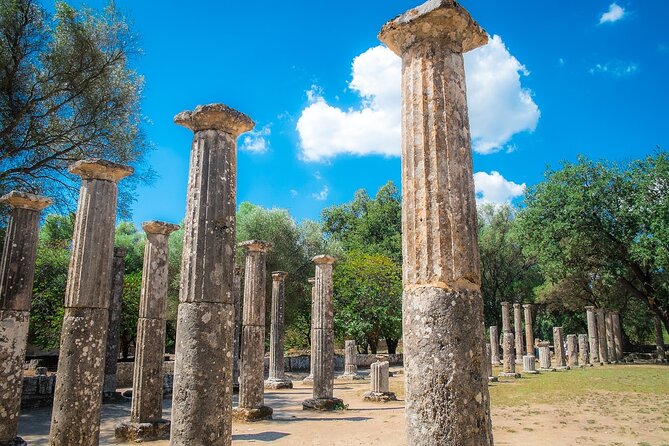
Most Greece plans bucket the country into one or two regions. This one keeps stretching the map, so you don’t just tick off Athens and islands—you get layers. You start with the classics in Athens, then swing through Peloponnese UNESCO sites, head north through Epirus and Macedonia, and finish with Mykonos and Santorini.
The payoff is scale with structure. You’re still moving day to day, but transfers and ferry legs are handled. That’s big, because getting between mainland regions and islands is where time and energy usually vanish.
You can also read our reviews of more tours and experiences in Athens.

Entering Athens: Agora, Acropolis, and the city’s big monuments
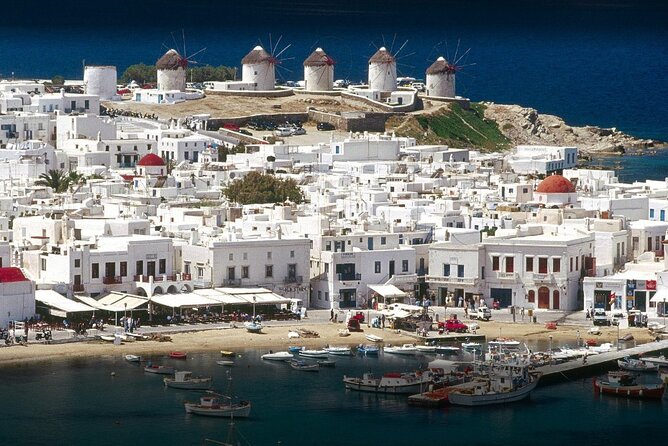
Athens works best in two passes: the “everyday civic life” areas first, then the “wow, that’s why people come” heights. That’s how this trip approaches it.
On Day 2, you visit the Ancient Agora of Athens, including the Temple of Hephaestus and the Stoa of Attalos, then you also get the Museum of the Ancient Agora and the Roman Agora landmarks. You finish with a smart Athens sightseeing loop: Panathenaic Stadium, Parliament and the Changing of the Guards, plus viewpoints like Mount Lycabettus area stops. It’s a lot, but it’s also practical—you see how the city’s present-day streets line up with the ancient grid.
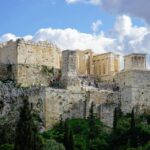
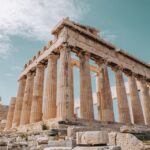
Day 3 is the heavyweight: the Acropolis with stops across Propylaia, the Theater of Dionysus, Temple of Athena Nike, the Erechtheion with the Caryatids, and more. After that, you continue to the Acropolis Museum, which helps you place sculptures and fragments in context. One reason this section feels satisfying is that it avoids the common mistake of staring at ruins without seeing what’s been preserved inside.
The National Archaeological Museum and Cape Sounio: Athens beyond the postcard
If you only do Acropolis, you miss Athens’ depth. The National Archaeological Museum gives you that missing context with sculptures, pottery, jewelry, and artifacts spanning multiple periods of Greek civilization. It’s not just one style of Greek art—it’s a timeline you can walk through, which helps the later sites land better.
Then comes Cape Sounio and the Temple of Poseidon. Even when you’ve seen photos, seeing that temple on its cliffs is a different feeling. It’s a great “Aegean light” break after days of crowds and stone. The views matter here, and it’s the kind of stop where you’ll want to slow down for photos and just watch the sea.
Corinth to Nafplio: mixing ancient stops with real places to wander
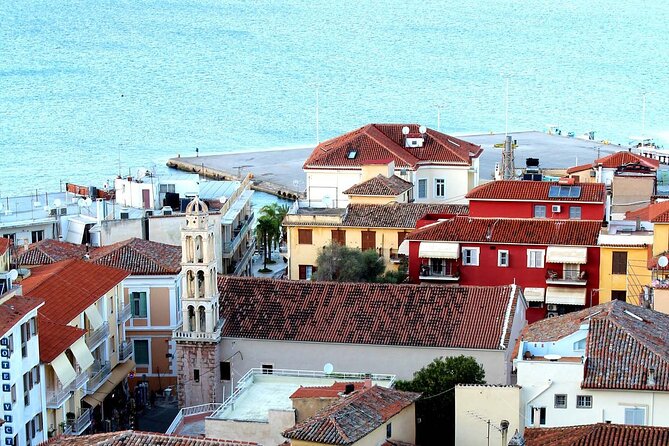
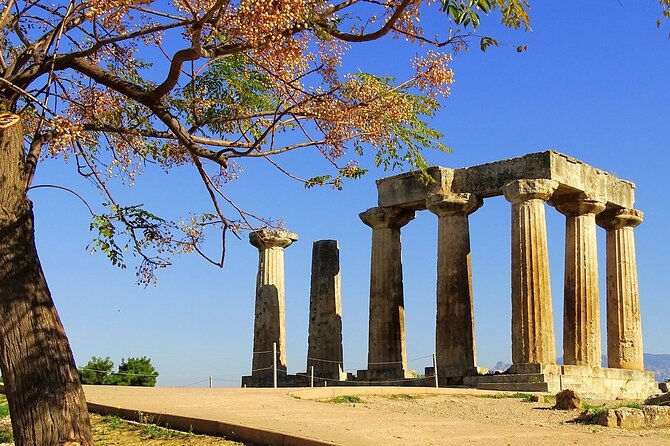
You’ll feel the trip shift from big-city Athens into road-trip Greece. Ancient Corinth gets paired with a stop at the Canal of Corinth, then you move into the ancient site area (including Temple of Apollo ruins) and the Corinth Museum. There’s also the Biblical path of Apostle Paul included in the plan, which adds a different layer if that’s meaningful to you.
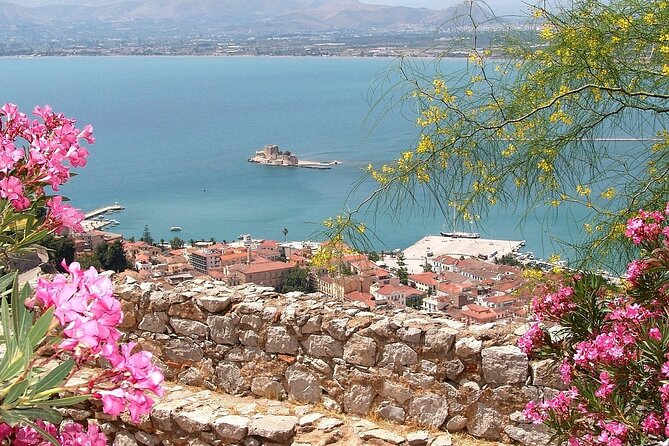
From there you head toward the Peloponnese rhythm: Nafplio is where the trip turns from pure archaeology into charming walking. You explore old town areas like Syntagma Square and the three Admiral’s squares, and you add viewpoint and fortress time with the Akronafplia Castle and Bourtzi. You also stop at Palamadi Castle, and there’s a Karoni’s Distillery Museum stop with ouzo sampling. That’s not filler—it’s how you keep the travel from feeling like a checklist.
Mycenae, Tiryns, Epidaurus, and Nemea: UNESCO in an efficient chain
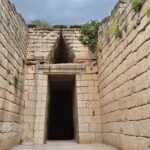
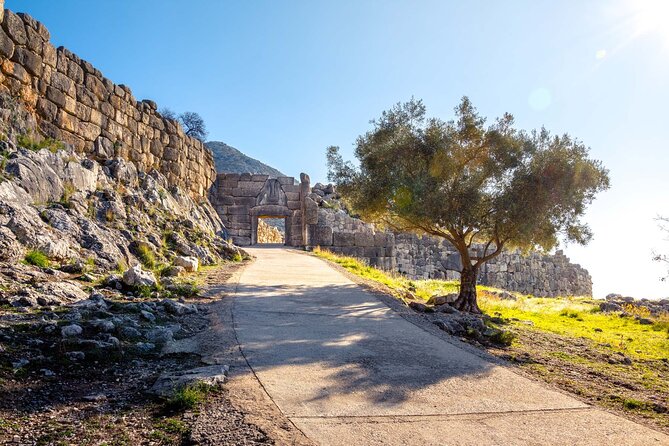
This is one of the strongest “all-killer” sections. Mycenae hits the major story points—Grave Circle A, Lions Gate, Royal Tombs, Cyclopean walls, the Treasury of Atreus, and the Tomb of Clytemnestra. You’re not just looking at stones; you’re seeing the parts that explain power, tomb culture, and building scale.
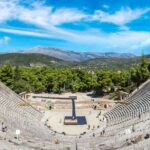
Tiryns follows as a UNESCO stop, then the schedule adds Epidaurus with the Sanctuary of Asclepios and the Great Ancient Theatre. The theatre stop is a big deal for many people because it’s one of the clearest examples of how ancient entertainment and religion intertwined. If you care about how these sites were actually used, it’s a rewarding day.
Then there’s Nemea, including a cooperative winery visit where you sample Nemea wines. The wine part is short, but it changes the mood. You’re still in the same region of the map, but the day ends with something that feels living rather than purely archaeological.

Sparta to Mystras to Diros Caves: kings, monasteries, and underground mystery
Sparta isn’t just a name on a history lesson. You visit Sparta archaeological sites including the Acropolis, Temple of Athena, Ancient Theatre, and you get stops for the Statue of Leonidas and the Museum of Olive Oil. That olive oil museum matters more than it sounds—Sparta’s story is tied to agriculture and daily life as much as warfare.
Then you head to Mystras, a UNESCO site. Mystras is where Greece starts feeling like a vertical city of stone history—chapels and monasteries packed into a dramatic setting. You’ll see Peribleptos Monastery, Pantanassa Monastery, Despot’s Palace, and the Chapel of St. Demetrios. Even if you don’t know the Byzantine detail, the place communicates power and faith through architecture alone.
Diros Caves add a totally different kind of wonder. You go underground by small boats and through narrow passages with formations of stalagmites and stalactites. It’s dark, cool, and very different from everything else on the trip—exactly the kind of contrast that keeps a long vacation from turning monotonous.
Olympia and the Peloponnese wine-and-honey rhythm
Olympia is one of those places where you can feel why the ancient Greeks cared about sport. You visit the archaeological site with the Ancient Olympic Stadium UNESCO connection, plus the Olympia museum areas. The plan also includes the Coubertin Monument and the Museum of Olympic Games, which bridges ancient sport to the modern revival idea.
After that, the day adds tastings and local stops that make Olympia less sterile. There’s an Achaia Claus Winery visit in Patras, then a market time at the Market of Ancient Olympia with free wine and olive oil tasting. You also visit Klio’s Honey Farm, where you have coffee/juice and handmade desserts made with honey produced there. This is one of the best “slow down and taste” parts of the tour, and it’s included.
If you like souvenirs, this is also where they tend to be most meaningful: olive oil, honey, and small food items you can actually use at home.
Ioannina and Corfu: Byzantine fortresses, Venetian islands, and a big culture switch
After Olympia and the bridge crossing (including Rion–Antirion), the trip shifts into northern Greece. Naupactus gives you a seaside break with the Venetian Castle and port areas. Then you move to Dodoni, the oracle sanctuary of Zeus and Dionysus, and you add Perama caves—an underground riverbed system described as around 1,500,000 years old. That scale-in-geology stop is memorable.
Ioannina is where Epirus starts to feel lived in. You walk around the fortified old town and visit the castle, described as the oldest Byzantine fortress in Greece. You also get a look at the Ottoman Mosque of Ali Pasha, plus the house Matei Hussein. Lake Pamvotida’s small island of Ali Pasha is accessible by boat, and you can build in time for local flavors—frog’s legs and pastries like sker bourek (sugar pie) are mentioned in the plan, along with baklava and syrup pastries.
Then you switch worlds: you take a late car ferry to Corfu and check in to your hotel. Corfu has a different architectural language than the mainland. It’s Venetian in tone, Ionian in pace, and it makes the trip feel like more than just history sightseeing.
Corfu Town UNESCO + Achilleion: the island’s best mix of art and walking
Corfu’s touring day includes major landmarks without only chasing views. Achilleion Palace comes first, tied to Empress Elisabeth of Austria, later purchased by Kaiser William II of Germany. Then you visit Mon Repos Palace, which is smaller but noted for its colonial architectural elements.
You also get the Old Fortress remains and time in Corfu Old Town, which is UNESCO. You’ll pass by the Palace of St. Michael and St. George, the Sterna Music Pavilion, the Monument of the Union of the Ionian Islands, the Ionian Academy, and the Schulenburg statue. The tour finishes with a stop at the historical church of Saint Spyridon (built 1456). This is a strong “island history in one day” list.
A great trick with Corfu Town is to keep your pacing flexible. After the guided portion, you’ll want a coffee break and time to wander the streets and squares on your own. Places like Liston square are perfect for that reset moment.
Paleokastritsa, Kanoni, and Mouse Island: bays that actually justify time
After Corfu Town, the trip gets more scenic. You head to Palaiokastritsa, described as a famous bay often compared to the Capri of Greece. Then you stop at Lakones to reach Kanoni and the Church of Panagia Vlacherna, plus Mouse Island. There’s also mention of a 14th-century Venetian fortress and Espianade square, once used as drilling grounds for Napoleon Bonaparte’s soldiers.
This day is built for photos and short walks rather than long museum time. If you like water views, it delivers. If you prefer indoor stops, you’ll still appreciate how the coastline and viewpoints help you understand why people fall for Corfu.
Vergina and Thessaloniki: Macedonian tomb drama and Byzantine landmarks
Leaving Corfu brings another leap. You ferry back to Igoumenitsa, then you visit Vergina (ancient Aigai) and its Great Tumulus museum experience. The museum includes the royal tombs, and it’s highlighted with the tomb of King Philip II, Alexander’s father.
Nearby Veroia adds a calmer, faith-and-community angle. You visit Saint Paul’s Bema and stroll through the old Jewish neighborhood and colorful market area. Then you reach Thessaloniki for an overnight.
In Thessaloniki, you get a big concentration of major sights: the Arch of Galerius and its ramparts feel Roman, Rotunda is monumental, and you visit the Basilica of St. Demetrius with its underground crypt. You also see the Acheiropoietos Church and the Church of Agia Sofia, plus the Museum of Byzantine culture and the White Tower for photos. This is a “city in layers” day, and it helps you connect Macedonian-era stories to later Byzantine culture.
Meteora sunset rocks and Delphi’s oracle stops: the trip’s emotional climax
The route then pushes into central Greece. You head to the Archaeological Park of Dion first, described as sacred city of the Macedonians at the foot of Mount Olympus. It sets up the myth-and-history mood before the next big visual punch.
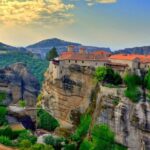
Then comes Meteora, including a sunset tour timed around the rocks. You visit the Holy Monastery of Great Meteoro (the biggest and oldest one on the list) and also the monastery of St. Stephan. Even in a short window, Meteora tends to reframe your trip. The rocks make everything feel monumental, and sunset helps because the light turns stone into something you can’t fake with photos.
After Meteora, you drive to Delphi for overnight, then the next day focuses on Delphi’s oracle sanctuary. You visit the Ancient Oracle, stadium, Ancient Theatre (over 5,000 capacity mentioned), and the Delphi Museum. You then get time for Arachova, a traditional winter village, for coffee or lunch. That pairing helps because Delphi is intense, and Arachova gives you a softer landing.
You also add a short stop at Thermopylae with the Leonidas statue before returning to Athens for overnight.
From Athens to Mykonos to Delos: island time that still respects archaeology
Once you reach Piraeus, the trip turns fully to island hopping. You take the ferry to Mykonos and check in, then you get a free day and a suggested approach: Little Venice strolls and walking through the narrow streets around “matogiania.” It’s also framed as an island of wind, beaches, and nightlife, so this part works best if you want some downtime and some atmosphere.
The next day is where Mykonos becomes more than a party base. There’s an optional extra-cost Delos visit with an on-the-water schedule: transfer to the port, boat trip, then about 1.5 hours of exploration at Delos (a UNESCO site). It’s described as the mythical birthplace of Apollo and Artemis, and you explore ruins including temples and mosaics. Then you return to the boat for a BBQ lunch and sail to Rhenia for swim and snorkel time, with the plan listing time on Rhenia beach.
This is a smart structure. You get an archaeological anchor, then you get a real break in the sea.
Santorini with Oia sunset and an optional hot-springs cruise
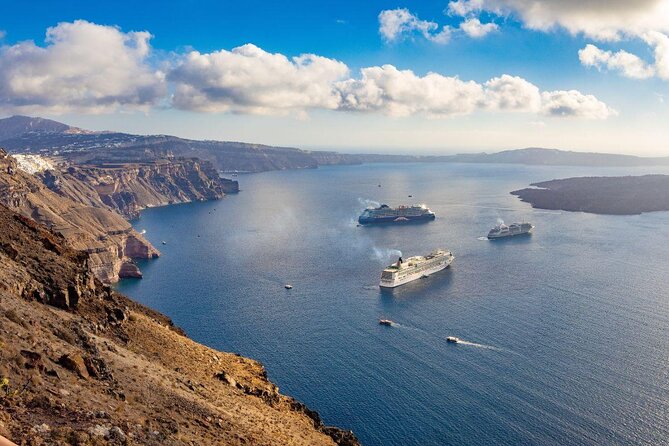
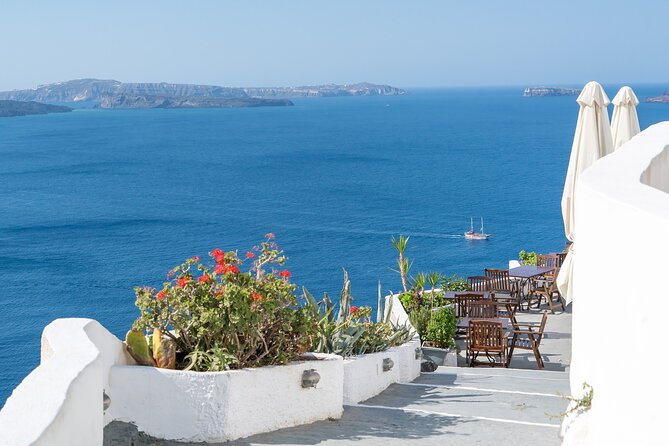
Then it’s Santorini time. You transfer from Mykonos by boat and focus first on the famous Oia sunset. The plan includes time after the sunset for a drink or dinner and walking the narrow streets with shopping for souvenirs.
If you want the full Santorini water-and-volcano experience, there’s an optional cruise with stops at Palea Kameni hot springs for a swim, plus Aspronisi and the Ancient Lighthouse views. The cruise also mentions Akrotiri and Indian Rock, then time at Red Beach volcanic sand and White Beach (reachable only by boat). You finish with an onboard BBQ buffet and another sunset view in Oia as the caldera and village shift colors.
Even if you skip the optional cruise, the Oia sunset stop is the one you’ll hear about for a reason. It’s a timed moment; it makes sense to plan around it.
Price and logistics: where the value really sits
At $15,621.11 per person for a 27-day private-style program, this isn’t a budget tour. The value, instead, is in what you don’t have to manage.
You get private transportation by car in mainland and Corfu with an English-speaking driver, plus private transfer from and to airport/hotel/port areas. You also get ferry tickets (Piraeus/Mykonos/Santorini/Piraeus and the Corfu ferry leg). On top of that, driver expenses are handled, and breakfasts are included for 26 mornings.
Where you may still spend extra is admissions and meals. Many listed sites note admission tickets are not included, and “meals and personal expenses” aren’t included either. Hotel city tax is paid at the hotel, and optional cruises are also optional in cost. If you’re a person who hates surprise costs, budget carefully for entrances and daily lunch/dinner.
Room setup is also worth knowing. The program uses double-sharing for 2 people, triple-sharing for 3 people, and 1 person in a private single room. City taxes are separate, so if you’re comparing total cost with another trip, that’s part of the picture.
Choosing your best match: who this tour fits
This tour is a great fit if you want a single trip that connects major archaeological sites with island scenery. It’s also ideal if you don’t want to rent cars or handle long-distance ferry planning yourself.
It’s not the best fit if you want a slow, flexible pace with long independent mornings. The days are structured, and even good folks can feel the density.
One practical note from the operator’s guidance: for November to March, they strongly recommend replacing Mykonos with Crete. If you’re traveling in those months, ask about that swap early so your island plan matches the season.
The human factor: drivers and guidance that make the days easier
Good logistics are only half the game; the other half is the person driving and coordinating. In past trip writeups tied to this style of private touring, Spiros Theodoleros is called out as an excellent driver for long and comprehensive days, with strong organization that makes key places feel easier to reach. Another experience shared a memorable guide named Spyros for the Delphi and Meteora portion, highlighting helpful, friendly guidance during intense sightseeing days.
The point for you: this trip works best when you trust the coordination. If you can, you should ask the company which driver you’re paired with and note any preferences for timing, photo stops, or pace.
Should you book this Grand Circle tour?
Book it if you want to see Greece as a chain of places—Athens to Peloponnese to the north, then Mykonos and Santorini—without piecing together transport. You’ll like it most if you enjoy both archaeology and scenery and you’re comfortable with a packed schedule.
Skip or rethink if you’re mostly after relaxed island days with minimal museums and fewer transfers. Also, plan on spending extra on admissions and meals, because many of the major sites list tickets as not included.
If you’re the type who hates logistics and loves having a plan that still leaves you pockets of time (like Arachova breaks, Corfu Town wandering, and the free time after Thessaloniki), this is the kind of trip that delivers.
FAQ
What’s the duration and starting point?
It runs for about 27 days and starts with meet-and-assist at Athens International Airport, with transfers onward to your hotel or other stops.
What’s included in the price?
You get private car transportation with an English-speaking driver in mainland and Corfu, private transfers to and from airport/hotel/port, 26 nights of accommodation with breakfast, ferry tickets for the listed routes, and some tastings and tours (including honey, olive oil and wine tasting at Olympia, plus a Meteora sunset tour). The program also includes driver expenses.
Are admission tickets included for major sites?
Not generally. Many site visits note admission tickets are not included. The plan specifically includes items like the honey farm experience, while other major archaeological sites typically require their own entries.
Does the tour include ferries between the islands?
Yes. Ferry tickets are included for Piraeus–Mykonos–Santorini–Piraeus, plus the Corfu ferry connection described from Igoumenitsa.
How are accommodations arranged?
The trip includes 26 nights. Room sharing is described as double-sharing for 2 people, triple-sharing for 3 people, and 1 person in a private single room. Hotel city tax is paid at the hotel.
What’s the cancellation timeline?
You can cancel up to 6 days in advance for a full refund. Cancel 2–6 days before for a 50% refund, and if you cancel less than 2 days before, there’s no refund.
You Might Also Enjoy

More Tours in Athens

More Tour Reviews in Athens
- All Day Cruise -3 Islands to Agistri,Moni, Aegina with lunch and drinks included
★ 5.0 · 4,958 reviews