REVIEW · ATHENS
Unexpected Athens Orientation Tour
Book on GetYourGuide →Operated by Alternative Athens · Bookable on GetYourGuide
Athens changes if you walk it differently. This orientation walk stitches together 3,400 years of stories, from Ottoman neighborhoods to 19th-century royal and industrial landmarks, and it’s guided with real control of the pace by people like Andreas and Simos. I also love that you get a simple city map showing the transformations across 2,500 years, so the big ideas click fast. One note: the WWII prison visit is closed Mondays and Tuesdays, so plan accordingly.
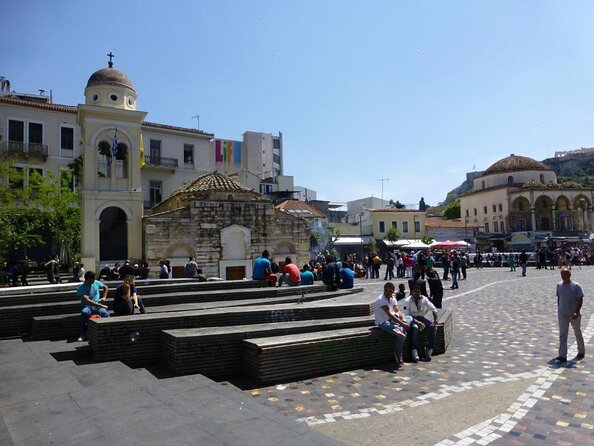
You’ll see major civic buildings too, not just old ruins—things like the Parliament area and the Academy/University/National Library zone—explained in plain terms, with why they matter to Athens as a European capital. And you end right where you’ll want to keep wandering, Monastiraki Square.
If you hate walking, this won’t be your cup of coffee. You’ll cover a lot of ground on comfy shoes, and the tour is structured as a guided stroll through multiple neighborhoods rather than long museum-style stops.
In This Review
- Key highlights at a glance
- Walking Athens’ East-West Story, One Neighborhood at a Time
- Start at Syntagma Square or Kolonaki (They’re Different Vibes)
- Exarcheia: A Corner of Athens With Its Own Personality
- Psiri and Monastiraki: Where the Old City Still Shows Through
- Parliament, the Academy, the University, and the National Library
- 19th-Century Athens: Industrial-Era Landmarks and Royal Power
- Ottoman Footprints and the City’s Missing Link
- Omonia, Kotzia, and Central Markets: Orientation With Real Life
- The WWII Prison Stop: Powerful, but Check Your Day
- Finishing in Monastiraki: Now You Can Walk Like a Local
- Price and Value: Is $62 Worth Four Hours?
- Who This Tour Fits Best
- Should You Book Unexpected Athens Orientation?
- FAQ
- How long is the Unexpected Athens Orientation tour?
- Where does the tour start?
- When and where does the tour end?
- What languages are offered?
- Are food and drinks included?
- Is the WWII prison visit always available?
- What should I bring?
Key highlights at a glance
- Two start options: Syntagma Square or Kolonaki, then a finish in Monastiraki
- 19th-century Athens: industrial-revolution sites plus royal-palace era landmarks
- Ottoman neighborhood walk through areas like Psiri and Monastiraki
- Major institutions: Parliament, Academy, University, and the National Library area
- WWII prison stop with a clear heads-up for Mon/Tue closures
- Included map tracing changes across 2,500 years
Walking Athens’ East-West Story, One Neighborhood at a Time
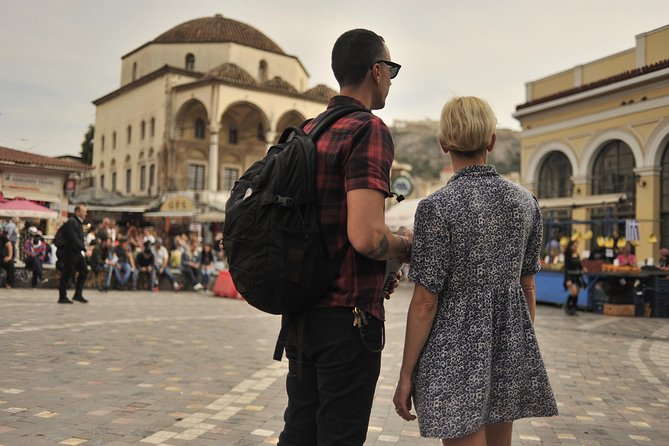
This tour works because it treats Athens like a living patchwork. You get the ancient layer, yes—but the whole point is how Greece’s city shape and street life were reworked through contact with East and West. You’ll move through squares, civic buildings, and old districts, learning what’s “still there” and what was rebuilt, repurposed, or traded in for new identities.
Two parts consistently impress: the way the guide keeps the pace and the range of what you see in only four hours. Guides named in past bookings—Andreas, Simos, Antigoni, Christina—are repeatedly described as attentive, clear, and organized. That matters. Athens is big, and you can easily get lost in the visuals. Here, you get a route with context, so the city stops feeling like random architecture and starts feeling like a story you can follow.
The other reason it’s a win is the included map. You don’t just hear about “ancient vs modern.” You get a visual reminder of how the city changes over time, across centuries that normally feel disconnected.
You can also read our reviews of more tours and experiences in Athens.



Start at Syntagma Square or Kolonaki (They’re Different Vibes)
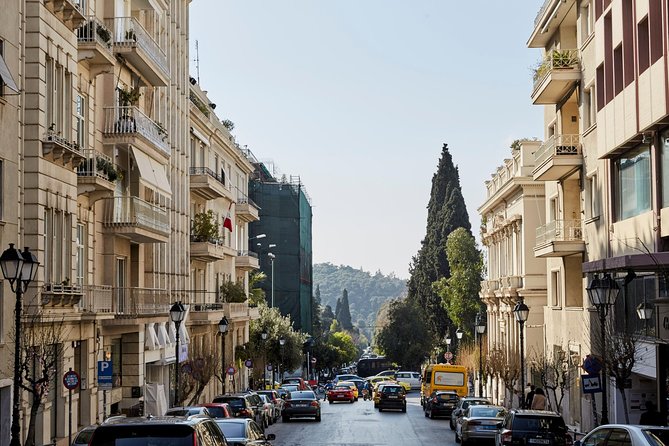
You’ve got two starting points, and that changes the feel of the first hour.
If you start at Syntagma Square, you’re stepping into central Athens right away, with the kind of energy that makes the city feel like a capital. It’s a strong choice if you like jumping into the action and orienting yourself fast.
If you start in Kolonaki, you begin in a more upscale, more “European city” mood. It can be a nice way to see how Athens frames itself to the outside world—before you head into the older neighborhood textures later.
Either way, the tour guides you through a chain of neighborhoods and landmarks, ending at Monastiraki Square. So think of the start as your preface, not your whole book.
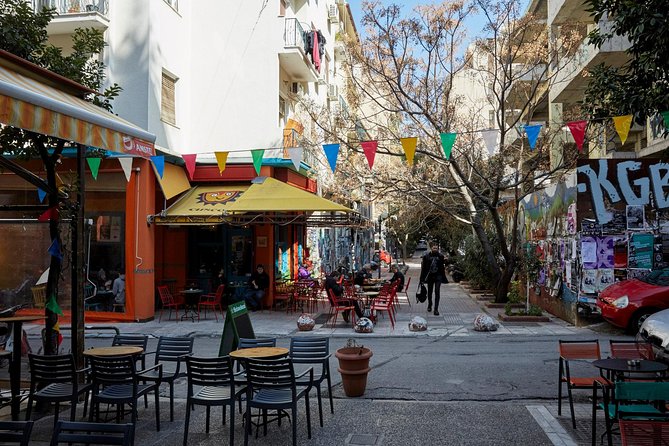
Exarcheia: A Corner of Athens With Its Own Personality
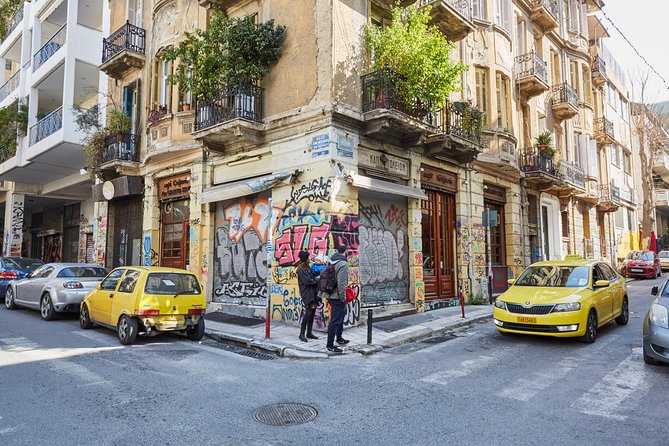
One of the guided stops centers on Exarcheia. This isn’t just a dot on the map—it’s a neighborhood that helps explain how modern Athens thinks, not only how it looks. You’ll walk with a guide who connects place to history, so the streets make sense instead of feeling like an “area you pass through.”
Why I like this part: it gives you a break from the tourist script. Athens isn’t only marble columns and postcard views. Exarcheia helps you understand the city’s more everyday side—how culture lives between institutions, markets, and street-level life.
If you’re the type who likes to photograph people and storefronts as much as buildings, this stop will likely feel like a payoff.
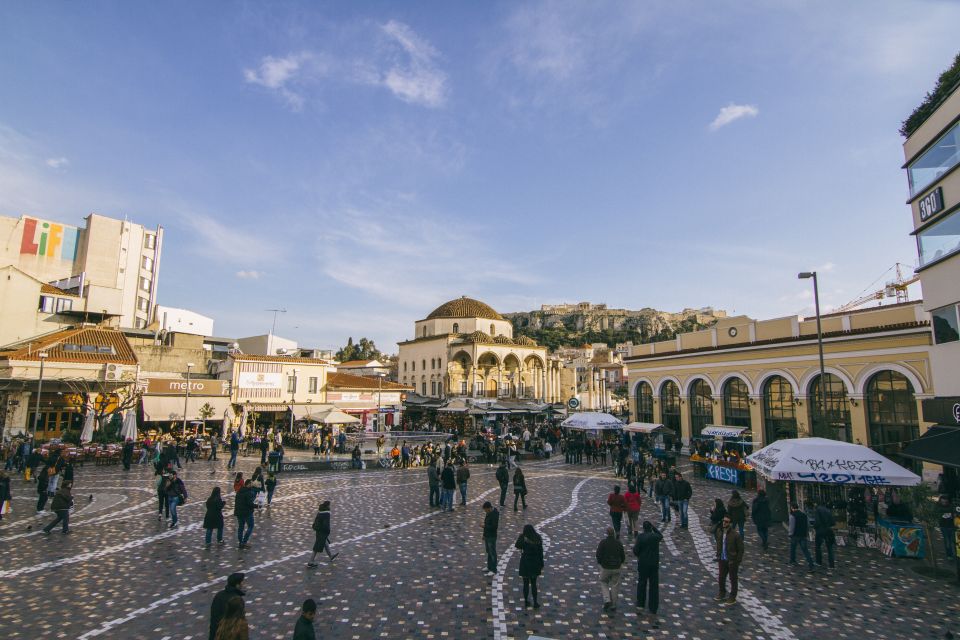
Psiri and Monastiraki: Where the Old City Still Shows Through
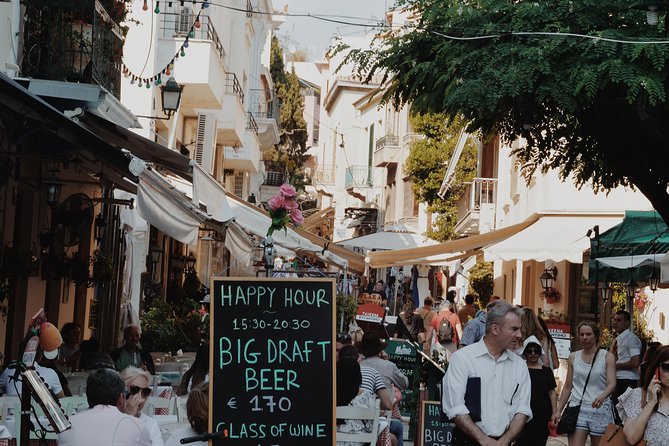
Psiri and Monastiraki are where the tour really leans into Athens as a layered street town. You’ll walk preserved neighborhood sections where Ottoman influence is still visible, which is key to understanding that Athens wasn’t just one story moving forward. It absorbed and mixed ideas—and sometimes resisted them—long before modern Europe arrived in full force.
In practical terms, this is where you get to see the city’s “texture”: street width, the feel of small blocks, and the way neighborhoods cluster around daily life. You’ll also pass through major public spaces like Omonia Square and Kotzia Square, plus the general area of central markets.
And you’ll likely leave with a better sense of direction. Monastiraki is one of those places where everything is close, but it’s easy to wander in circles without context. A guided walk helps you learn the rhythm.
Parliament, the Academy, the University, and the National Library
At some point, the tour shifts into landmark civic architecture—exactly the kind of “why this building matters” Athens can struggle to explain if you’re doing it alone.
Expect to see the Parliament area and the institutional cluster connected to the Academy, University, and the National Library. These places are not just pretty fronts. They help show how modern Athens shaped itself as a European capital, using monumental buildings to signal identity.
Here’s what you’ll likely appreciate: the guide connects these sites to the broader idea of nation-building. You’re not simply standing and reading a plaque. You’re learning how a city builds legitimacy through public architecture—especially after the ancient story got a new political job.
If you enjoy architecture but don’t want a lecture, this section hits a sweet spot.
- All Day Cruise -3 Islands to Agistri,Moni, Aegina with lunch and drinks included
★ 5.0 · 4,958 reviews






19th-Century Athens: Industrial-Era Landmarks and Royal Power

One of the most distinctive promises of this tour is a walk through 19th-century landmarks tied to the industrial revolution and royal palaces. That’s a smart move. Most Athens walks either sprint through the classical era or linger near the big ruins.
This route slows down the “in-between” centuries—when Athens was becoming a modern capital and when new styles of power and industry were shaping the city. You’ll also get commentary on international architectural interest, meaning you’ll see buildings not just as local curiosities, but as part of a wider European design conversation.
Why this is valuable: it gives you a fuller Athens. When you later see a neoclassical façade or a grand civic building, you’ll have a quick mental handle on where it fits in the timeline.
Ottoman Footprints and the City’s Missing Link

The tour’s focus on Ottoman neighborhoods in Psiri and Monastiraki is more than trivia. It’s the missing link between the ancient story and the modern one. The city you see today didn’t land in its current shape from one moment in history. It passed through periods of rule, trade, and cultural blending.
So when you walk through preserved Ottoman streets, you’re learning how the city absorbed influences that didn’t always match Western European ideas of what a capital should be. Sometimes the mix was visible. Sometimes it was hidden in the layout and daily rhythms more than in the obvious façade.
This part tends to click especially well if you like history but hate museums that feel distant. Walking does a better job of making the timeline feel physical.
Omonia, Kotzia, and Central Markets: Orientation With Real Life

A good orientation tour doesn’t only show monuments. It helps you understand where people actually move.
On this route, you’ll pass Omonia Square and Kotzia Square and spend time near central markets. That’s useful because those spaces act like hubs. After the walk, you’ll have a clearer map of where to head for food, browsing, and that everyday Athens feeling—without guessing.
Also, market areas tend to teach you something that guidebooks often skip: the city’s practical center isn’t always the same as the tourist center. Learning that early saves time later.
The WWII Prison Stop: Powerful, but Check Your Day
One of the tour’s most striking elements is a descent to a notorious prison connected to World War II. That stop is included, but it comes with an important constraint: it’s closed on Mondays and Tuesdays.
If you book for a Mon or Tue, you may miss this component. That’s not a deal-breaker for everyone—some people are more focused on architecture and neighborhoods—but it is part of what makes this tour different.
If the prison stop is a must for you, pick your dates carefully. This is also the kind of place where a guide’s context helps. You’ll get the story in a way that keeps it from becoming just another dark room photo moment.
Finishing in Monastiraki: Now You Can Walk Like a Local
The tour wraps up at Monastiraki Square. That’s a strong ending because it’s an area with constant movement, lots to look at, and plenty of easy next options.
What you’ll likely feel after the walk: your sense of Athens becomes ordered. You now know how the ancient story connects to civic buildings, which connects to Ottoman neighborhoods, which connects to the modern squares and market life. Once that order clicks, exploring feels less like aimless wandering and more like choosing your next chapter.
If you’re trying to decide where to go next, Monastiraki is a good launchpad. Use what you learned about neighborhoods and streets to aim for the parts that match your interests.
Price and Value: Is $62 Worth Four Hours?
At $62 per person for about four hours, this tour is priced like a solid orientation, not a cheap add-on. The value is in three places.
First, you’re not just getting a list of stops. You’re getting a guide plus an included city map that tracks transformations across 2,500 years. That’s the sort of “mental souvenir” that makes the rest of your trip easier.
Second, you’re getting variety in a short time: 19th-century landmarks, institutional civic architecture, Ottoman neighborhood streets, central squares and markets, plus the WWII prison stop (when open).
Third, the guide quality matters. Names like Andreas, Antigoni, Simos, and Christina appear with strong notes on pacing and clarity. That doesn’t guarantee your experience, but it’s a helpful signal that the tour’s format works.
If your travel style is “I want the city to make sense fast,” this price is easy to justify. If you want only ancient ruins or only one big landmark, you might feel the variety is too broad. Still, as an orientation, it’s a practical use of half a day.
Who This Tour Fits Best
This is a good match if you:
- Want a fast orientation that connects ancient Athens to the modern capital
- Like walking neighborhoods, not only famous monuments
- Enjoy architecture, civic buildings, and the story behind them
- Are visiting Athens for the first time or returning and want a fresh route
It may be less ideal if you:
- Can’t walk for a solid four-hour route
- Are strongly date-dependent and can’t adjust for the WWII prison closure on Mon/Tue
- Prefer long indoor museum time over street-level explanation
Also, private group availability is noted, which can be worth considering if you want a quieter, more tailored pace.
Should You Book Unexpected Athens Orientation?
I’d book it if you want Athens to feel organized early in your trip. The route hits the exact places that help you stop seeing Athens as separate eras. Instead, you see the “why” behind what’s there now—through East-West influence, Ottoman footprints, 19th-century state-building, and even the darker WWII connection.
Go for it if you like guides who keep things moving and keep the story clear. Choose carefully if you’re traveling Monday or Tuesday and the WWII prison stop is high on your list. Otherwise, this is one of the better ways to get your bearings fast without spending your day in a classroom.
FAQ
How long is the Unexpected Athens Orientation tour?
It lasts 4 hours.
Where does the tour start?
You can start either at Syntagma Square or at Kolonaki. The exact meeting point may vary depending on which option you book.
When and where does the tour end?
The tour finishes at Monastiraki Square.
What languages are offered?
The live guide offers English or French.
Are food and drinks included?
No. Food and drinks are not included, and you’ll want to plan your meals around the walk.
Is the WWII prison visit always available?
No. The prison stop is closed on Mondays and Tuesdays.
What should I bring?
Bring comfortable shoes, since this is a walking tour.
You Might Also Enjoy



More Tours in Athens

More Tour Reviews in Athens
- All Day Cruise -3 Islands to Agistri,Moni, Aegina with lunch and drinks included
★ 5.0 · 4,958 reviews