REVIEW · ATHENS
Night Tour of the City of Athens with Guide in Spanish
Book on Viator →Operated by Secrets of Greece · Bookable on Viator
Athens at night teaches you new angles. This 2-hour Spanish guided tour strings together some of the city’s most beautifully lit monuments and squares, from Syntagma to the Ancient Agora, with time to pause for photos and ask questions. I like that it focuses on how buildings and stories change after dark, not just which site is famous. I also like the Spanish official guide approach, the kind that keeps the pace human and answers your doubts as you walk. One thing to consider: you will mostly enjoy views from the outside, and there’s no interior access to archaeological sites.
You get a compact route with big-name stops, so it’s ideal if you’re short on time or want a first feel for central Athens. The main drawback is that 2 hours goes fast, and some stops are brief. If you want long museum-style time inside buildings, this isn’t that kind of tour.
In This Review
- Key things to know before you go
- Why Athens Looks Better After Dark
- Price and logistics: what $27.51 buys you in real life
- The Spanish guide makes the difference
- Starting at Vallianeio Megaron: the Athenian trilogy begins
- Stop 1: Vallianeio Megaron
- Stop 2: National and Kapodistrian University of Athens (2nd Radiology Laboratory area)
- Stop 3: Academy of Athens
- Syntagma Square and the Hellenic Parliament at night
- Stop 4: Syntagma Square
- Stop 5: Hellenic Parliament
- Zappeion, Panathenaic Stadium: sports heritage under the streetlights
- Stop 6: Zappeion
- Stop 7: Panathenaic Stadium
- From Leof. Vasilisis Amalias 50 to Zeus Olimpio: big monuments, quick hits
- Stop 8: Leof. Vasilisis Amalias 50
- Stop 9: Tempio Di Zeus Olimpio
- Stop 10: Metropolitan Cathedral of Athens (Plaka)
- Ancient Agora finish: how the night walk ties together
- Photo and comfort tips for a 2-hour night walk
- Who this tour fits best
- Should you book this Night Tour of Athens?
- FAQ
- FAQ
- What language is the guide?
- How long is the night tour?
- Where does the tour start?
- Where does the tour end?
- Is the ticket mobile?
- Are entrance tickets included for the stops?
- Can I go inside archaeological sites on this tour?
- What is included in the price?
- Is dinner included?
- Is the group size limited?
- Are service animals allowed?
- What if I need to cancel?
Key things to know before you go
- Night-first route: Illuminated neoclassical buildings and squares, designed for evening light.
- Spanish official guide: Clear explanations with built-in Q&A time.
- Athenian trilogy in one walk: National Library of Athens, National and Kapodistrian University, and Academy of Athens.
- Mostly exterior viewing: You’ll see landmarks up close, but you won’t go inside archaeological sites.
- Small group size: Maximum 15 travelers, which helps with pace and attention.
- Two-hour timing: Quick stops, photo breaks, and an end at the Ancient Agora area.
Why Athens Looks Better After Dark
Night in Athens changes how you read the city. Daytime gives you scale and detail. At night, streetlights and building illumination add drama and hide some of the usual noise, so the monuments feel more intentional. The tour is built around that idea: walk a tight loop of central landmarks, then watch the stories from history and mythology come alive in the glow.
I especially like how this tour doesn’t just say a place is historic. It helps you connect what you’re seeing to what the building stood for. That matters because many Athens landmarks can look similar if you’re not sure what they are or why they were built. Here, the guide helps you decode names, design, and symbolism in plain language.
You’ll also get a photo-friendly rhythm. This is not one of those walks where you’re stuck listening while everyone else gets the pictures. The plan includes time to stop, look, and take your photos before moving on.
One more small practical point: evening weather often feels easier for walking, but conditions vary. Bring layers just in case. Two hours is short, but Athens sidewalks still add up.
You can also read our reviews of more guided tours in Athens


Price and logistics: what $27.51 buys you in real life
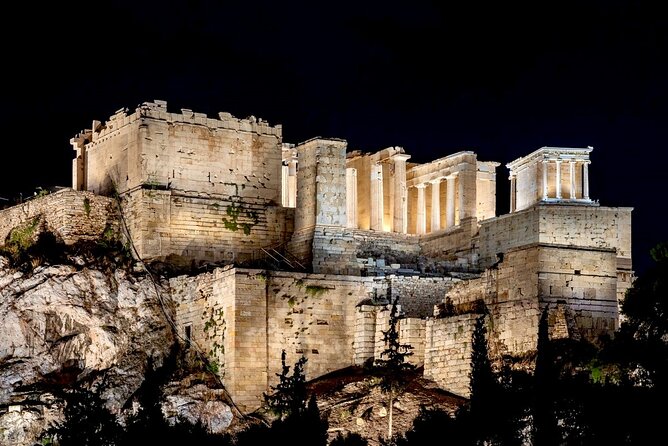
At $27.51 per person for about 2 hours, this tour is priced for a classic “do the highlights” evening. You’re not paying for museum tickets or a long sit-down experience. You’re paying for an official Spanish guide, a structured route, and the convenience of knowing where to go next without figuring it out yourself.
The route is also efficient. You hit a mix of civic Athens (Syntagma and Parliament), educational Athens (the Athenian trilogy), sports heritage (Panathenaic Stadium), and archaeology-adjacent history (Ancient Agora). That blend is the value: one walk covers multiple eras without requiring separate plans.
A couple logistics notes that help your day:
- You’ll use a mobile ticket, so you can keep things simple on your phone.
- The tour is near public transportation, which makes it easier to start on time and connect back to your hotel afterward.
- Group size caps at 15 travelers, which usually keeps questions flowing and reduces that “herding cats” feeling.
If you’re traveling solo or in a small group, this kind of small limit is a plus. It’s easier to stay oriented at night when you’re not walking behind a huge pack.
The Spanish guide makes the difference
This tour wins or loses on the guide. Here, you get an official tourist guide in Spanish, and the pacing is designed for learning on foot: short stop, explanation, then time for photos.
I love when a guide treats your questions as normal, not as interruptions. The structure here supports that. The information includes history, mythology, and local culture, not just facts read like a script. That’s why the experience feels less like sightseeing and more like a moving conversation.
From the names that show up in past experiences tied to this tour style, guides such as Juan and Lorena Navarrete have been praised for friendly delivery and clear, enjoyable explanations. The key detail to take from that: you’re not just getting dates. You’re getting context—how buildings connect to Greece’s identity and how the city’s modern life sits on top of older layers.
Also, the tour is described as being focused on art and architecture understanding. If you like buildings and details—the kind of traveler who zooms in on façades—this is a strong fit.
Starting at Vallianeio Megaron: the Athenian trilogy begins
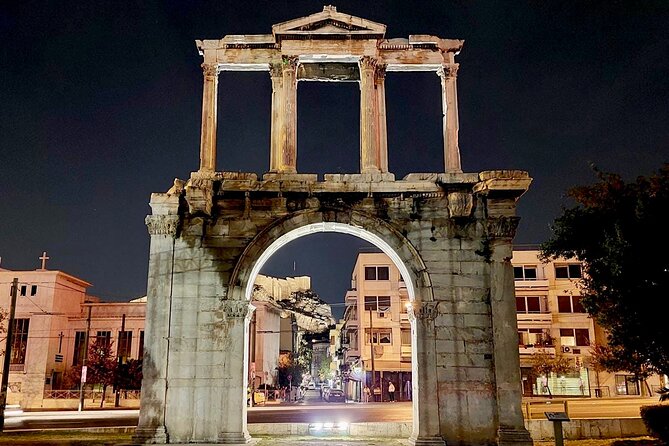
You meet at Vallianeio Megaron, Panepistimiou 32. This start point sets the tone, because the first stretch is about education and architecture in Athens, not random stops.
Stop 1: Vallianeio Megaron
This is your gateway to the National Library of Athens part of the so-called Athenian trilogy. You’ll get a short look and explanation at the relationship between the buildings and what they represented in Greek culture.
Even if you’ve seen photos of neoclassical Athens before, this is where you start learning how to “read” those photos. The architecture isn’t just pretty; it’s tied to education, civic pride, and the idea of Greece as a modern heir to classical learning.
You can also read our reviews of more city tours in Athens





Stop 2: National and Kapodistrian University of Athens (2nd Radiology Laboratory area)
The tour then continues to the university headquarters building connected with that trilogy theme. The stop is brief, but it’s useful because it gives you a structured mental map: library, university, academy—three pieces that work like one story.
Stop 3: Academy of Athens
Next up is the Academy of Athens, described as representing well what a building is in ancient Greece. This is one of those “small stop, big payoff” moments. You’ll be standing where architectural language is being borrowed from older models, and the guide helps you connect why it matters.
Why this part is valuable: It’s not just a list of monuments. It helps you understand what Athens wanted to project: knowledge, continuity, and a confident cultural voice.
Possible drawback here: Because each stop is around five minutes, you’ll want to be ready to absorb quickly. If you’re the type who likes slow wandering, save that for daytime on your own.
Syntagma Square and the Hellenic Parliament at night
After the education triangle, you pivot into the beating heart of modern Athens.
Stop 4: Syntagma Square
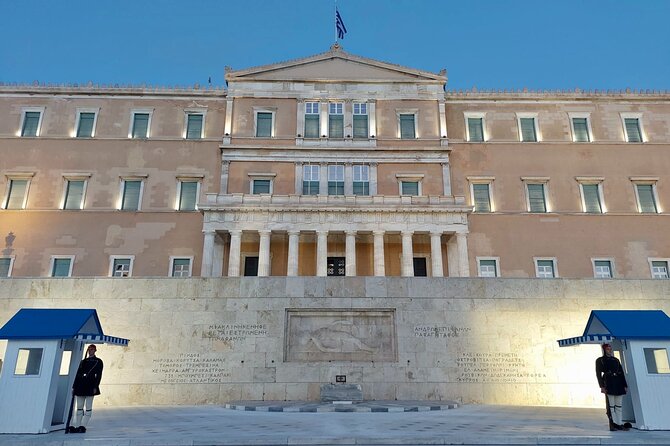
You’ll spend time at Syntagma Square, known for its name in commemoration of the Constitution during the reign of King Otto I. This stop works well at night because squares feel more cinematic after dark. You’ll notice how the space holds political meaning while still functioning like everyday public ground.
Stop 5: Hellenic Parliament
Then comes the Hellenic Parliament area. The Parliament of Greece is tied to the story of modern Greek governance, and seeing it at night helps you notice the contrast: modern state power in front of a city famous for ancient foundations.
In practice, you’ll probably do a mix of standing, looking, and listening. These stops are short but meaningful, because they anchor the night walk in contemporary Athens.
Tip: When you’re in a central square, pause for your photos, but also pause for your bearings. The lighting can make landmarks easier to identify, especially if you’re planning to return on your own later.
Zappeion, Panathenaic Stadium: sports heritage under the streetlights
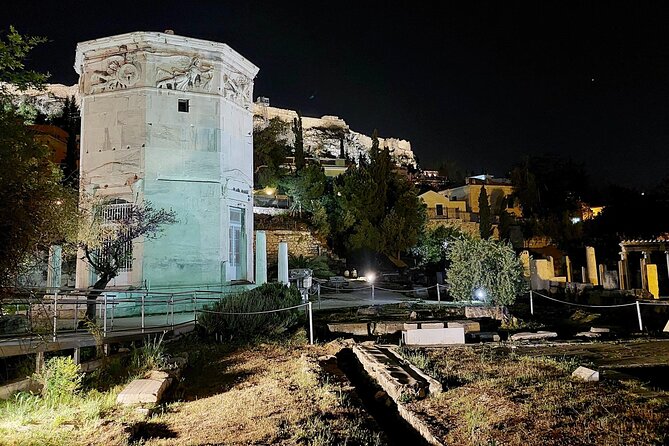
This part is a favorite for a lot of people because it adds a different flavor to the night walk. Instead of only civic or educational landmarks, you’re moving through symbols of athletic tradition and international attention.
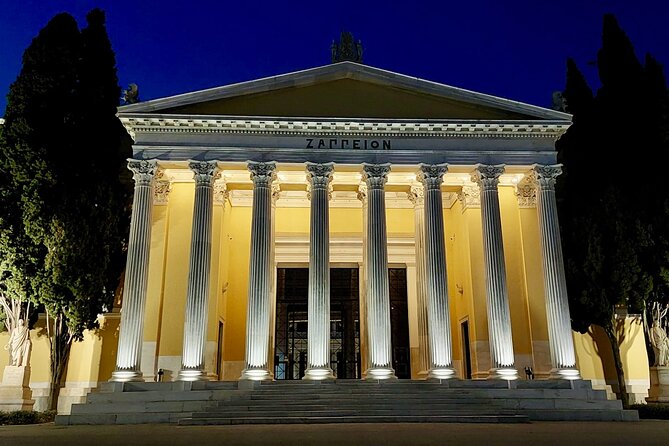
Stop 6: Zappeion
You’ll stop at Zappeion, linked to the Olympics. Even with a short visit, it’s a chance to place Greece’s Olympic story into a wider setting beyond just one venue.
Stop 7: Panathenaic Stadium
Next is the Panathenaic Stadium, venue of the first edition of the Olympic Games. This is one of those Athens highlights where you don’t need long explanations to appreciate the scale and the symbolism. The guide helps you connect it to Greece’s myth-to-modern legacy of the Games.
At night, the stadium’s presence can feel larger and more dramatic, and you’ll likely enjoy the photo moment more than you would in harsh daytime light.
Practical consideration: The stops are short, so if you’re a “circle the monument for 20 minutes” type of traveler, you may want to return during the day later.
From Leof. Vasilisis Amalias 50 to Zeus Olimpio: big monuments, quick hits
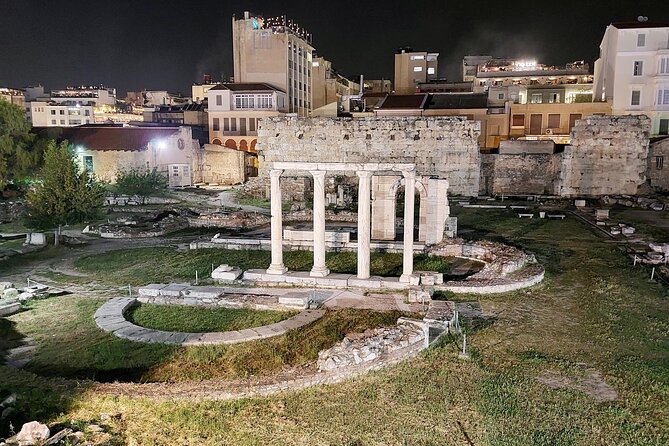
The next stretch is built for visibility and variety. You’ll move from one major landmark to another, and the guide ties them together with story.
Stop 8: Leof. Vasilisis Amalias 50
This address area is described as one of the most significant monuments of the Greek capital. Short stop, quick orientation, and likely a couple key points about what makes it important.
Stop 9: Tempio Di Zeus Olimpio
Then you get to Tempio Di Zeus Olimpio, described as the largest temple in all of Greece. This is where the night atmosphere helps. Even though you can’t go inside archaeological sites, you’ll still have a real sense of the size and ambition behind the structure.
That “no interior access” detail is worth remembering: you’re there for exterior viewing and interpretation. You’ll walk away with a better understanding of what you saw, not with a ticket to explore rooms.
Stop 10: Metropolitan Cathedral of Athens (Plaka)
Finally, you reach the Metropolitan Cathedral of Athens, located in the heart of the Plaka neighborhood. This stop gives you a change of mood. Instead of only ancient scale, you’re now looking at living city presence in a historic area.
Why this sequence works: You move from ancient grand scale to more human neighborhood energy. It keeps the walk from feeling like one long monument parade.
Ancient Agora finish: how the night walk ties together
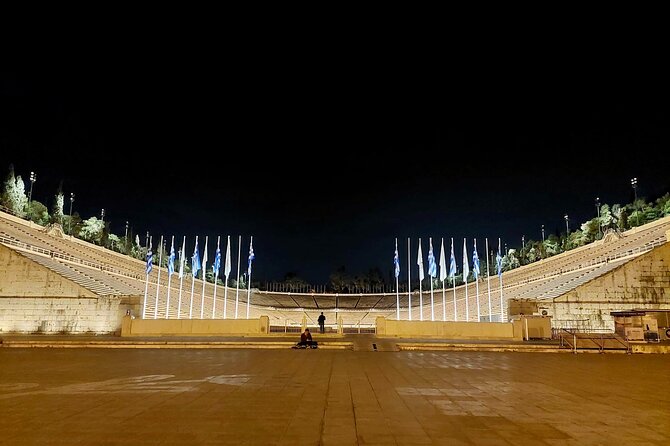
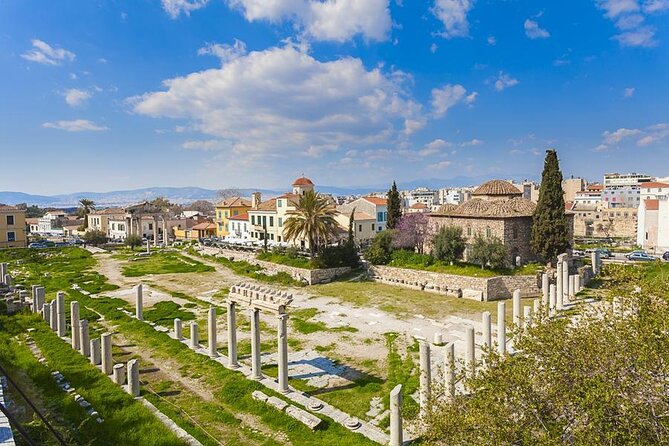
The tour ends at the Ancient Agora of Athens. This finish point is smart because it’s one of the most meaningful places to connect the dots between ancient Athens and the modern streets around it.
Even without interior archaeological site access, the guide can still help you understand the importance of the Agora as a space for public life and civic identity. At night, the area can feel quieter and easier to focus on, which can make the final explanation feel more personal.
Also, as you approach the end, pay attention to the way the skyline frames your view. The evening light in Athens often makes the Acropolis area visible from central spots, and the tour’s overall description emphasizes panoramic views. If you’ve never seen Athens from street level with the illuminated skyline in the background, this ending is a good time to get your bearings for later.
Photo and comfort tips for a 2-hour night walk
You’re walking at night, in central Athens, with multiple quick stops. That means small comfort choices matter.
- Wear shoes you trust. Even a “short” night tour is still a steady walk.
- Bring a light layer. City nights can change quickly.
- Keep your phone ready before the guide starts the story at each stop. Once the explanation begins, you’ll want to listen.
- For photos, use the time the guide allows for pictures rather than trying to chase angles while moving. This route is built for pause moments.
If your goal is to come away with strong photos, treat the tour like a guided photo schedule. Let the guide pick the best moments, then you decide what you want to capture.
And one more tip: if you’re new to Athens, this is a great night primer. You’ll recognize places easier the next day, which can save you time when you switch to self-guided exploring.
Who this tour fits best
This night walk is a good match if:
- You’re arriving in Athens and want a first orientation fast.
- You like architecture, history, and how stories connect across time.
- You want a Spanish guide who answers questions and keeps stops clear and manageable.
- You prefer a structured 2-hour plan rather than wandering at night without a roadmap.
It’s less ideal if:
- You want long time inside major archaeological sites.
- You dislike quick-stop formats and prefer slow pacing with lots of unstructured time.
- You’re expecting a full tour of one single site. This is a route, not a deep dive into one monument.
Should you book this Night Tour of Athens?
If you want an efficient, Spanish-guided way to see central Athens at night, I think this is worth booking. The route covers a lot of the city’s identity markers in just two hours: education-era architecture, modern civic power, Olympic heritage, and archaeological-adjacent context, all under night lighting. The pricing also feels reasonable for what you get—an official guide plus a tight walking plan—especially with a small maximum group size.
Book it if you’re new to the city and want to understand what you’re looking at. Skip it if your priority is entering archaeological sites or if you want a long, slow, museum-style experience. For everyone else, this is a practical evening plan that helps Athens make sense quickly.
FAQ
FAQ
What language is the guide?
The tour includes an official tourist guide in Spanish.
How long is the night tour?
It lasts about 2 hours.
Where does the tour start?
The meeting point is Vallianeio Megaron, Panepistimiou 32, Athina 106 79, Greece.
Where does the tour end?
The tour ends at the Ancient Agora of Athens, Athens 105 55, Greece.
Is the ticket mobile?
Yes, the tour uses a mobile ticket.
Are entrance tickets included for the stops?
The stops listed show admission ticket free for each stop.
Can I go inside archaeological sites on this tour?
No. There is no access to the interior of any archaeological site.
What is included in the price?
An official tourist guide in Spanish is included.
Is dinner included?
No dinner is included.
Is the group size limited?
Yes, the maximum group size is 15 travelers.
Are service animals allowed?
Service animals are allowed.
What if I need to cancel?
You can cancel for a full refund if you cancel up to 24 hours in advance of the experience’s start time.
You Might Also Enjoy

More Guided Tours in Athens
More Tours in Athens
More Tour Reviews in Athens
- All Day Cruise -3 Islands to Agistri,Moni, Aegina with lunch and drinks included
★ 5.0 · 4,958 reviews