REVIEW · ATHENS
From Athens: Ancient Sparta and Mystras Private Day Trip
Book on GetYourGuide →Operated by Olive Sea_Travel · Bookable on GetYourGuide
Byzantine towers and Sparta grit in one day. This private trip is a fast way to see Mystras and the Corinth Canal while connecting ancient Greek and medieval Greek stories in a single route. You’ll get a lot of self-guided time in Sparta, which can feel light if you want deep commentary on every stone.
One of my favorite parts is the way the route tells a timeline you can actually picture: the Persians, Leonidas, then the Byzantine world that built, fortified, and worshiped on the hills above the valley. And because it’s private transport with hotel pickup and a driver waiting outside sites, you’re not stuck in a slow group shuffle.
The main thing to consider: the driver is not a licensed guide inside the sites. If you want fuller explanations at each stop, you’ll likely want to add a licensed guide.
Key highlights to expect on this trip
- Corinth Canal on the pedestrian bridge, with views over a canal cutting since 1892
- Mystras as a real “ghost city” where monasteries and church life still continue
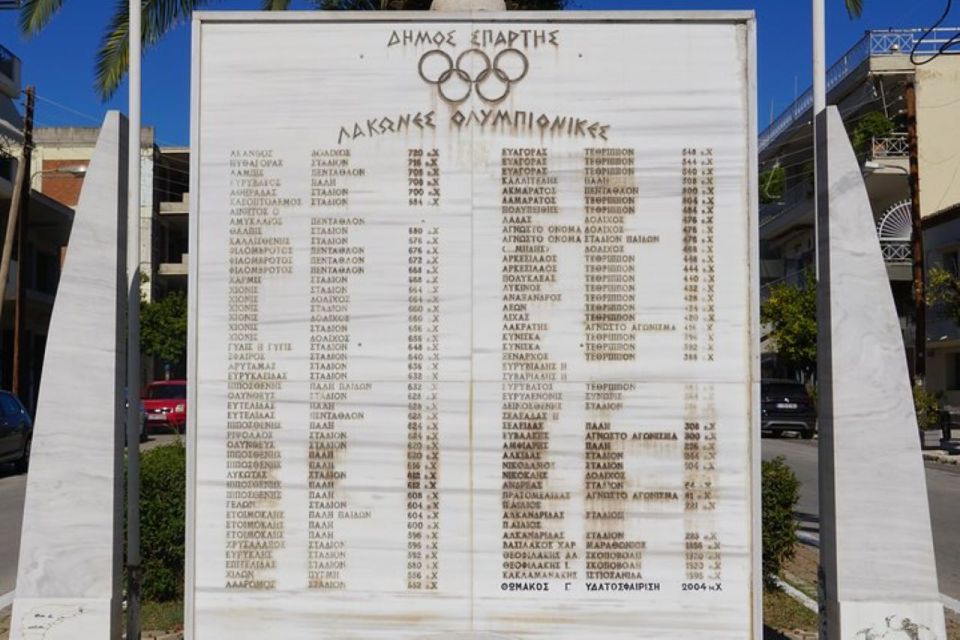
- Leonidas and Sparta stops tied to the Thermopylae story and Spartathlon symbolism
- St. Demetrios at Mystras, including the two-headed eagle plaque connected to the last Byzantine emperor
- Guided Museum of Olive and Greek Olive Oil time, plus a chance for Laconia’s food culture
In This Review
- A Route That Links Persians, Byzantine Palaces, and Plain Country Roads
- Corinth Canal: The 1892 Engineering Moment You’ll Want to Photograph
- Mystras: The Byzantine Hill City That Still Feels Alive
- Sparta: Leonidas Country, With Self-Guided Time and Minimal Help Inside Sites
- The Olive and Olive Oil Museum: A Small Stop That Explains Laconia
- Price and Logistics: Is It Worth $566 Per Person?
- Who This Private Day Trip Suits Best
- Final Call: Should You Book Athens to Sparta and Mystras?
- FAQ
- How long is the trip?
- Where does the tour start and how do you get picked up?
- Is this a private tour or a group tour?
- What sites are visited during the day?
- Are entrance fees included?
- Is food included?
- Is a licensed guide included?
- Can the driver go into the sites with you?
- Does the tour include skip-the-line entry?
- Is the tour wheelchair accessible?
A Route That Links Persians, Byzantine Palaces, and Plain Country Roads
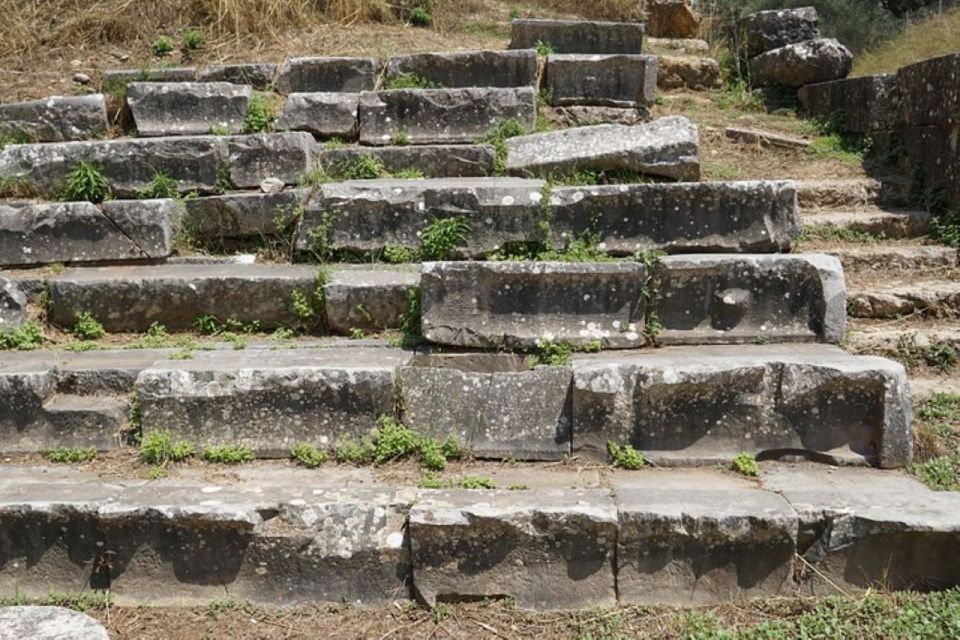
This is a one-day sampler of the Peloponnese that works because it stays focused on one region: Laconia. You’re not bouncing around Greece collecting random stops; you’re moving through a set of places that share a common thread—power, defense, and how people lived when empires changed.
You start from Athens and head out in an air-conditioned van. Along the way, you pass Greek seaside villages and even spot the area tied to the naval battle connected with Salamis (Athenians versus Persians). That early “context drive” matters, because it primes you for why Sparta and the surrounding kingdoms mattered so much.
Then you shift from sea views into mountainous countryside. That contrast is part of the appeal: the day goes from dramatic straits and engineering to fortified hill towns and church-covered stone.
Corinth Canal: The 1892 Engineering Moment You’ll Want to Photograph
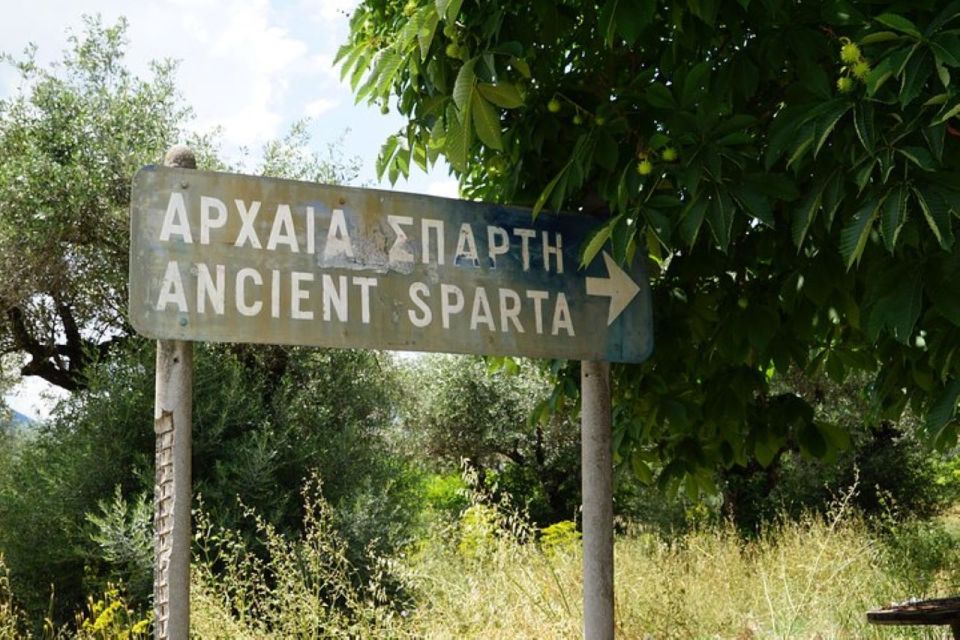
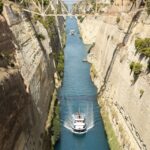
Your first true stop is the Corinth Canal, with a short photo stop plus scenic viewing time. The canal’s point is simple, but it still feels unreal in person: it divides the Peloponnese Peninsula from the rest of Greece, linking the Saronic Gulf to the Corinthian Sea.
The star here is the pedestrian bridge. Walking across it gives you that “how did they do this?” feeling, because the canal cuts so cleanly through the geography. On some days, there’s even an option for bungee jumping nearby, which adds a little thrill to an otherwise history-and-views kind of stop.
Tip for your day: keep your camera ready for quick moments. Your canal window is brief, and the views are exactly the kind that invite multiple angles.
You can also read our reviews of more private tours in Athens


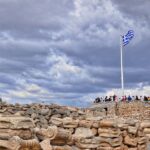
Mystras: The Byzantine Hill City That Still Feels Alive
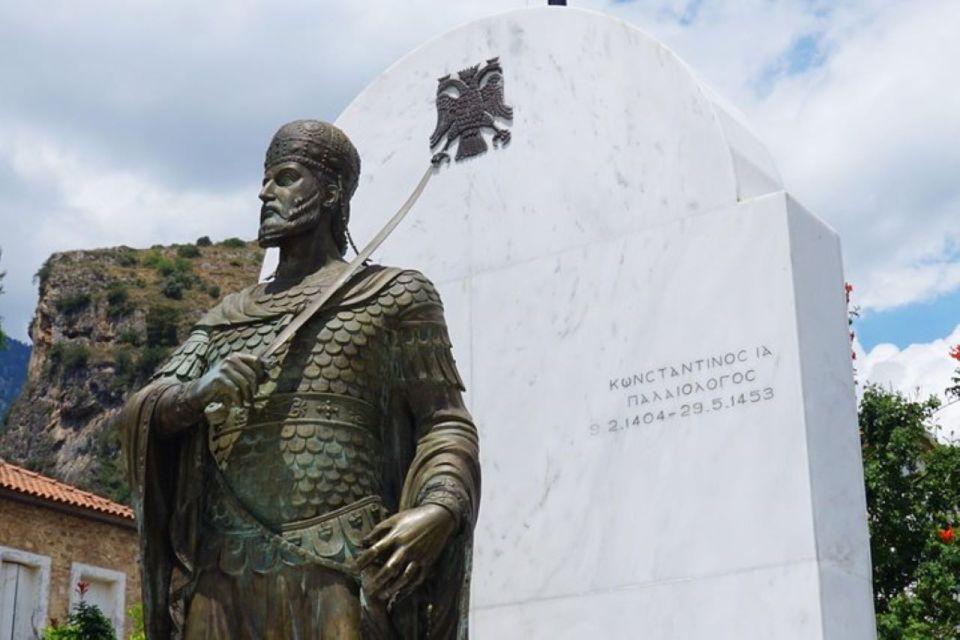
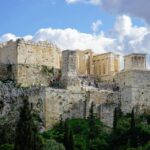
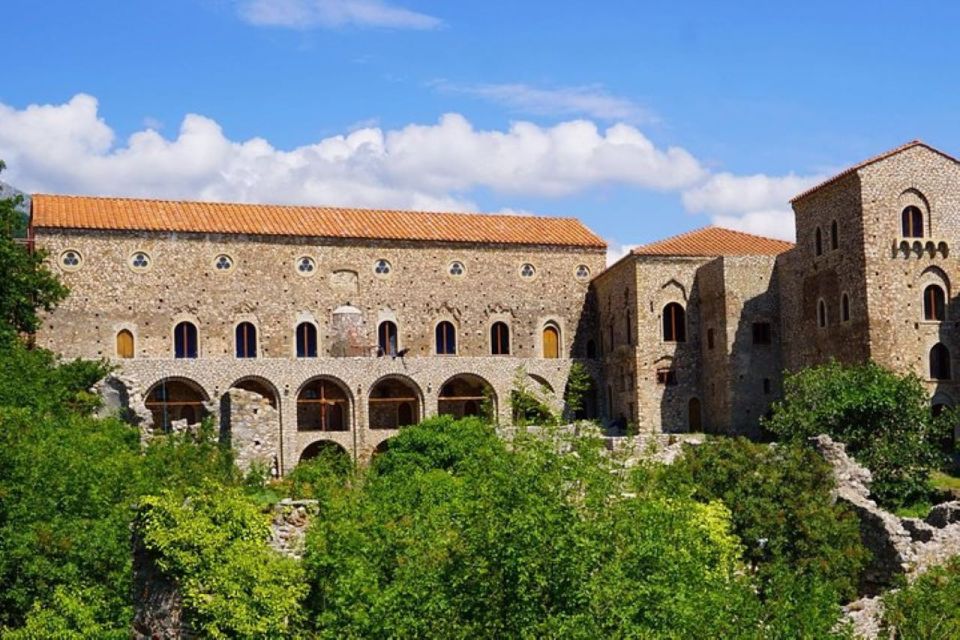
Then you head to Mystras, often described as a ghost city. What makes it more than a poetic label is that Mystras isn’t just ruins on a hillside. It includes medieval churches, and it also preserves ordinary houses, mansions, and palaces—so you can get a sense of how daily life and power buildings sat side by side.
You’ll start with time for a self-guided tour and then continue with the Mystras Castle section. If you like walking ruins at your own speed, you’ll enjoy this format. If you prefer nonstop explanations, plan to either ask your driver questions or consider booking a licensed guide for the site.
What I’d focus on when you’re there:
- The climb to the citadel viewpoint, where the surrounding areas open up
- The downhill walk toward palaces and royal courtyards
- The way the church spaces and the domestic architecture mix in a real, physical way
One of the most specific details to remember is St. Demetrios. On its floor there’s a plaque showing a two-headed eagle, the Byzantine symbol. The story tied to it is that Konstantine Palaiologos kneeled there before being crowned as the last Byzantine emperor. That kind of detail turns a church visit into something you can feel, not just something you glance at.
And yes—about that ghost-city idea. It’s still a functioning spiritual area. Many monasteries are still in use, and monks can show you around their small society. Even if you move quietly and don’t plan a long conversation, the fact that it’s lived-in changes the mood.
Sparta: Leonidas Country, With Self-Guided Time and Minimal Help Inside Sites
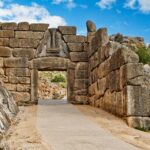
Next comes Sparta, the “eternal rival” often linked to Athens and the idea of democracy. Sparta’s story is different. This was a military-centered society with a structure that famously included two kings. And the place is forever tied to Leonidas, the man who led the 300 Spartans out toward Thermopylae in 480 BCE.
In practice, your Sparta time is partly about ruins you can see and partly about the route you take through the key points:
- Ancient citadel of Sparta, where the ancient theater view can seem to appear in stages as you approach
- A stop near the Leonidas monument
- A look near the stadium area, where the statue of King Leonidas marks the ending point symbolism for Spartathlon (the Athens–Sparta run)
Then you have time for the archaeological museum of Sparta. This is the part that often turns confusion into clarity, because museums usually give you context for what you’re seeing outside.
Here’s the consideration worth taking seriously: Sparta on a self-guided day can feel a little minimal if you crave constant interpretation. Some ruins are obvious; others need a guide to connect the dots between what remains and what it used to be like. If you’re the type who loves facts as you walk, I’d strongly consider adding a licensed guide.
Also, don’t overplan your energy. One person-friendly approach is to use Sparta’s outdoor stops like a “visual map,” then let the museum do the heavy lifting for details.
The Olive and Olive Oil Museum: A Small Stop That Explains Laconia
The last major stop is the Museum of the Olive and Greek Olive Oil, with a guided visit. This is one of those experiences that can sneak up on you—in a good way. Sparta and Mystras get the headlines, but Laconia’s food and farming shaped daily life just as much as temples and fortifications did.
The museum segment is listed as guided, and that matters because it gives structure to what you’re seeing. You also get a more human-scale understanding of the region before the day closes back out toward Athens.
Quick caution from real-world timing: one booking reported disappointment after being told the olive museum was closed at 3 pm, even though online information suggested later hours. If timing matters to you, it’s worth planning your schedule so you’re not rushed at the end of the day.
Price and Logistics: Is It Worth $566 Per Person?
For $566 per person for a private one-day route, you’re paying for a full day of transportation and hands-on scheduling: hotel pickup/drop-off, a private vehicle, and a driver, plus bottled water. In other words, you’re buying convenience and saved time.
What’s not included can affect your total:
- Entrance fees are listed at about €34 per person
- Food and drinks are not included
- A licensed guide is optional and listed as €380 when requested
- The driver isn’t licensed to walk into sites with you, so the “depth” level depends on how you want to experience the sites (and whether you add a licensed guide)
So is it good value? Usually, yes—if you want one day that covers three big anchors (Corinth Canal, Mystras, Sparta) without the headache of driving, parking, and timing between sites. Many people also feel the private format helps the day feel more personal, especially when the driver is eager to talk and share the background while you’re riding.
There’s one more practical factor: the day has a lot of walking and short timed stops. If you’re the type who needs long museum hours or extra time at every viewpoint, you might feel the pace. In that case, asking your driver to adjust within reason (especially around museum time) can make the difference.
You can also read our reviews of more tours and experiences in Athens


Who This Private Day Trip Suits Best
This day trip fits best if you want:
- A single-day sampler of Laconia across eras
- Strong interest in Sparta, Leonidas, and Byzantine Mystras
- Comfort with a mix of guided moments and self-guided walking
You’ll likely enjoy it even more if you like learning in transit. Several hosts and drivers named in feedback—Giannis, Panos, and Manos—were described as friendly and engaging, with good English and helpful context while driving.
On the flip side, if your main goal is deep archaeology at every step, you may feel that Sparta’s self-guided format is too light unless you add a licensed guide.
Final Call: Should You Book Athens to Sparta and Mystras?
If you’re trying to choose between “more time in Athens” and “one unforgettable Peloponnese day,” this is the kind of trip that makes sense. Mystras alone is a major draw: the hilltop citadel views, the mixture of churches with everyday buildings, and the specific St. Demetrios detail tied to Byzantine rule make it memorable.
Book this tour if you like history you can walk through, and if you’re okay with some parts being self-paced. Add a licensed guide if you want stronger interpretation at Sparta and Mystras rather than just seeing the stones.
Don’t book it if you only want minimal walking, or if you’re not interested in the Byzantine layer and you expect a fully guided experience at every site. In that case, you’d be happier with a more guided, longer format.
FAQ
How long is the trip?
It’s a 1-day private day trip.
Where does the tour start and how do you get picked up?
Pickup is included from your hotel or accommodation in Athens, with the driver waiting outside.
Is this a private tour or a group tour?
It’s a private group tour.
What sites are visited during the day?
You’ll visit Corinth Canal, Mystras (including the castle area), Leonidas Monument, Sparta (including the archaeological museum), and the Museum of the Olive and Greek Olive Oil.
Are entrance fees included?
No. Entrance fees are listed as €34 per person.
Is food included?
No. Food and drinks are not included, though there is a stop for a traditional Greek tavern.
Is a licensed guide included?
A licensed guide is not included. It’s available upon request for an additional €380.
Can the driver go into the sites with you?
Your driver is not licensed to accompany you into any site along the tour.
Does the tour include skip-the-line entry?
Yes, it’s listed as skip the ticket line.
Is the tour wheelchair accessible?
Yes, it’s listed as wheelchair accessible.
You Might Also Enjoy

More 1-Day Tours in Athens
More Private Tours in Athens

More Tour Reviews in Athens
- All Day Cruise -3 Islands to Agistri,Moni, Aegina with lunch and drinks included
★ 5.0 · 4,958 reviews