REVIEW · ATHENS
Christian tour on Paul’s footsteps in Athens and Corinth 8-H
Book on GetYourGuide →Operated by Planetourama · Bookable on GetYourGuide
Paul’s footsteps feel close here. This private St Paul in Greece route links Athens sites like Mars Hill with the Corinth places tied to his letters. You also get serious payoff time-wise with the drive to the Corinth Canal for big photo views. One thing to keep in mind: the tour includes a drivers’ commentary, but an English licensed guide who can go inside sites is optional.
You’ll start early, ride in a private air-conditioned Mercedes (or similar), and hit the highlights in a smart order—monuments first, then the religious anchor points, then Corinth late in the day. If you’re hoping for heavy, biblically focused teaching inside every stop, you should ask about adding a licensed guide up front.
In This Review
- Key Highlights You’ll Actually Feel
- The Athens-to-Corinth Route That Turns Scripture Into Places
- Morning Athens: Start Early, See the City First
- Acropolis Core + Mars Hill (Areopagus): The Acts 17 Stop
- Plaka and the Ancient Agora: Where Paul’s People-Work Fits
- The Corinth Canal Drive: A Short Pause With Real Atmosphere
- Ancient Corinth: 18 Months, Aquila and Priscilla, and Gallio’s Setting
- Kechreae (Cenchrea) Port Ruins: The Sailing Link to Ephesus
- Price and Value: What You Pay For in an 8-Hour Private Tour
- Who This Tour Suits Best (And Who Might Want a Different Setup)
- Should You Book This Paul’s Footsteps Tour?
- FAQ
- What’s included on this private Christian Athens and Corinth tour?
- Are entrance fees to archaeological sites included?
- Is food included?
- How long is the tour?
- Is this tour private?
- What’s the main Athens itinerary focus?
- What about cancellation and pickup details?
Key Highlights You’ll Actually Feel
- Mars Hill (Areopagus) tied to Acts 17: The stops are set up as a living Bible map.
- Acropolis core sights in one stretch: Parthenon, Propylaea, and Athena Nike are all on the route.
- Plaka + Ancient Agora pacing: You see where Paul worked among people, not just where old stones sit.
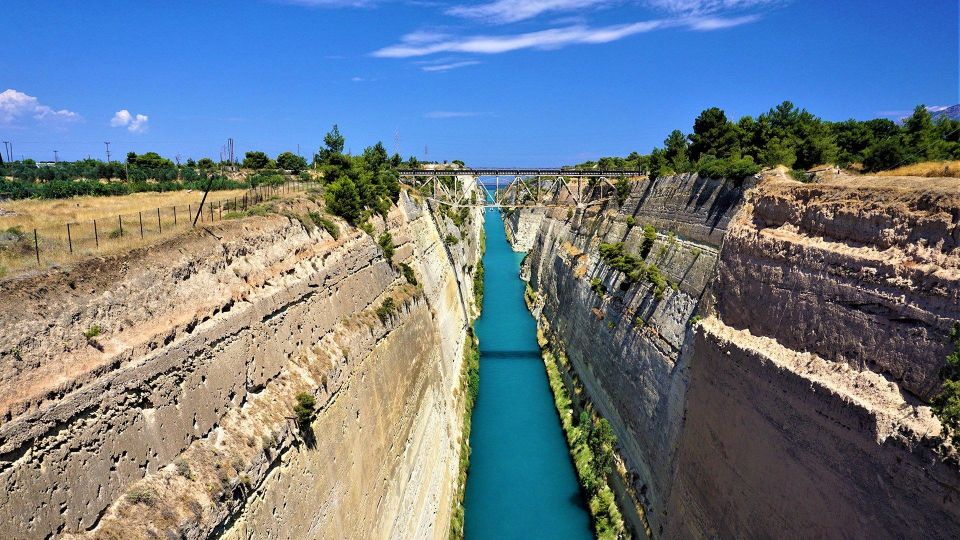
- Corinth Canal photo stop: A quick coastal jolt before you reach Ancient Corinth.
- Corinth’s connected Paul timeline: Aquila and Priscilla, the agora trial setting, and the 18-month preaching story.
- Kenchreae (Kechrea) harbor ruins: The sailing port angle helps the Athens-to-Ephesus storyline click.
The Athens-to-Corinth Route That Turns Scripture Into Places
This is a full-day Christian private tour built around the idea that faith stories become easier to grasp when you stand in the same kinds of places Paul moved through. The format matters. You’re not just getting dropped at a list of ruins. You’re traveling between Athens and Corinth with a steady narrative flow: city life, teaching points, then the Corinthian sites where Paul spent time and wrote.
I like that it’s organized like a story, not a scavenger hunt. You begin with central Athens landmarks that set the atmosphere of the modern city Paul would have felt the edges of, then you move to the most direct biblical locations—Areopagus/Mars Hill, the Agora area, and later Corinth’s core ruins and ports. You also get a comfort factor that matters in Greece: air-conditioning in the car helps keep the long day manageable in hot weather.
The one caution is about expectations. The included staff is a professional English-speaking driver with history and culture knowledge, but an English licensed tour guide is not automatically included. That can change how much is explained on the spot and whether you can get full access commentary inside certain sites.
You can also read our reviews of more tours and experiences in Athens.

Morning Athens: Start Early, See the City First
Your day begins early in Athens with hotel pickup. You’ll ride in a private air-conditioned Mercedes Benz (or similar for your group size). From there, the first phase is a classic Athens highlights circuit—useful even if your main mission is Paul. It puts you in the right mental frame.
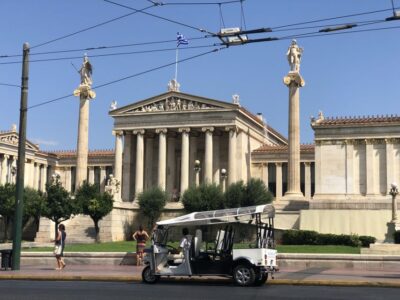
You’ll pass key points around Constitution Square, including the Tomb of the Unknown Soldier and the Parliament House. Then comes the Panathenaic Stadium, famous for hosting the first modern Olympic Games in 1896. After that, you’ll go through central Athens features like the Neoclassical Trilogy—the Academy, the University, and the National Library—plus Omonia Square.
Why I think this matters: Paul’s story in Greece is not only about churches. It’s about movement through a living city. Seeing Athens’ big public spaces first gives you a better sense of what the route to religious sites feels like once you’re climbing up toward the Acropolis.
You’ll also include Temple of Olympian Zeus and Hadrian’s Arch before the day turns toward the Holy Rock.
Acropolis Core + Mars Hill (Areopagus): The Acts 17 Stop
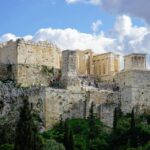
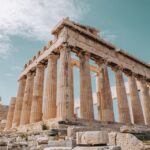
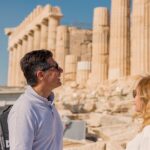
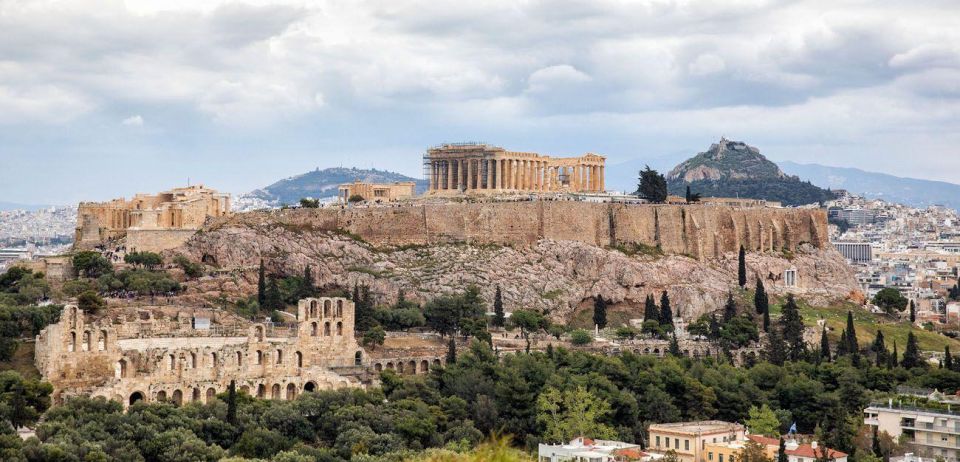
Next comes the high point: the Acropolis. You’ll see the Parthenon as the crown of the complex, along with the Propylaea and the Temple of Athena Nike. This section works best when you treat it as orientation. It’s the anchor that makes the surrounding “where did Paul talk?” locations feel connected.
Then you reach Mars Hill (Areopagus), described around Acts 17:22, the place where Paul came to preach to the Athenians. Even if you’ve read the chapter a dozen times, seeing the area in the flow of a real route helps. Paul’s message suddenly feels less like a distant Bible scene and more like a human conversation happening in a very public setting.
One practical note: the day is packed. If you’re sensitive to walking time and stairs, plan to take small breaks when you can and don’t expect a slow museum pace. This is a “see it, connect it, move on” format.
Plaka and the Ancient Agora: Where Paul’s People-Work Fits
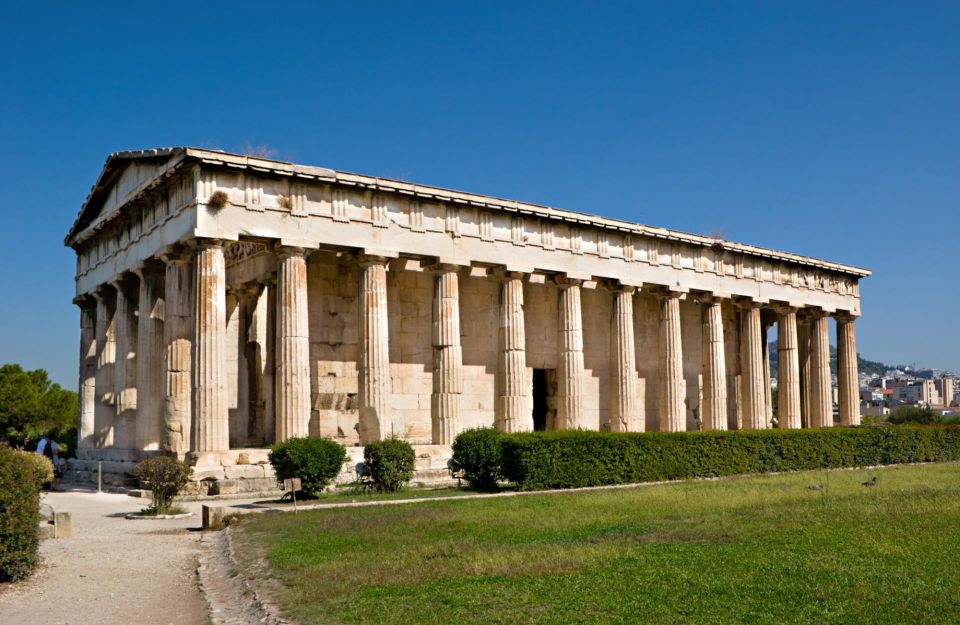
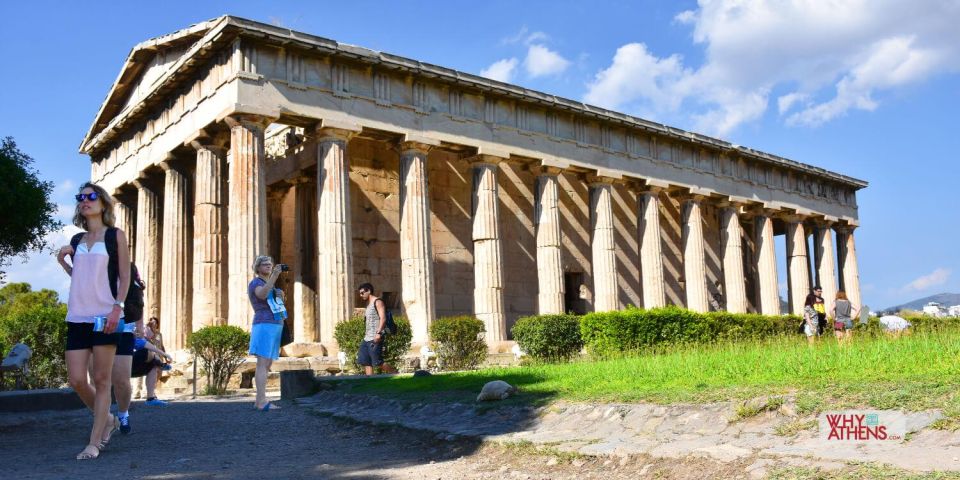
After the Acropolis, the tour heads down toward Plaka, the old neighborhood vibe that helps you imagine daily life as you get near the Ancient Agora. Plaka is listed as the area where Paul preached and met followers, and the Ancient Agora segment is built specifically around that idea.
The focus here is on Paul spending much of his day in the Agora—meeting people, discussing ideas, and working through what this new religion meant to real neighbors. That’s the difference between a route that only shows objects and a route that tries to explain what the objects were for.
You’ll also get time to visit Lycabettus Hill for views over Athens. This is a smart break in the middle of the religious stops. It gives you a visual map of the city. When you can see Athens laid out, the earlier drives and squares start to make more sense.
Then you’ll have a nice Greek lunch before heading out toward the Peloponnese.
The Corinth Canal Drive: A Short Pause With Real Atmosphere
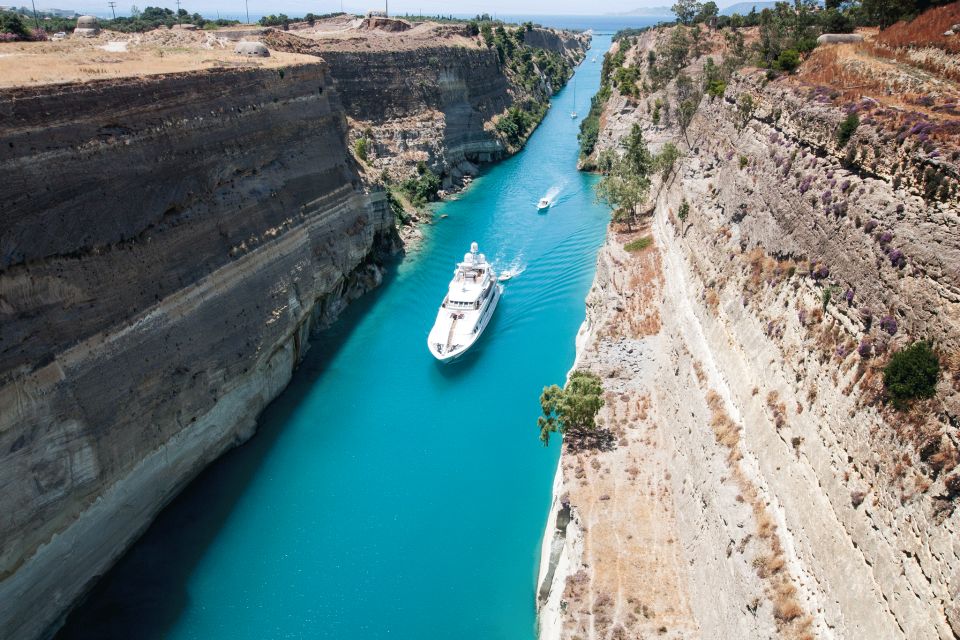
From Athens, you’ll drive along the coastal road through Athens and Attica toward Corinth Canal. The trip takes close to an hour, and you’ll have a short stop for picture views of the canal.
This brief break does two things. First, it breaks up the long day. Second, it gives you a sense of geography: Corinth isn’t just an archaeology stop. It’s a place shaped by movement of goods and people. That matters for Paul’s story, because ports and travel routes are part of the backdrop of his ministry.
Then you head straight to Ancient Corinth.


Ancient Corinth: 18 Months, Aquila and Priscilla, and Gallio’s Setting
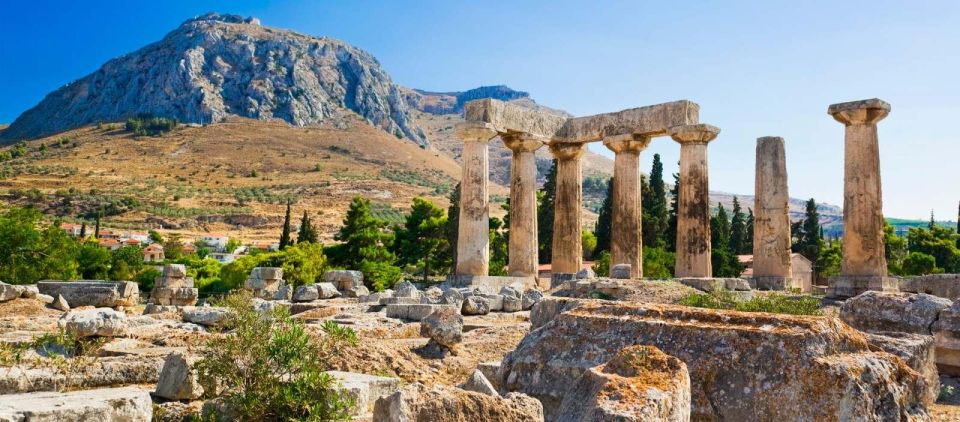
Ancient Corinth is one of the biggest payoff stops on this tour, and it’s given the time it deserves. Paul is tied to Corinth in multiple ways here, and the route is arranged to reflect that.
You’ll visit the main ruins, including context around the Acropolis area with the remains of the Temple of Aphrodite above Corinth. Then you’ll get the core Paul details as you walk through the space:
- Paul spent about 18 months preaching to Jews and Gentiles.
- He worked with Aquila and Priscilla, and this community effort brought tension and prompted Paul to write multiple letters.
- Paul’s trial by Gallio took place in the agora area (Acts 18:12–17).
- Corinth is also linked to Paul’s letters, including the Thessalonian correspondence from this broader timeline.
The tour’s job is to help you see how those events fit the physical place—so you’re not memorizing dates. You’re learning what sort of public center the message spread through.
This is also where you’ll want to keep the “read the room” approach. Corinth was a major city-state. The ruins show you scale and layout in a way a page can’t.
Kechreae (Cenchrea) Port Ruins: The Sailing Link to Ephesus
After Ancient Corinth, you’ll shift to the waterfront angle: the ruins of Cechrae / Kechreae—the harbor area from which Paul sailed to Ephesus (Acts 18:18).
You’ll see:
- the ancient agora context
- the Temple of God Apollo
- the ancient port of Kechreae
This part matters because Paul’s journeys weren’t only walking. They were also shipping routes and disembark points. The harbor stop is tied to the idea that Paul disembarked here when visiting Corinth to preach, and that an important church was established in the area before he left for Ephesus.
If your faith reading is often more head-based than place-based, this is the section where it usually clicks. You can literally picture the “I’m leaving” moment when you’re near the port ruins.
Price and Value: What You Pay For in an 8-Hour Private Tour
The listed price is $507 per group (up to 3 people) for an 8-hour private tour. Since it’s per group rather than per person, it can be a strong value for small families, couples, or a duo plus one friend—especially when you factor in the private air-conditioned vehicle and hotel pickup/drop-off.
But here’s the honest value equation:
- Included: private Mercedes-style transport, hotel pickup/drop-off in Athens, and a professional English-speaking driver with history and culture knowledge.
- Not included: entrance fees to archaeological sites and museums (they can be purchased for you in advance under a small service fee), food and drinks, and an English-speaking licensed tour guide.
One reason this matters: one earlier experience reported that the driver couldn’t go into the sites with them, which reduced how much context could be delivered inside. That can happen if you’re relying only on a driver’s commentary rather than a licensed guide’s in-site access.
So if you want the most Bible-forward framing possible—especially for inside-the-site explanations—ask about arranging an English licensed tour guide with additional cost. It’s also worth asking what the driver can cover while you’re on-site.
The AC is not a small detail either. In summer heat, it can be the difference between feeling tired and feeling irritated.
Who This Tour Suits Best (And Who Might Want a Different Setup)
This is a good fit if you:
- want a Christian day trip centered on Paul’s route in Athens and Corinth
- like the idea of seeing Mars Hill, the Agora area, and Corinth in one connected itinerary
- prefer a private setting where you can ask questions without a big group rhythm
- value comfort (air-conditioned private car) for a long day
It might be less ideal if:
- you expect a licensed guide to lead inside every major site automatically
- you want extensive biblical teaching at each stop, not just driving commentary and spot explanations
If your priority is the strongest on-site guidance, build in the option for the licensed guide.
Should You Book This Paul’s Footsteps Tour?
Book it if your goal is to follow Paul’s story through real places—Athens to Corinth—with a private vehicle and a route that connects Acts-style locations to major monuments, then ports and ruins. The itinerary is structured so you’re not just collecting photos; you’re seeing a chain of locations that make the narrative feel logical.
Skip or adjust it if you’re a stickler for inside-the-site guided explanations and you want maximum biblical teaching time. In that case, pay attention to the licensed guide option before you go. It’s the single most important variable that can change the experience.
If you do book, pack comfortable shoes, expect a long day, and bring a Bible mindset: ask how each place fits the story you already know.
FAQ
What’s included on this private Christian Athens and Corinth tour?
You get a professional English-speaking tour driver with history and culture knowledge, transport by private air-conditioned Mercedes (or similar), and hotel pickup and drop-off in Athens. You also get (upon request) pick-up and drop-off at the cruise ship pier at Port of Piraeus.
Are entrance fees to archaeological sites included?
No. Entrance fees to archaeological sites and museums are not included, but you can have tickets purchased for you in advance for a small service fee.
Is food included?
No. Food and drinks are not included, though the tour includes time for a Greek lunch.
How long is the tour?
The tour runs for about 8 hours (starting times depend on availability).
Is this tour private?
Yes. It’s a private group tour designed for up to 3 people.
What’s the main Athens itinerary focus?
You’ll see Constitution Square highlights (Tomb of the Unknown Soldier and Parliament House), Panathenaic Stadium, key neoclassical landmarks, Temple of Olympian Zeus and Hadrian’s Arch, then the Acropolis. You’ll also visit Mars Hill (Areopagus), Plaka, and the Ancient Agora, plus a stop at Lycabettus Hill for views.
What about cancellation and pickup details?
Free cancellation is available up to 24 hours in advance for a full refund. You’ll be met at the main entrance of your hotel for pickup, and you can request cruise ship pier pickup at Port of Piraeus.
You Might Also Enjoy


More Tours in Athens


More Tour Reviews in Athens
- All Day Cruise -3 Islands to Agistri,Moni, Aegina with lunch and drinks included
★ 5.0 · 4,958 reviews