REVIEW · ATHENS
Athens to Meteora, Day Trip with Local Guide,up to 9 people
Book on GetYourGuide →Operated by VIP Meteora Tours · Bookable on GetYourGuide
Meteora makes you rethink gravity. This Athens-to-Kalambaka trip lines up the big rock views and gets you into monasteries without you having to piece together every ticket and bus stop. The group stays tiny, so the local English-speaking tour leader can keep the day flowing and your photo stops actually fit the schedule.
Two things I like a lot. First, you get a close-range look at all 6 monasteries, so you understand the whole “cliff kingdom” layout instead of cherry-picking one view. Second, you do interior visits for 3 monasteries plus a stop for the Hermit Caves, which turns the scenery into a real sense of place.
One heads-up: it’s a long day. Between Athens-to-Kalabaka travel and the time on site, you’re looking at about 14 hours total, so bring patience and comfy shoes.
In This Review
- Key takeaways before you go
- Why Meteora feels like a different world
- Price and logistics: Athens to Kalabaka and back
- Getting your bearings: the long day rhythm that actually works
- Monasteries with viewpoints and interior time
- The close-range “six-monastery” overview
- Interior visits: why 3 monasteries is the right number
- “Skip the ticket line” and how it affects your time
- Hermit Caves: a calmer stop with strong meaning
- Small-group touring up to 9: how the day feels in motion
- What’s included, what costs extra, and how to budget
- Included
- Not included (you’ll want cash)
- Who this Meteora day trip suits best
- Not suitable for
- Quick booking checklist: shoes, cash, and what to bring
- Should you book this Athens to Meteora day trip?
- FAQ
- How long is the day trip from Athens to Meteora?
- Do we visit all six monasteries inside?
- Are monastery entrance fees included in the price?
- What about meals during the trip?
- How do the transport steps work from Athens?
- Is this tour suitable for people with mobility or health limits?
Key takeaways before you go
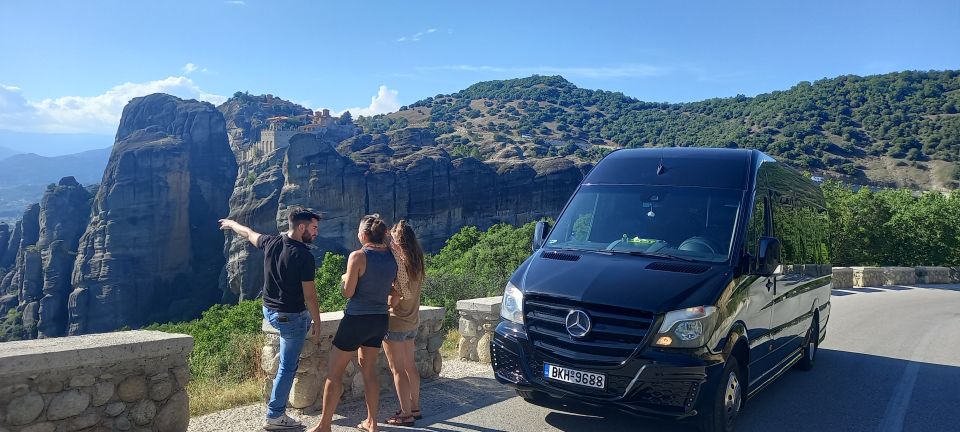
- Close views of all 6 monasteries: you see the full complex of cliff monasteries, not just a couple of quick stops.
- Interior time at 3 monasteries: you get inside enough places to notice differences in layout and atmosphere.
- Hermit Caves stop: a quieter, more personal angle on how people lived in these rocks.
- Small group, up to 9: easier conversation with the guide and less waiting around than big buses.
- Transport handled end-to-end: you won’t spend the day figuring out trains and transfers from scratch.
- Entrance fees are extra: the tour covers access and guidance, but you’ll budget per monastery ticket.
Why Meteora feels like a different world
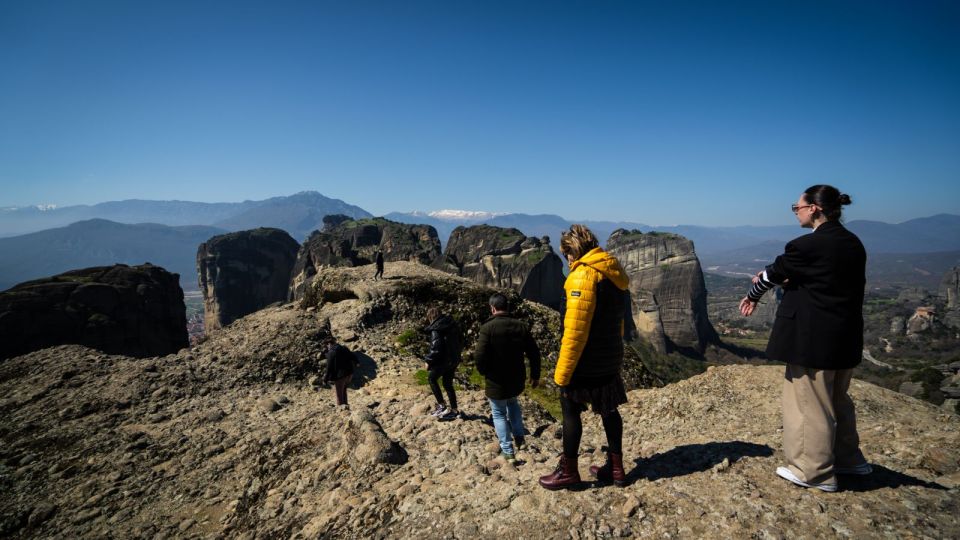
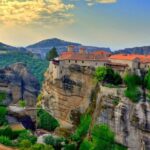
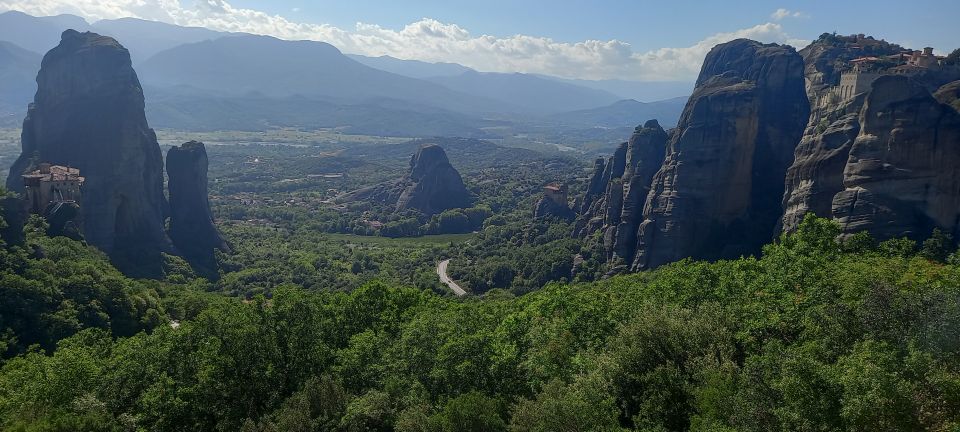
Meteora is one of those destinations that looks unreal from a distance—and then feels even more strange up close. Massive rock pillars rise out of the Thessaly plain, and monasteries sit on top like they were placed with a steady hand and a lot of faith.
What makes this day trip a good fit is that it doesn’t treat Meteora like a checklist. You start with the big panoramic look, so you understand why these rocks were so important. Then you move into the monasteries themselves for a grounded look at daily monastic life—stone, corridors, silence, and that specific kind of stillness you only get in places that have stayed focused for centuries.
You can also read our reviews of more guided tours in Athens



Price and logistics: Athens to Kalabaka and back
At $128 per person for a full day, the value depends on what you’d otherwise do on your own. If you’re trying to manage train timing, transfers, and monastery entry across several cliff sites, this package starts to make sense fast—especially with a guide smoothing out the day.
Here’s the practical part: your route is built around St. Larissis in Athens and Kalabaka Station on the way back and forth. The day is roughly:
- Train from Athens toward the Kalabaka area (about 2.83 hours)
- Coach/bus leg (about 80 minutes)
- Time in Meteora (about 4.17 hours)
- Then the return journey mirrors the outward flow
One important note you should plan around: rail service in the area has been disrupted due to line repairs. The operator may use a modern, air-conditioned 35-seater bus instead of the rail segment, while keeping travel time essentially the same and making the day easier to handle. Even if you see train references in the general directions, treat this as a “ride plan” that can switch to a bus when needed.
Getting your bearings: the long day rhythm that actually works
This is the kind of trip where timing matters more than you think. You’ll be up early enough to catch the Athens-to-Kalabaka morning connection, and then you’ll spend the day moving between viewpoints, monasteries, and a few organized stops.
That rhythm matters because Meteora isn’t one single place. It’s a cluster of monasteries spread across different rock tops, plus viewpoints that help you understand the bigger picture. The tour’s structure helps you:
- See the monasteries from close enough distances to appreciate their position on the rocks
- Hit the best photo angles without racing between sites
- Get interior time in selected monasteries without turning the whole day into a line-waiting exercise
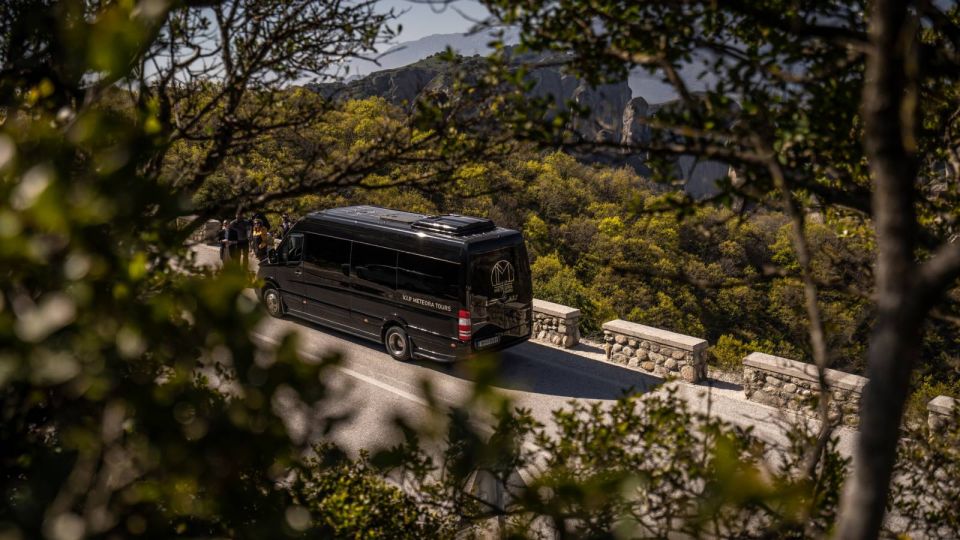
The comfort details are also not nothing. You’ll have bottled water, Wi‑Fi, and an air-conditioned vehicle (listed as a VIP-class minibus). Those small things help on a day that runs close to 14 hours.
Also worth knowing: seats are assigned according to the tickets you’re sent, so it’s less chaotic than some open-seating day trips.
Monasteries with viewpoints and interior time
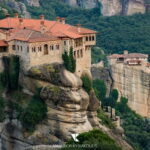
The headline is simple: you see all 6 monasteries from close range, and you visit the inside of 3. That combo is usually the sweet spot for a one-day schedule: enough variety to avoid the feeling of repeating the same building, while still giving you real interior atmosphere.
The close-range “six-monastery” overview
Seeing all six from viewpoints does more than check boxes. It shows you how each monastery relates to the rock network. From these angles, you can spot patterns: the way buildings hug the cliffs, how access routes were planned, and why the wider area feels almost staged. It’s also when the guide’s stories matter most, because Meteora’s setting is dramatic enough that you’ll want context to make sense of it.
You can also read our reviews of more tours and experiences in Athens

Interior visits: why 3 monasteries is the right number
Walking into monasteries changes the whole experience. Outdoors, Meteora is about scale and light. Indoors, it becomes about silence, stone details, and the feeling that you’ve stepped into a space meant for slower living.
Even though the interior experience is different monastery-to-monastery, one practical caution is that you should still expect similar general styles. The big win is that three visits give you enough comparison points to notice differences in layout and atmosphere rather than feeling like you’re seeing three versions of the same room.
“Skip the ticket line” and how it affects your time
Time is the real currency on a day trip like this. The tour includes skip-the-ticket-line, which helps you avoid losing your best energy to queues at the monasteries. That matters because the day is already packed with transportation legs and a set block of time on site.
Just remember: you still need to budget for monastery entrance fees. The tour notes it as €5 per person per monastery (and the state-licensed guide inside monasteries is not included). So you’re paying extra to actually enter, but you’re not paying extra in lost time.
Hermit Caves: a calmer stop with strong meaning
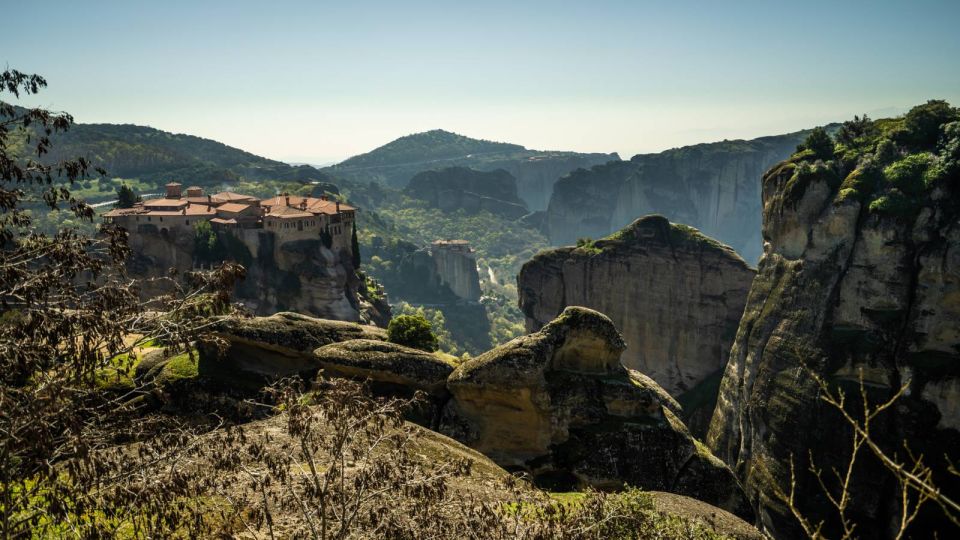
Between the monastery visits and the photo stops, there’s a stop for the Hermit Caves. This matters because it shifts the day away from the more formal, public face of monastic life.
Caves are often where you feel the concept of retreat most clearly. They’re smaller, more intimate, and less about grand spaces. Even if you’re not an expert on the area’s spiritual history, the Hermit Caves stop adds a human scale to the rocks. You can think of it as the tour’s way of balancing spectacle with reflection.
Small-group touring up to 9: how the day feels in motion
A max group size of 9 people is a big quality difference. With fewer people, the guide can keep everyone together without constantly herding. That reduces the amount of standing around you’ll do during transitions.
It also helps conversations. The tour is led by a local English-speaking tour leader, and guides associated with this service (including George and Vagelis) are described as sharing historical context during the ride, not saving everything for the last minute. That approach helps you connect the view in front of you with the stories behind it, instead of treating Meteora like a slideshow.
There’s also a small comfort bonus with group size: when the group is unusually small, you might ride in a more personal vehicle type. One past experience tied to this service mentions a comfortable Mercedes sedan when the group was tiny, which shows you the operator can scale the ride to the day’s headcount.
What’s included, what costs extra, and how to budget
Let’s talk money in plain terms, because Meteora has extra costs that trip people up.
Included
You get:
- Round-trip tickets from Athens to Meteora area (as handled by the operator)
- See all 6 monasteries from close distance
- Visit 3 monasteries inside
- Hermit Caves stop
- Local English-speaking tour leader
- Small group up to 9
- Pick-up/drop-off at Kalampaka’s Train Station
- Bottled water
- Air-conditioned vehicle
- Wi‑Fi
- Skip the ticket line
Not included (you’ll want cash)
- Monastery entrance fees: €5 per person per monastery
- State-licensed guide inside the monasteries
- Meals/snacks/soft drinks
- Personal travel insurance
Meals being excluded is important. It means you should bring a plan for lunch time. The day includes a break and some time for on-site stops, but you shouldn’t count on food being included.
A simple budgeting tip: set aside money for the monastery entries and a modest lunch. If you’re sensitive to long travel days, also buy your own water or snacks before you arrive in the Meteora area, just in case the timing doesn’t match your hunger.
Who this Meteora day trip suits best
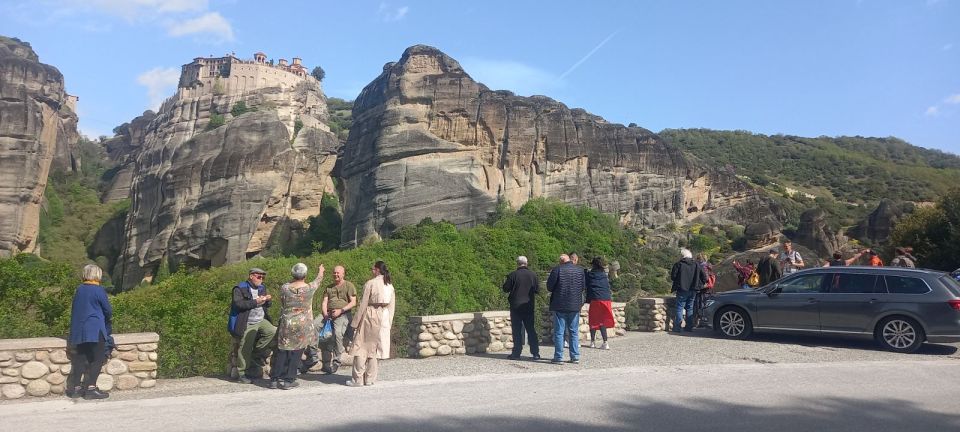
This tour is best for people who want structure. If you’re the type who doesn’t want to wrestle with multiple connections, it helps a lot that transport and a guide are packaged together.
It’s also a good match if you love panoramic viewpoints, because the day is built around photo angles and close-range viewing of all monasteries. And if you want cultural context without over-planning, the guide’s stories and legends are part of what you’re paying for.
Not suitable for
The tour states it is not suitable for:
- People with back problems
- People with mobility impairments
- Wheelchair users
- People with heart problems
- People with recent surgeries
So even if you can technically manage stairs in one setting, be cautious. Meteora day trips combine walking on uneven terrain and getting between viewpoints and monastery areas.
Quick booking checklist: shoes, cash, and what to bring
If you want the day to feel easy instead of exhausting, prep like this:
Bring:
- Passport or ID card
- Comfortable shoes (this is a must)
- Camera
- Comfortable clothes
- Cash (for entrance fees)
And follow the on-board rules:
- No smoking in the vehicle
- No alcohol or drugs
- No alcoholic drinks in the vehicle
- Don’t touch exhibits
- No nudity
Also, keep an eye on your email. The operator contacts you a few days before the tour with detailed instructions, so check your spam folder too.
Should you book this Athens to Meteora day trip?
I’d book this tour if you want Meteora without the headache of planning transport across multiple segments and coordinating monastery visits on your own. The small group, the fact you see all six monasteries from close range, and the interior visits to three make it a smart one-day balance.
Skip it if you strongly dislike long days. You’ll be traveling most of the day, and you’ll be on your feet enough that the tour’s “not suitable” list should be taken seriously. It’s a great cultural-and-view day, not a slow stroll.
If you can handle an early start and you pack the basics (good shoes plus cash for entrance fees), this is one of the better ways to experience Meteora from Athens in a single shot.
FAQ
How long is the day trip from Athens to Meteora?
The tour duration is about 14 hours, with travel time from Athens to the Meteora area and a full day block on site.
Do we visit all six monasteries inside?
No. The tour includes close-range viewing of all 6 monasteries, and you visit 3 monasteries inside.
Are monastery entrance fees included in the price?
No. Entrance fees are listed as €5 per person per monastery, and the state-licensed guide inside the monasteries is not included.
What about meals during the trip?
Meals, snacks, and soft drinks are not included. You’ll have time for a break during the Meteora portion, but you should plan for lunch on your own.
How do the transport steps work from Athens?
You’ll board a train bound for Kalabaka from Athens on your own, then disembark part-way through to board a bus using the same tickets provided. A note also explains that rail trips may be replaced with a modern air-conditioned 35-seater bus due to restorations, with similar travel time.
Is this tour suitable for people with mobility or health limits?
No. It is not suitable for wheelchair users, and it also does not suit people with back problems, mobility impairments, heart problems, or recent surgeries.
You Might Also Enjoy
More 1-Day Tours in Athens
More Guided Tours in Athens
More Tour Reviews in Athens
- All Day Cruise -3 Islands to Agistri,Moni, Aegina with lunch and drinks included
★ 5.0 · 4,958 reviews