REVIEW · ATHENS
Athens: the Great Greek Philosophers Guided Tour in Spanish
Book on GetYourGuide →Operated by Secrets of Greece IKE · Bookable on GetYourGuide
Athens can feel like a museum. This tour turns it into a living debate. You follow the logic of ideas across central Athens, using specific places tied to the big names of Greek philosophy.
What I like most is the way the guide links sites to the arguments people made there, not just the stonework you see today. I also love the focus on discussion-style learning, with questions that push you to think, not just listen. You’ll spend 150 minutes on foot with Plato’s Statue, the Aeropagus, and a stop tied to Socrates’ prison.
One thing to plan for: you’re in motion for the full route, and there’s no food included. If you’re hungry or you show up in shoes you regret, the pacing can feel like a challenge instead of a treat.
In This Review
- Key Highlights You’ll Actually Feel
- Turning Athens Streets Into a Philosophy Lesson
- Meeting in Front of the Statue of Plato: Start Where the Story Points
- From the Agora to the Hill of Pnyx: How Public Space Shapes Thought
- What you’ll likely notice at this stage
- Possible drawback
- The Aeropagus Stop: Where Ideas Meet Power
- How to make the Aeropagus moment work for you
- Socrates’ Prison: The Cost of Wisdom Gets Real
- One practical note
- Pnyx Hill: Where Speaking Becomes Influence
- Spanish Live Guide: How Language Changes the Experience
- Price and Time: Is $34 a Good Deal for Athens?
- Who This Tour Is Best For
- Quick Booking Check: Should You Book This One?
- FAQ
- How long is the tour?
- Where do I meet the guide?
- What languages is the tour offered in?
- What are the main stops on the tour?
- Is the tour guide included in the price?
- What should I bring?
- What isn’t included?
- What’s the cancellation policy and can I pay later?
Key Highlights You’ll Actually Feel
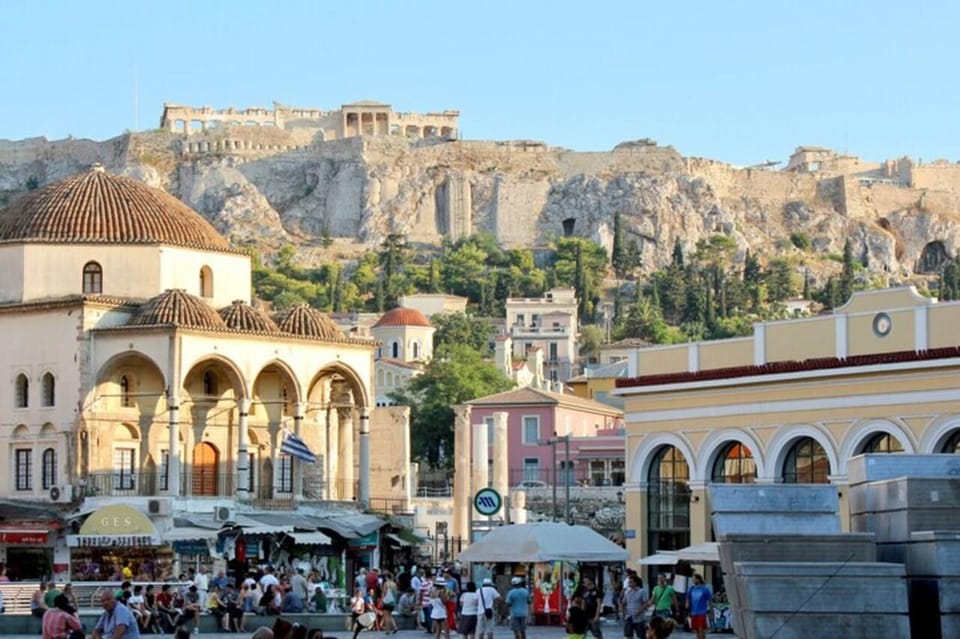
- A philosophy story built around real locations, from the Agora area to the Pnyx hill
- Three signature stops: Plato’s Statue, the Aeropagus, and Socrates’ prison
- Spanish live guidance that turns vocabulary into ideas you can use
- A question-friendly guide style, not a lecture that runs on rails
- A smart 150-minute format that fits a busy Athens day without chewing up your evening
Turning Athens Streets Into a Philosophy Lesson
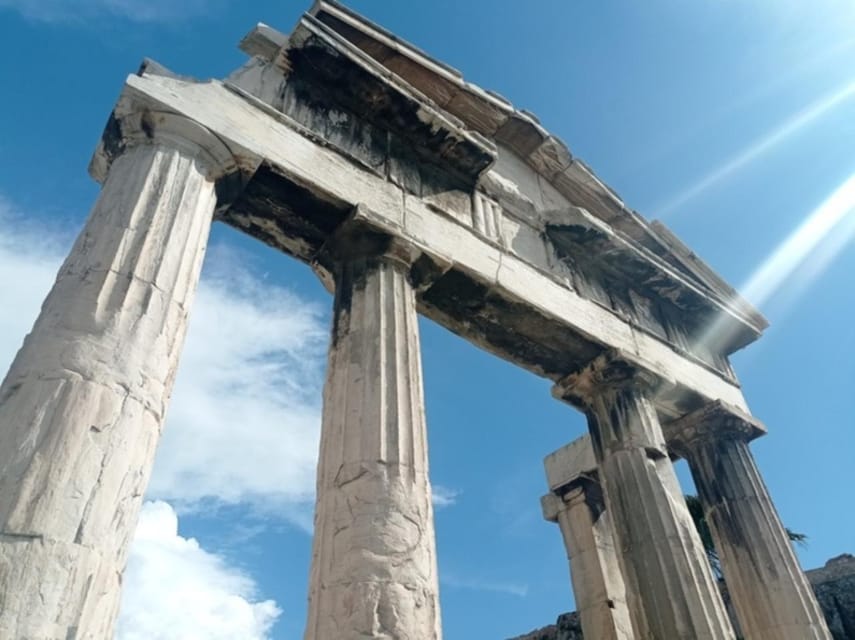
This Athens: the Great Greek Philosophers Guided Tour in Spanish is priced accessibly, but the value is bigger than the number on the ticket. For $34, you’re buying a guided storyline that gives shape to the city. Athens has plenty of monuments. This is about meaning.
Instead of treating ancient Greece as a list of names, the tour builds a cause-and-effect thread. You’ll hear how philosophy begins, how thinkers challenged society, and how being right—or even being wise—could carry real consequences. The tone is a mix of story, context, and reflection, which is why this works even if your philosophy knowledge is basic.
The route is also a practical win. It’s only 150 minutes, so you don’t have to rearrange your whole day. And because it’s a walking tour, you get that on-the-ground sense of scale: hills, meeting points, and spaces where ideas were argued in public.
You can also read our reviews of more guided tours in Athens


Meeting in Front of the Statue of Plato: Start Where the Story Points
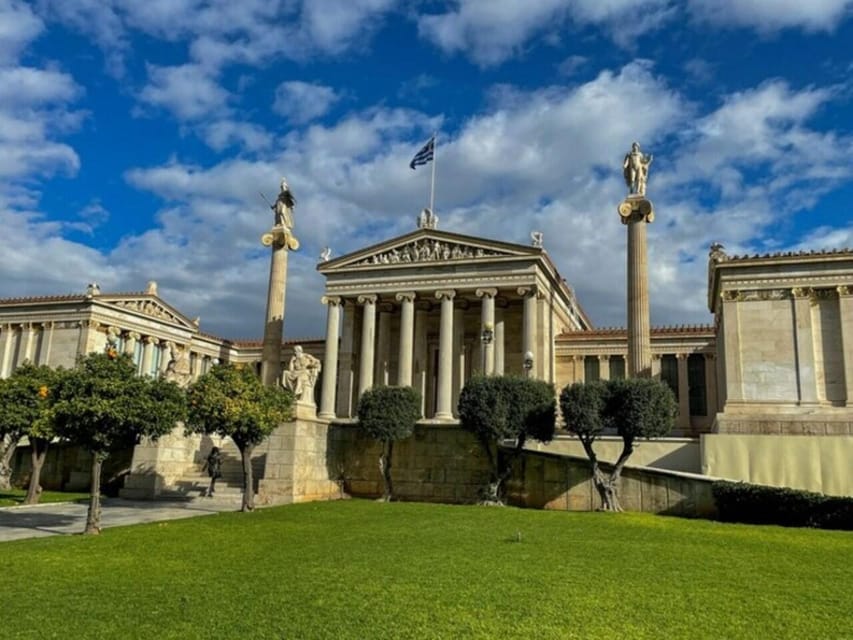
You meet in front of the Statue of Plato, and you should arrive 10 minutes early. That timing matters more than people think. Getting settled before the group starts helps you catch the first thread of the tour story, which you’ll need for the later connections.
Starting at Plato’s statue is a clue about the tour’s approach. Plato isn’t just a name on a sign. The tour uses him as a gateway into larger questions: what counts as knowledge, how societies define virtue, and why ideas spread the way they do.
Practical tip: bring comfortable shoes and water. The tour may not be long on paper, but walking in Athens can add up fast once you include hills and turning corners.
From the Agora to the Hill of Pnyx: How Public Space Shapes Thought
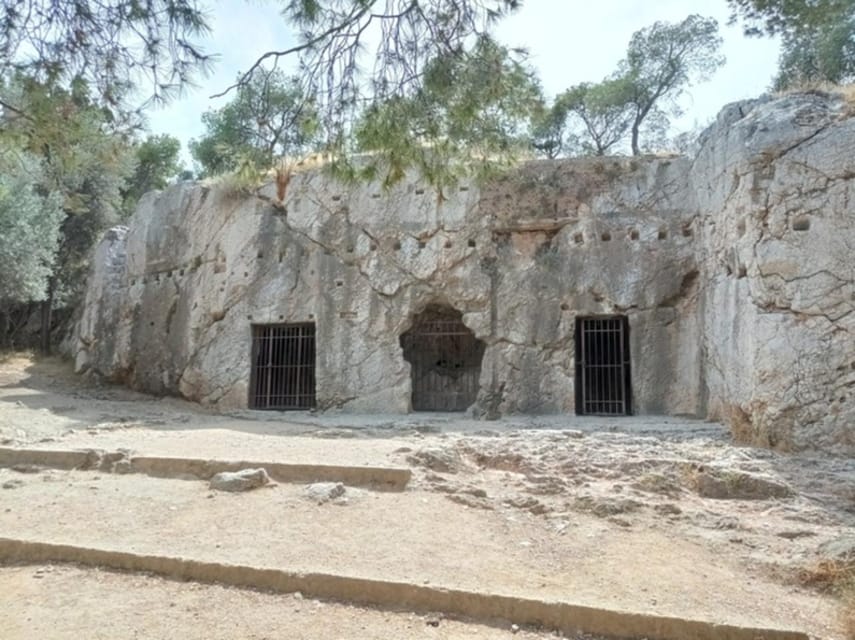
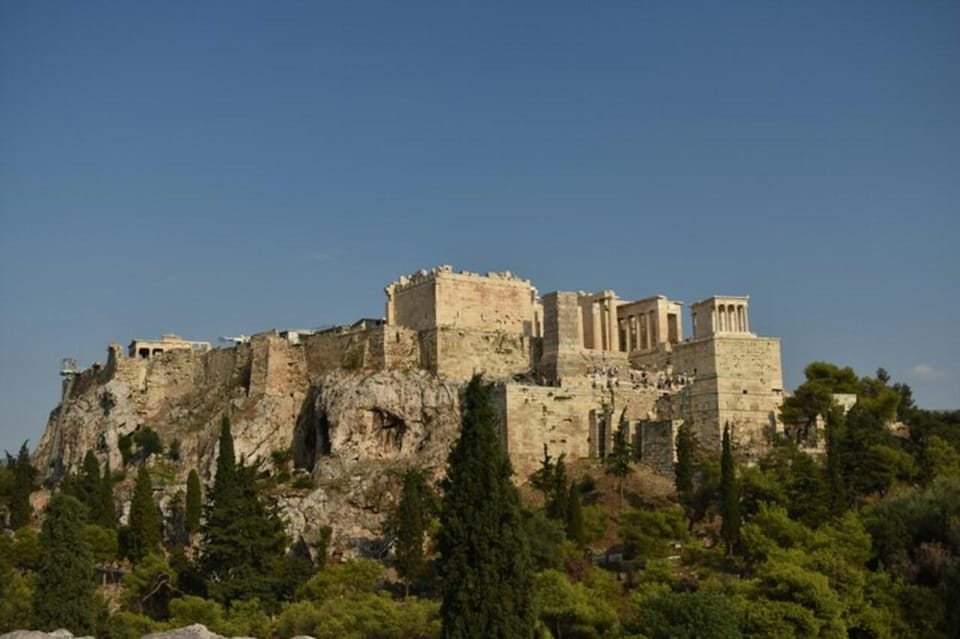
As the tour moves through central Athens, you’ll cover the symbolic geography that made ancient philosophy possible. The route references the Greek agora (the heart of public life) and then connects that world to the hill of Pnyx. Even if you’ve never studied Greek history, these places are easy to grasp because they were designed for people to show up, speak up, and judge ideas in real time.
This is where the tour’s teaching style clicks. You don’t just hear that debate mattered. You stand near the kinds of spaces where debate mattered. That physical context helps your brain store information more naturally. When the guide talks about the birth of philosophy, the setting supports it: this wasn’t philosophy in a quiet room. It was philosophy in public.
What you’ll likely notice at this stage
- You start to connect philosophy with citizenship and community, not just theory.
- The guide ties each stop to why it mattered in ancient society, which makes the route feel purposeful instead of random sightseeing.
Possible drawback
Because the tour is structured as a storyline, you’ll cover a lot of ground in 150 minutes. If you like to linger for photos, you’ll need to balance that with the group pace.

The Aeropagus Stop: Where Ideas Meet Power
One of the headline highlights is the Aeropagus. In the tour’s framing, this isn’t only a location you pass by. It’s a place tied to the social and civic side of philosophy—where thinking can bump into authority, and where discussion isn’t just intellectual. It’s public.
What makes this stop valuable is the way it helps you understand conflict in philosophy. Ancient philosophers weren’t always comfortable characters. Their ideas could threaten norms, and that friction shaped what people believed, how they behaved, and what the consequences might be.
How to make the Aeropagus moment work for you
Go in with one mindset: ask yourself what the place represents for the story. When the guide explains the symbolism and societal importance, you’re not just learning facts. You’re learning why a location can matter in politics, justice, and ethics.
And if you enjoy questions, this is a good moment to lean in. The guide style includes time for you to interact and think, not just to absorb.
Socrates’ Prison: The Cost of Wisdom Gets Real
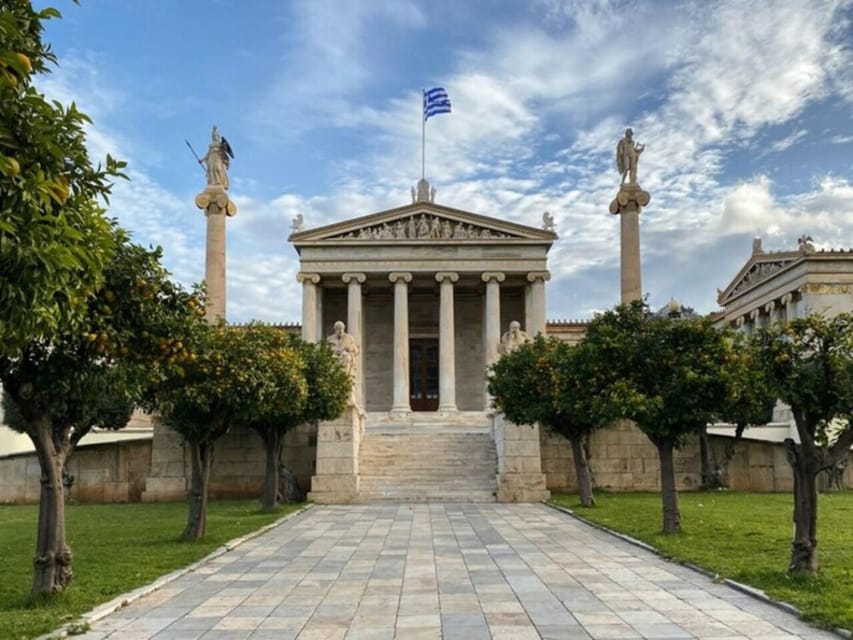
The tour’s third major highlight is Socrates Prison, a stop connected to the famous idea that wisdom can come with a price. This is one of those places where history stops being abstract.
The tour links this theme to earlier parts of the walk: the public nature of debate, the role of the community in deciding what is acceptable, and the danger of challenging established beliefs. You’ll hear the idea that being wise doesn’t automatically protect you. Sometimes it makes you a target.
This stop is especially powerful if you like moral questions. The tour’s discussion-style approach encourages you to look at bigger themes: how beliefs shape behavior, how societies enforce ideas, and what you do with uncomfortable truths.
One practical note
Socrates Prison is part of a moving walking route. If you want long photo pauses or deep reading time, plan for the fact that the guide needs to keep the group on schedule for the full 150 minutes.
Pnyx Hill: Where Speaking Becomes Influence
The tour also references the hill of Pnyx, a site tied to public speaking and political life. That matters because philosophy in Athens wasn’t only about asking questions. It was about arguing answers in front of other people.
On a city-walk like this, Pnyx helps you tie the day together. Earlier, the guide starts with the birth of philosophy and key figures. Then you see how philosophy connects to civic life. Finally, the story lands on the idea that ideas can win, lose, and affect the future.
For you, this is a strong “aha” moment. You walk away understanding that the city itself is a classroom. Not in a vague way—more like: the route shows how public space trains citizens to think out loud.
Spanish Live Guide: How Language Changes the Experience
This is a live tour guide in Spanish, and that’s not a small detail. Language affects pace, listening, and participation. The upside is that the guide can explain concepts in a more nuanced way, and you can ask questions when you want clarification.
If your Spanish is solid, you’ll probably get the most out of the philosophical references and the meaning behind the stories. If your Spanish is beginner-level, you can still enjoy the tour by focusing on:
- key names (Plato, Socrates, and the overall framework of Greek philosophy),
- the guide’s explanations of why places mattered,
- and the bigger themes the tour returns to again and again.
You’ll still benefit from the structure because the tour is anchored to clear physical landmarks. Even if you miss a detail, the route gives you enough context to keep up.
Price and Time: Is $34 a Good Deal for Athens?
At $34 per person for 150 minutes, this tour is aimed at strong value: a guided walk that covers multiple major philosophy-linked stops. You’re not paying for a long day. You’re paying for a guided narrative that gives context to what you’d otherwise see as disconnected monuments.
Here’s what’s included and what isn’t, and why it matters:
- Included: an official tour guide
- Not included: food and drinks, and personal expenses
That means you should handle your own hydration and any snack needs. Athens is warm at many times of year, and walking can sneak up on you. If you want the experience to stay fun instead of tiring, come prepared with water and plan a meal before or after the tour.
As for the pacing: the tour covers enough ground that it works best when you treat it like a guided experience rather than open-ended sightseeing time.
Who This Tour Is Best For
This tour fits best if you want your Athens day to include ideas, not just photos. I’d recommend it for:
- people who like learning through stories and questions,
- history-minded travelers who enjoy how society shapes beliefs,
- anyone curious about Socrates and how philosophy connects to everyday ethics and civic life,
- couples and friends who can discuss the themes during and after the walk.
It may be less ideal if you:
- need a fully relaxed, slow pace with lots of waiting time,
- expect a strictly academic lecture with heavy primary-text detail,
- or don’t want to navigate a walking route without built-in breaks.
Quick Booking Check: Should You Book This One?
Book it if you want a short, focused philosophy-focused walking tour with clear anchor stops and a guide who explains the city through the lens of ideas. If your schedule allows a 2.5-hour block and you’re comfortable walking in comfortable shoes, this is an efficient way to see Athens with more meaning.
Skip or reconsider if you’re looking for food included, an all-day tour, or a language you don’t speak (since it’s Spanish). Also, if you hate walking when you’re hungry, plan a snack or meal around it.
My bottom line: this is strong value for anyone who wants Athens to make you think—at street level, not just from a guidebook page.
FAQ
How long is the tour?
The duration is 150 minutes.
Where do I meet the guide?
Meet in front of the Statue of Plato, about 10 minutes before the tour begins.
What languages is the tour offered in?
The tour is offered in Spanish.
What are the main stops on the tour?
The highlights include the Statue of Platon (Plato), the Aeropagus, and Socrates Prison. The route also references the Greek agora and the hill of Pnyx.
Is the tour guide included in the price?
Yes. An official tour guide is included.
What should I bring?
Bring comfortable shoes and water.
What isn’t included?
Food and drinks are not included, and you’ll also have personal expenses.
What’s the cancellation policy and can I pay later?
You can cancel up to 24 hours in advance for a full refund. There’s also a reserve now & pay later option so you can book your spot without paying immediately.
You Might Also Enjoy



More Guided Tours in Athens
More Tours in Athens


More Tour Reviews in Athens
- All Day Cruise -3 Islands to Agistri,Moni, Aegina with lunch and drinks included
★ 5.0 · 4,958 reviews