REVIEW · ATHENS
Athens: Acropolis Visit and City Night Tour
Book on GetYourGuide →Operated by Secrets of Greece IKE · Bookable on GetYourGuide
Ancient Athens looks different after dark. This Acropolis-to-night-city combo gives you daytime clarity and nighttime drama in one smooth loop, with a big plus: you start from the main entrance area avoidance route and you get panoramic night views after. I especially like the way the guide walks you through key monuments plus the myths behind them, and I also like the added free time so you can linger where you care most. One thing to plan for: the Acropolis ticket is not included, and you must buy it before the tour starts, often with a required time slot.
In the afternoon, you’ll cover the Parthenon complex, major temples, and the Theatre of Dionysus with a licensed Spanish guide, then you’ll shift into Athens after sunset from neoclassical buildings to Syntagma Square, Panathinaiko Stadium, and the Ancient Agora view back toward the Acropolis. It’s a 5-hour day that’s designed to connect ancient Athens to the modern capital you see today.
In This Review
- Key things you’ll notice on this Acropolis + Night Athens tour
- Afternoon Acropolis: starting from the south-east side (and why it matters)
- Parthenon complex highlights: Parthenon, Propylaea, Caryatids, and Temple of Athena Nike
- Theatre of Dionysus and Odeon of Herodes Atticus: why ancient Athens felt alive
- Erechtheion, myths, and how the guide makes ruins click
- Your Acropolis ticket and time-slot reality
- Night Athens city tour: neoclassical Athens to Syntagma Square
- Zappeion, Panathinaiko Stadium, and the layers between empire and modern sport
- Metropolitan Cathedral, Little Mitropolis, Monastiraki, and the end view toward the Acropolis
- Price and value: is $53 for 5 hours a good deal?
- Who this tour fits best (and who should skip it)
- Should you book this Athens Acropolis + Night Tour?
- FAQ
- Do I need to buy Acropolis tickets separately?
- What language is the tour guide?
- Where do I meet for the afternoon part?
- Where do I meet for the night city tour?
- How long is the full experience?
- Do I need a specific Acropolis time-slot ticket?
- Are there restrictions on what I can bring or wear?
- Is this tour wheelchair-friendly?
- What if I need to cancel?
Key things you’ll notice on this Acropolis + Night Athens tour
- South-east start on the Acropolis to avoid the most crowded main approach
- Parthenon, Propylaea, and Theatre of Dionysus covered in one guided circuit
- Myths explained at the ruins, not just dates on a sign
- Spanish licensed guiding throughout the experience
- Night stops built around views, from lit monuments to an end-point with Acropolis sightlines
- Free time after the Acropolis so you can slow down and explore solo
Afternoon Acropolis: starting from the south-east side (and why it matters)
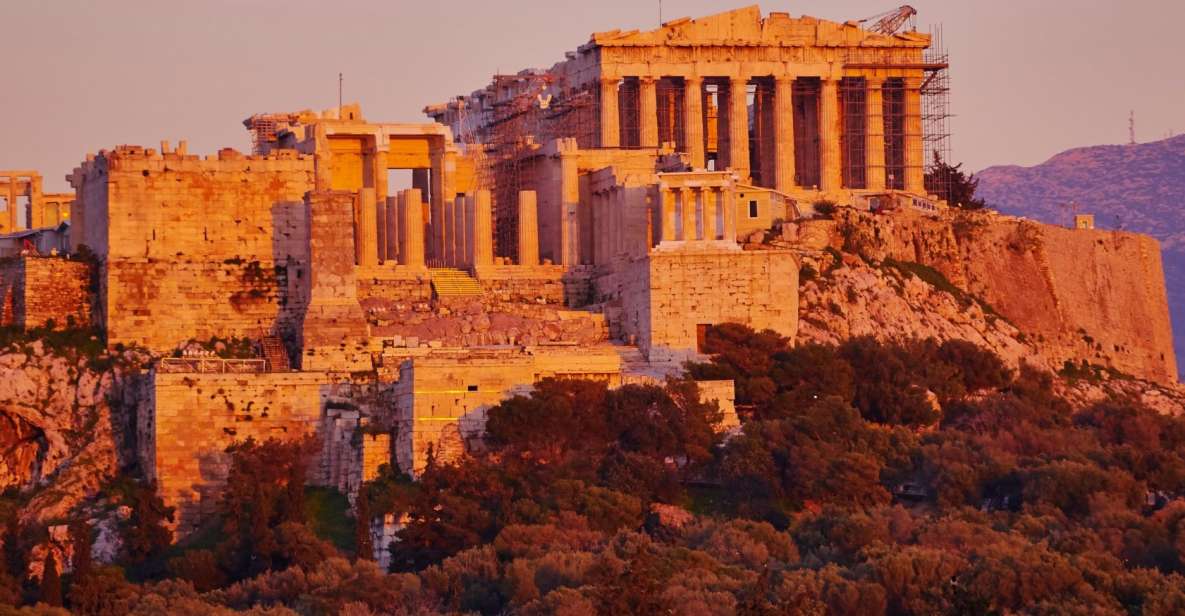
The biggest practical win here is the route choice. You begin on the south-east side rather than the main entrance, which is typically where bottlenecks form. That alone can make your afternoon feel calmer and more intentional, especially in peak months when the Acropolis can be crowded.
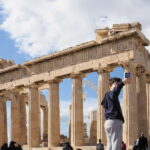
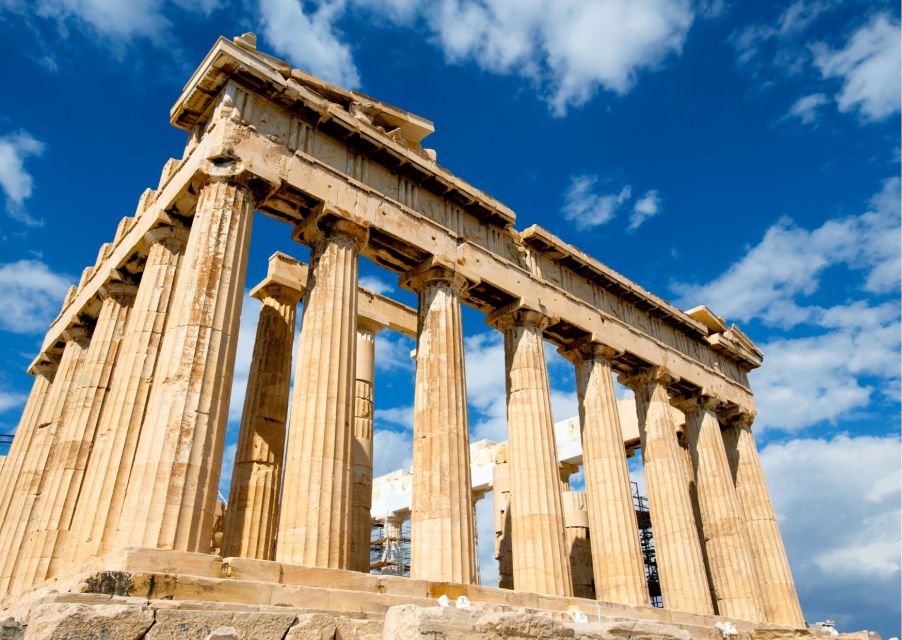
This afternoon segment is built for meaning, not just checkboxes. You’re guided through the site dedicated to Athena, and the tour is structured around major monuments and the stories Greeks told to explain why these places mattered. If you’re the kind of person who wants to look up and actually understand what you’re seeing, you’ll get more out of the stones than just photos.
I also like that you get a guide-led visit first, then a window to explore longer on your own. That’s huge at the Acropolis, because you might love one corner more than another. A guided circuit can be intense; free time afterward lets you choose your pace instead of being rushed back to the meeting point.
You can also read our reviews of more city tours in Athens



Parthenon complex highlights: Parthenon, Propylaea, Caryatids, and Temple of Athena Nike
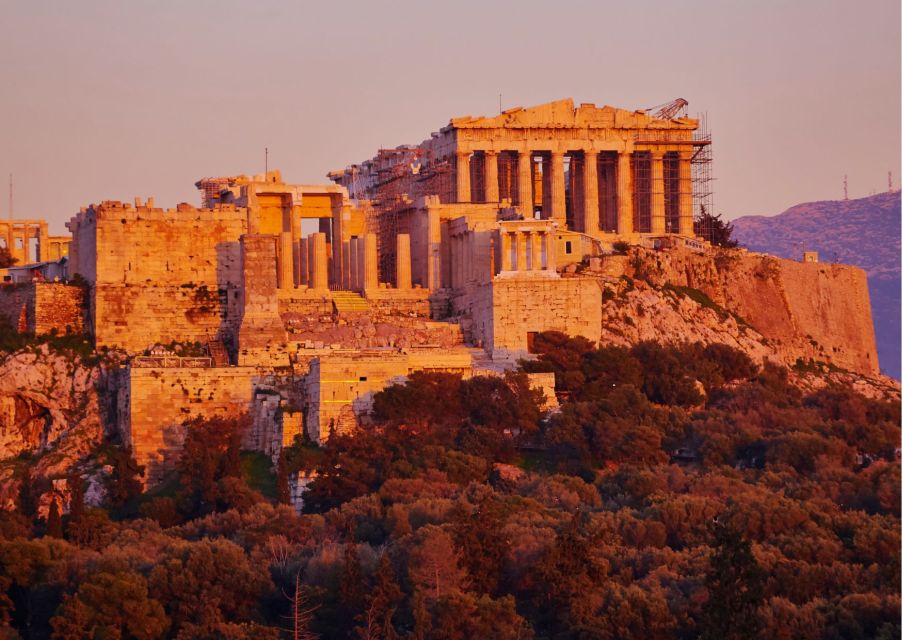
The tour routes you through the core landmarks people come to see, but it’s not a rapid-fire sprint. Here’s how this afternoon experience tends to feel as you move through it.
You’ll look at the Parthenon and the monumental gateway area Propylaea. Those two anchors help you understand the layout and the ceremonial feel of the Acropolis. The Parthenon isn’t just an impressive building; it’s part of a system of sightlines and symbolism. The gateway matters because it signals that you’re moving into a sacred world, not just walking around ruins.
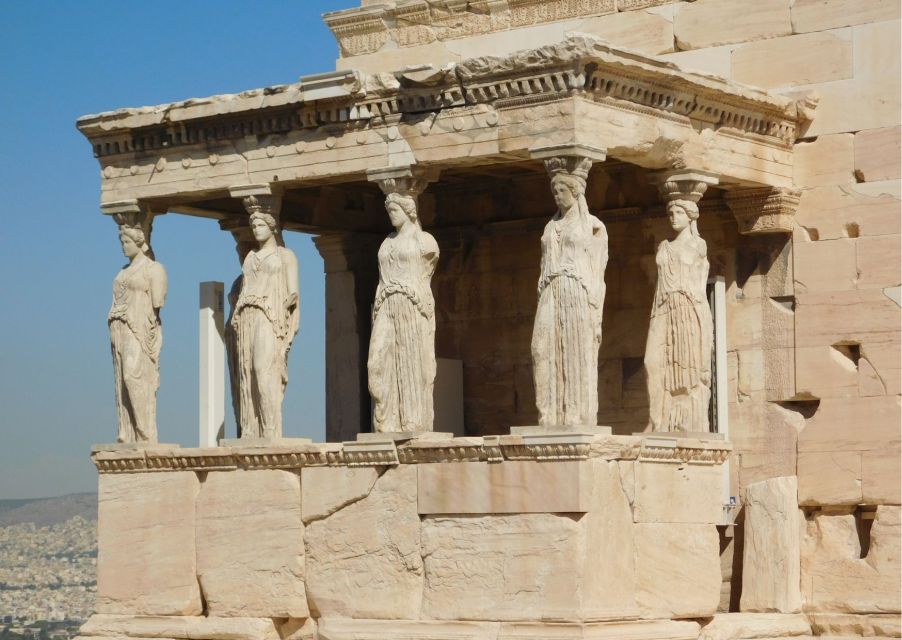
You’ll also see details that visitors often miss if they only focus on the big names. The Caryatids stone carvings are one example. They’re not “bonus decoration” on the site; they help explain how sculpture and architecture worked together to communicate power and myth.
Then there’s the Temple of Athena Nike, the smaller temple that still gets your attention. When a site includes a “small” temple among massive monuments, it’s worth slowing down and listening. The best guides connect the scale to the intent—this isn’t about size, it’s about message.
Theatre of Dionysus and Odeon of Herodes Atticus: why ancient Athens felt alive
It’s easy to treat the Acropolis like a museum. This tour nudges you to see it as a place that once hosted crowds and rituals.
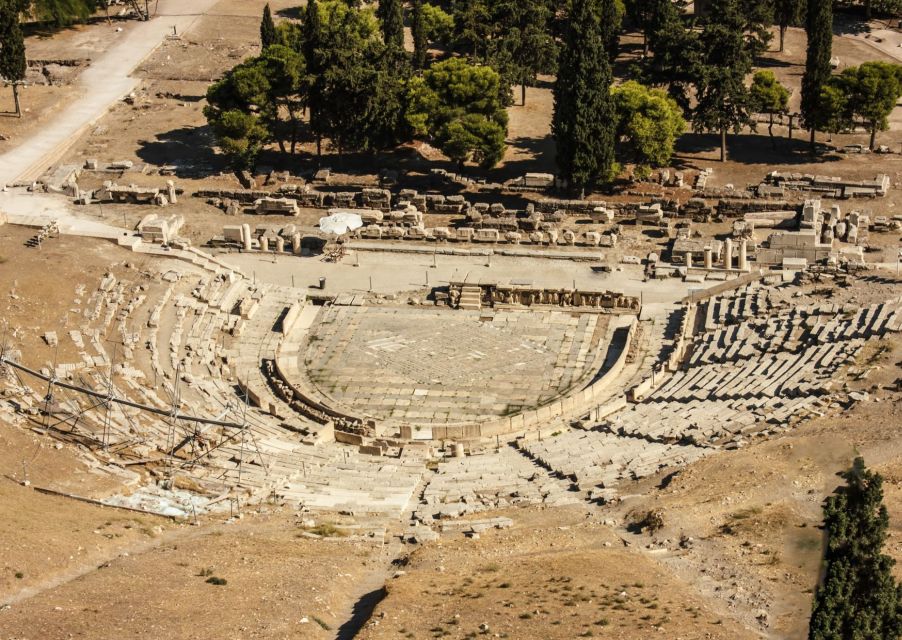
The Theatre of Dionysus is a standout stop. It seated around 17,000 spectators and was used for festivals honoring a Greek god. Even if you don’t know Greek tragedy from Greek comedy (you don’t need to), the sheer scale helps you imagine how public performances were part of civic life.
The itinerary also includes the Odeon of Herodes Atticus. That structure adds another layer: Athens wasn’t only worship; it was culture, gatherings, and public events. When you connect the theatre to the temple spaces, the whole place starts to feel less like separate categories and more like one functioning city.
Erechtheion, myths, and how the guide makes ruins click
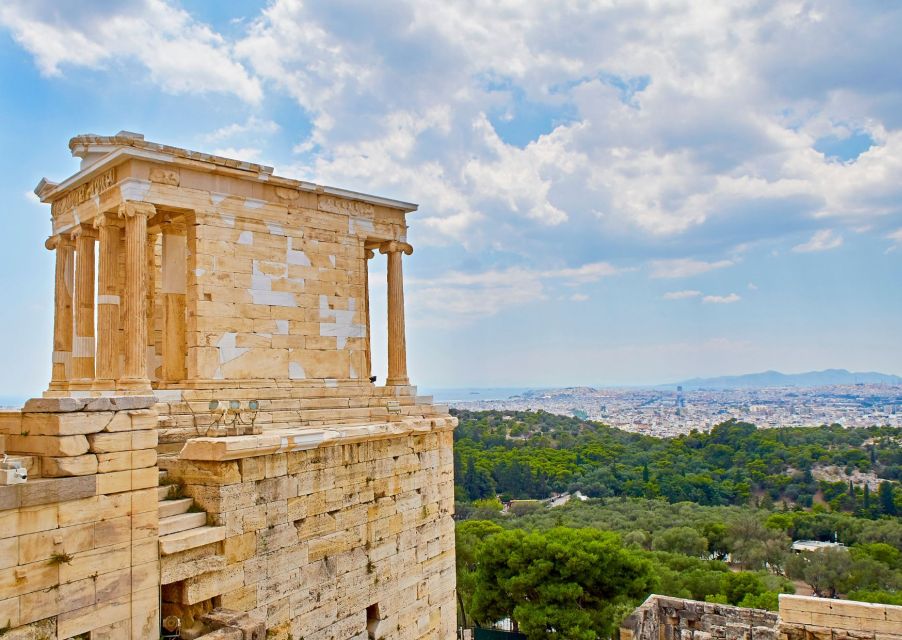
The tour doesn’t just point; it explains. At stops like the Erechtheion, you’ll hear why it’s named after the demigod Erechtheus and how the myths connect to what you’re looking at.
This is where the guided commentary really matters. Ruins can feel like random fragments unless someone ties them to the stories people used to live with. The guide’s job here is to translate stone into meaning.
I’m also glad the tour is set up to help you visualize how things looked and worked in the past. In the feedback I’ve read from this experience, guides such as Bárbara have been praised for using a folder with simulations so the Acropolis makes more sense in your head, not just in front of you. Another guide named Juan also gets credit for strong historical knowledge and friendly delivery. If you like learning that feels practical, not textbook-only, this format is a good match.
One note: one piece of feedback you may relate to is the desire for a bit more context to set the stage (like everyday life details). This tour focuses heavily on the site itself and the myths, so if you want broader “daily Athens” statistics, you’ll probably enjoy adding your own quick reading before you go.
Your Acropolis ticket and time-slot reality
Here’s the part that can trip people up, and it’s worth planning before you commit.
Acropolis tickets are not included in the tour price, and you must buy them before the activity starts. The guidance is clear that tickets can be purchased online, and the tour timing is tied to specific time slots depending on the season and the start time you choose.
If you book a 15:00 tour during low season, you need the 15:00–16:00 time slot. In high season, for a 17:00 tour you need 17:00–18:00, and for a 17:45 tour you need 18:00–19:00.
If you can’t get a ticket online, you’ll need to go to the ticket office area of the South entrance about 30 minutes earlier to wait in line and purchase there. Once you have the tickets, the meeting point is less than a 2-minute walk from that ticket office area, so you’re not scrambling across the city.
Bottom line: this tour is a great use of time, but it runs on the assumption you’ll handle the ticket step cleanly.
You can also read our reviews of more evening experiences in Athens






Night Athens city tour: neoclassical Athens to Syntagma Square
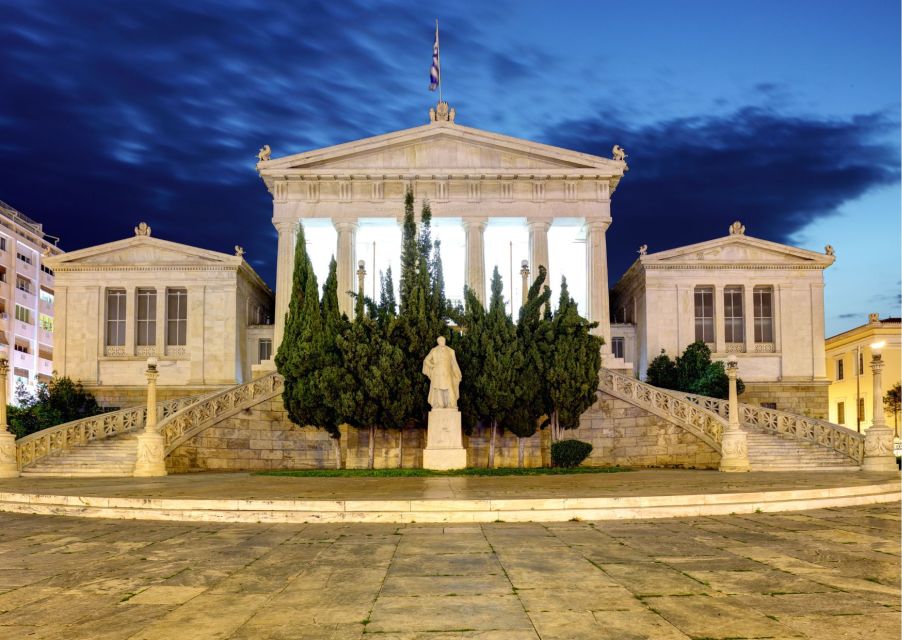
After the afternoon segment, you switch from ancient stones to modern streets—and you get a different feeling in the same city. The night portion starts at the National Library of Greece (Panepistimiou 32).
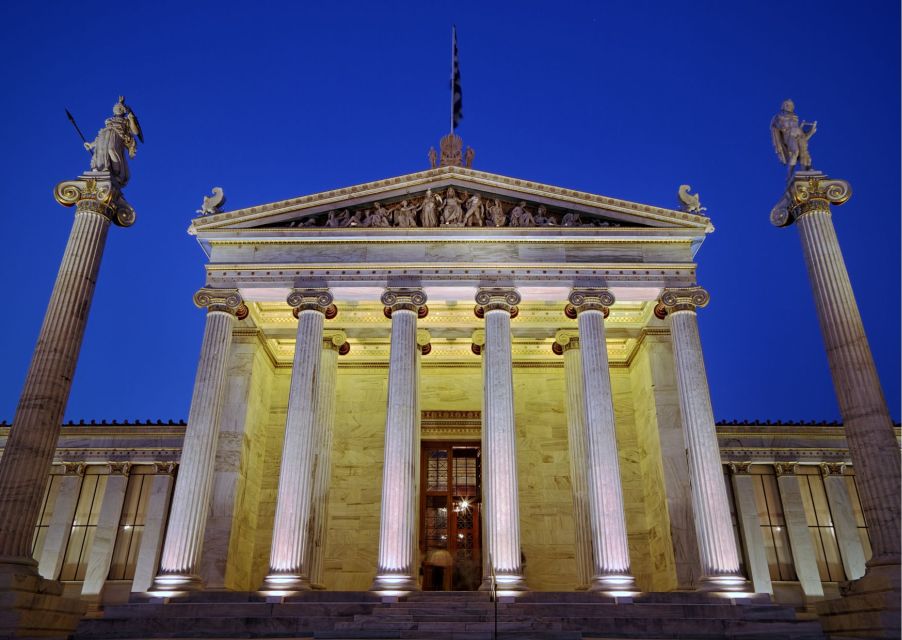
One nice touch of this evening route is that it begins with the neoclassical “trilogy” feel: you visit the National Library, then the University, then the Academy of Athens. Even if you’re not an architecture nerd, it helps you understand that Athens didn’t stop at classical Greece. The city rebuilt its identity in later centuries, and the buildings you see tonight reflect that.
From there, you head to Syntagma Square. You’ll stop to see the Greek Parliament and the presidential guard. This is one of those Athens moments where people instinctively look for something specific to watch, and this stop gives you that.
Zappeion, Panathinaiko Stadium, and the layers between empire and modern sport
Then comes a sequence that’s fun because it connects different “Athens themes” without feeling random.
In the National Gardens area, you visit the Zappeion area—linked to the Olympic Village concept—and you’ll also see the Panathinaiko Stadium, noted as the first Olympic stadium in modern history. Even if you’ve seen pictures before, it lands differently at night because it’s easier to imagine the space as a stage. It’s not only about the past; it’s about how the past gets reused.
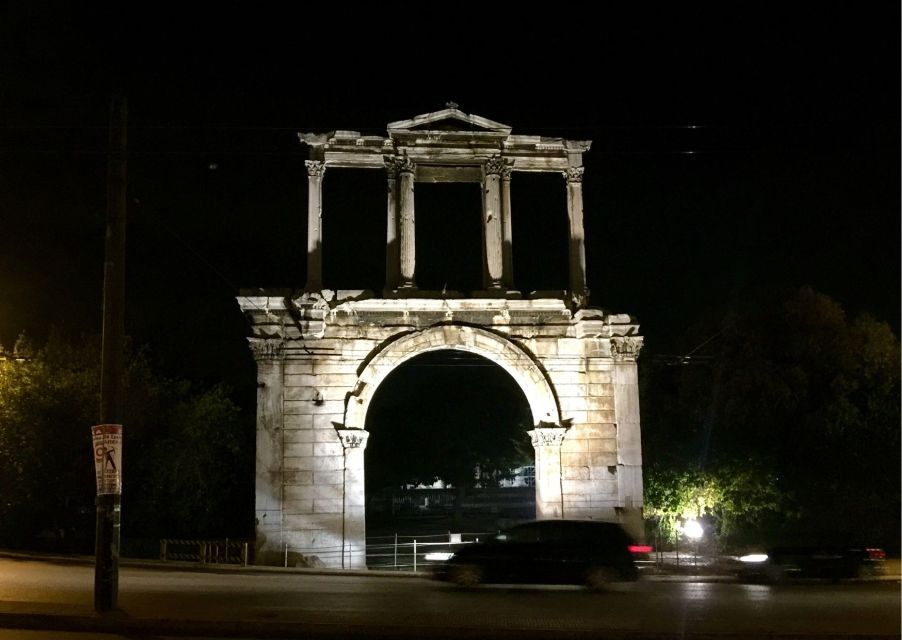
Next you travel further back again with Hadrian’s Arch and the Temple of Zeus. Seeing these between modern civic squares and sports landmarks helps you feel the city’s timeline instead of treating it as a list of dates.
If you’re the type who struggles to remember which era is which, this evening route helps. The buildings act like visual signposts.
Metropolitan Cathedral, Little Mitropolis, Monastiraki, and the end view toward the Acropolis
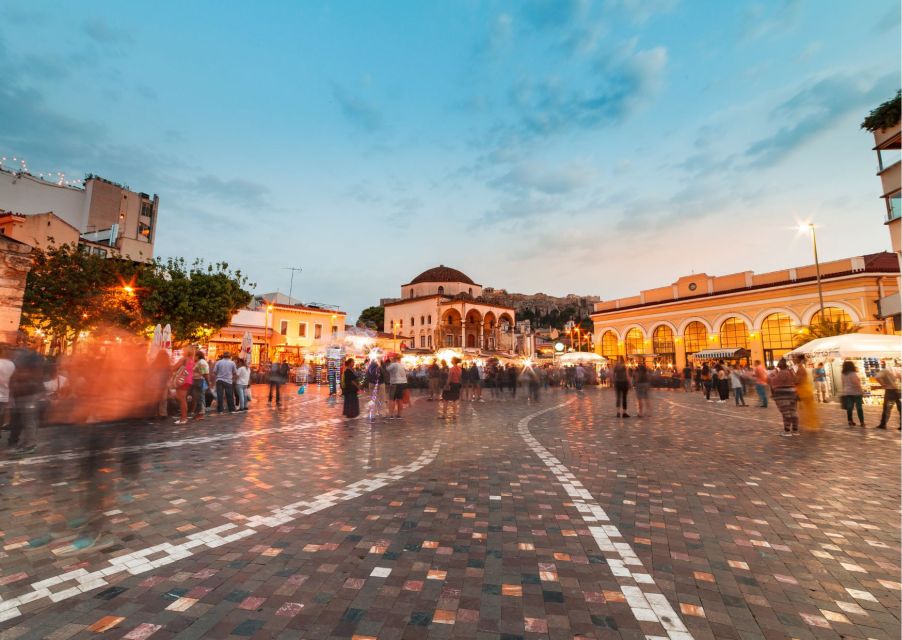
Your final stretch moves through central Athens toward the old heart of the city.
You’ll visit the Metropolitan Cathedral and Little Mitropolis, then continue to Monastiraki Square. The day ends in the Greek Agora, where you get impressive views back toward the Acropolis.
That finish matters. If you spent the afternoon learning what the Acropolis monuments mean, ending near the Agora with sightlines back up to the hill helps everything click. It’s not just a view for photos; it’s the city’s geography showing you how these places relate.
Also, Monastiraki is the kind of place where the energy is always present. If you’re in the mood to keep walking after the tour ends, you’ll likely find yourself drawn into nearby streets naturally.
Price and value: is $53 for 5 hours a good deal?
At around $53 per person for a 5-hour experience, this combo is aiming at one thing: getting you guided time on the Acropolis plus a structured night route without paying for separate services back-to-back.
The key value point is that your guided time includes both:
- A guided walk through the Acropolis monuments with a licensed Spanish guide
- A guided Athens night circuit hitting major central landmarks and viewpoints
The downside to the price is the one practical line item that isn’t bundled: Acropolis tickets. You’ll pay for those separately, and the tour depends on you matching the correct time slot.
So, does it still represent good value? Usually yes, if you:
- Want expert help on the Acropolis (where it’s easy to get lost or miss details)
- Appreciate organized night routing, especially if you’re not sure where to go after dinner
- Like the idea of a single guide for two different moods of the city
If you already know the Acropolis very well and you’d rather self-guide at night, you might spend less money on separate tickets and a DIY evening stroll. But if you want everything organized and interpretive, this price-to-time balance works.
Who this tour fits best (and who should skip it)
This experience is a solid fit if you want a guided structure and you’re okay with walking a lot on uneven ground. It’s not suitable for wheelchair users, and the tour also bars things like high-heeled shoes, baby strollers, and baby carriages. Food and drinks aren’t allowed during the tour either, so plan to eat before you start.
You’ll probably love it if:
- You want the Acropolis explained, not just observed
- You like connecting myths and architecture
- You want to see central Athens at night with a clear route and stops
You might reconsider if:
- You hate ticket logistics and prefer everything included
- You need step-free access throughout
- You’re looking for lots of free time beyond the Acropolis window (the evening portion is guided)
Should you book this Athens Acropolis + Night Tour?
I’d book it if you want one day in Athens that feels efficient and meaningful: afternoon understanding on the Acropolis, then a night route that shows how the modern capital sits on top of layers of the past.
But only book it if you’re ready to handle the Acropolis ticket step carefully and match the right time slot for your selected departure time. Once that’s done, the rest of the experience is the kind of guided day that leaves you with more than photos—more like a mental map of Athens.
If you’re short on time and you want both daytime monument depth and nighttime central-city views, this is a smart use of your 5 hours.
FAQ
Do I need to buy Acropolis tickets separately?
Yes. Acropolis archaeological site tickets are not included, and you must purchase them before the activity starts. Online purchase is recommended.
What language is the tour guide?
The guide is licensed and leads in Spanish.
Where do I meet for the afternoon part?
Meet at the Acropolis metro station about 10 minutes before the tour starts.
Where do I meet for the night city tour?
Meet at the National Library of Greece (Εθνική Βιβλιοθήκη, Panepistimiou 32, Athina 106 79, Greece).
How long is the full experience?
The duration is 5 hours.
Do I need a specific Acropolis time-slot ticket?
Yes. For low season, a 15:00 tour requires a 15:00–16:00 ticket slot. In high season, a 17:00 tour requires 17:00–18:00, and a 17:45 tour requires 18:00–19:00.
Are there restrictions on what I can bring or wear?
High-heeled shoes aren’t allowed. Food and drinks aren’t allowed. Baby strollers and baby carriages aren’t allowed either.
Is this tour wheelchair-friendly?
No. It is not suitable for wheelchair users.
What if I need to cancel?
You can cancel up to 24 hours in advance for a full refund.
You Might Also Enjoy




More City Tours in Athens


More Tours in Athens


More Tour Reviews in Athens
- All Day Cruise -3 Islands to Agistri,Moni, Aegina with lunch and drinks included
★ 5.0 · 4,958 reviews