
REVIEW · ATHENS
Athens: Acropolis Beat the Crowds Afternoon Guided Tour
Book on GetYourGuide →Operated by Alternative Athens · Bookable on GetYourGuide
Acropolis traffic and heat can mess up your whole day. This small-group afternoon tour helps you see the hill with breathing room, plus a guide who strings Greek mythology and civic history together as you move site to site. I especially like how you get myth + democracy context (not just stone facts), and I like the pace built for easing into the ruins rather than sprinting through them. One catch: the Acropolis involves plenty of stairs and uneven ground, so it is not the best fit if you have mobility limits.
I also like that this is a tour designed around timing. The afternoon slot is chosen because crowds thin out and the heat usually eases, so you can focus on what you’re actually looking at. And if you land with a guide like Christina, Michael, or Alex, you’ll likely get storytelling that makes the monuments feel connected instead of separate stops.
In This Review
- Key Takeaways Before You Go
- First Stop: Meeting Under the Arch of Hadrian
- Theatre of Dionysus: Where Drama Began
- Temple of Athena Nike: A Temple Built for Symbol and View
- Erechtheion: Details That Reward Close Looking
- Parthenon Time: The Long Stop That Makes It Worth It
- A tip that can save your feet
- The Pace, the Group, and Why It Feels Different
- Heat and Crowd Management: Why Afternoon Wins
- Tickets and Entry Fees: What You Pay vs. What You Get
- Free admission notes to keep in mind
- What’s Included vs. What You Must Plan
- Who This Tour Is Best For
- Practical Details That Will Make Your Day Smoother
- Should You Book the Athens Acropolis Beat-the-Crowds Afternoon Tour?
Key Takeaways Before You Go
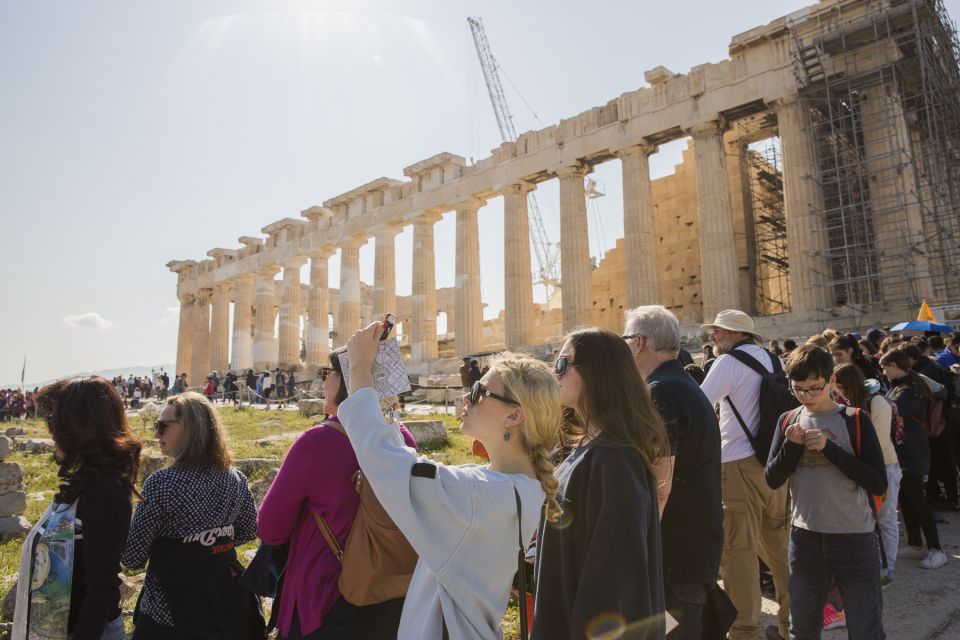
- Small group (up to 15) so questions and slow moments work
- Afternoon timing meant to cut both crowds and harsh sun
- Greek mythology woven into the monuments, not tacked on
- Structured visit with a long Parthenon stop so it sticks
- Certified guides who keep the experience moving with purpose
First Stop: Meeting Under the Arch of Hadrian
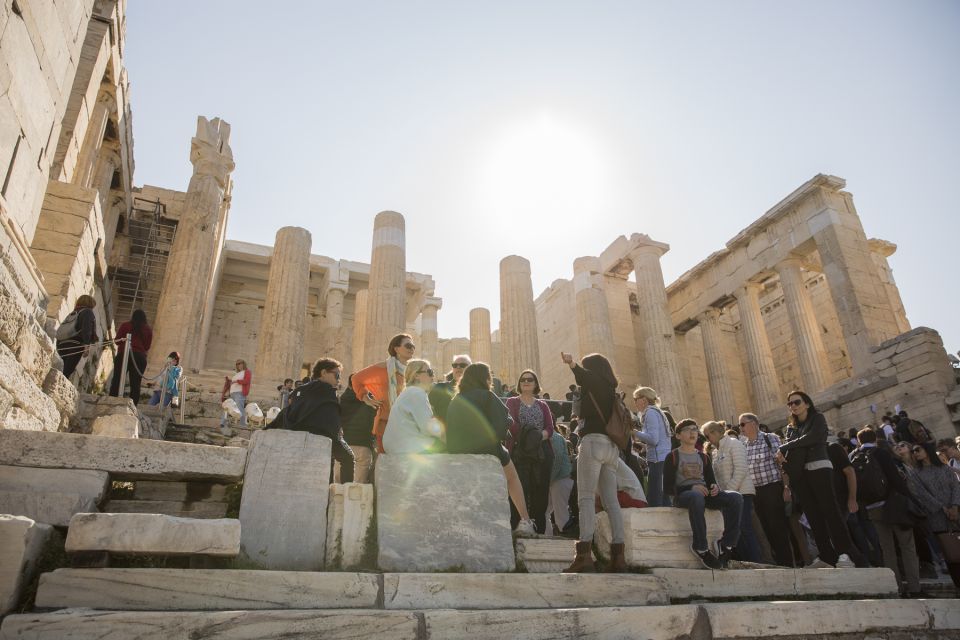
You start under the Arch of Hadrian at Hadrian’s Gate area, near Leof. Vasilisis Amalias 50. It’s a smart launch point because it grounds you fast in the bigger Athens story: not only the ancient hill, but the city around it.
From the start, this tour keeps you oriented. You’re not left guessing where you are or what matters most. That matters on the Acropolis, where the view is spectacular but the site can feel overwhelming if you don’t have a thread to follow.
You can also read our reviews of more guided tours in Athens



Theatre of Dionysus: Where Drama Began
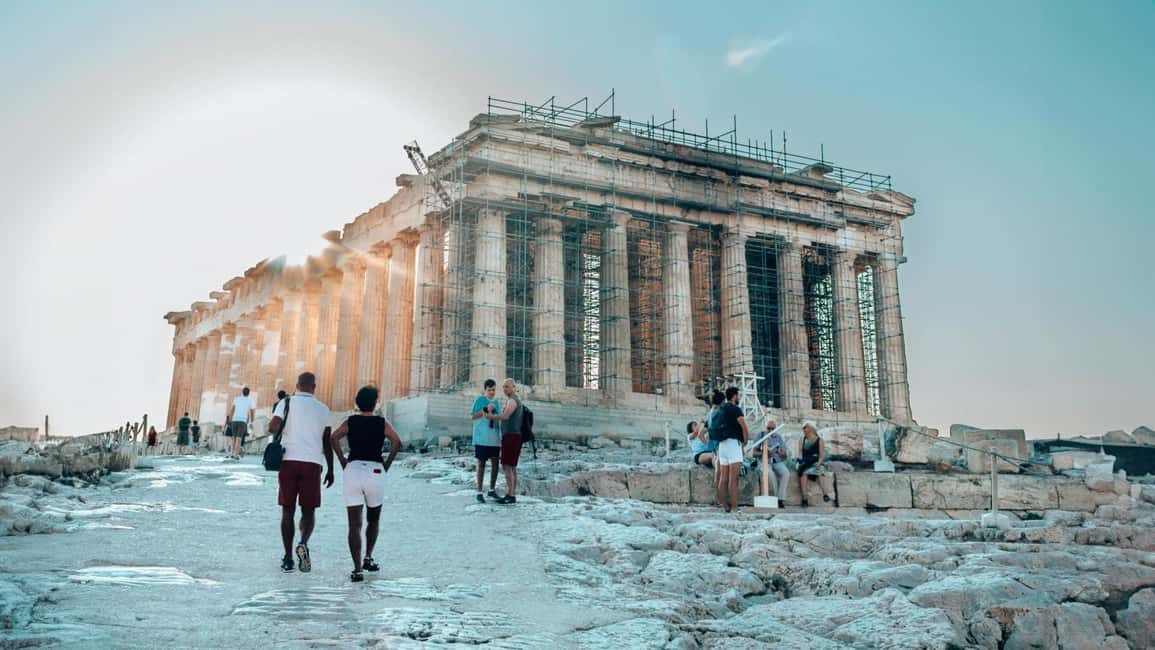
The first major stop on the hill is the Theatre of Dionysus. This is one of those places where you can almost feel the idea of the theatre taking shape: public life, performance, and civic culture all tied together.
I like this opening because it sets a theme. Even before you reach the temples and the big iconic structures, you’re understanding that ancient Athens was not just about worship. It was about ideas, public debate, and culture that people actually showed up for.
You get a guided walkthrough here with time to look around and not just pass by. If you’re a fan of stories, this is also a great moment for myth to start doing real work. The guide’s job is to connect what you see to why it mattered to people who lived there.
Temple of Athena Nike: A Temple Built for Symbol and View
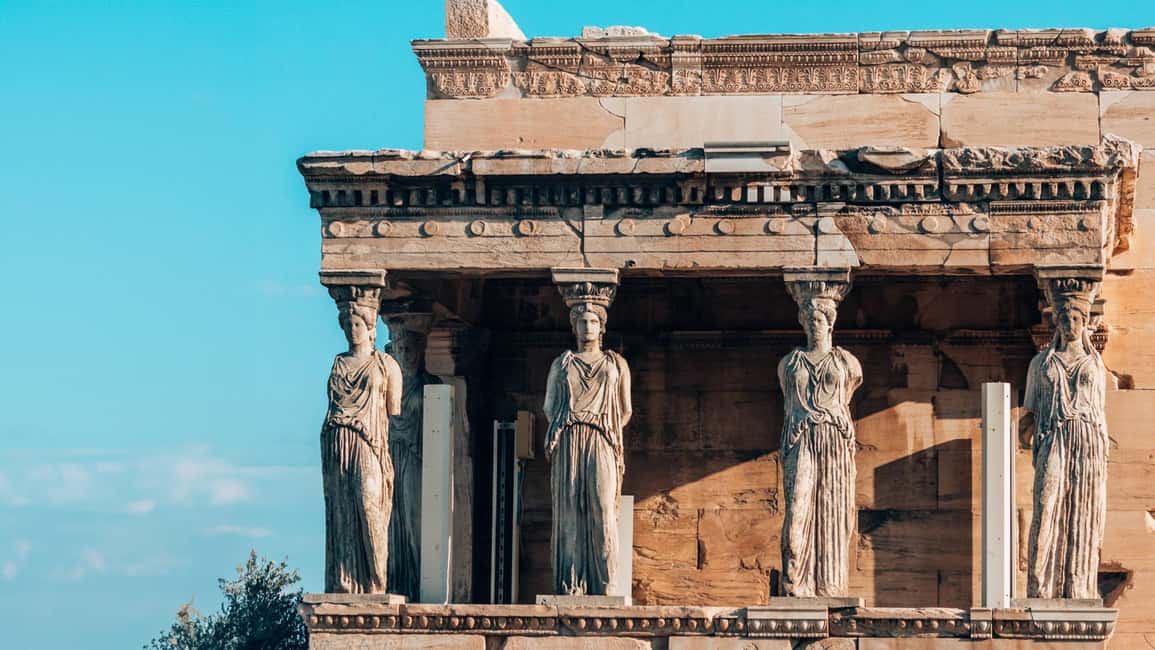
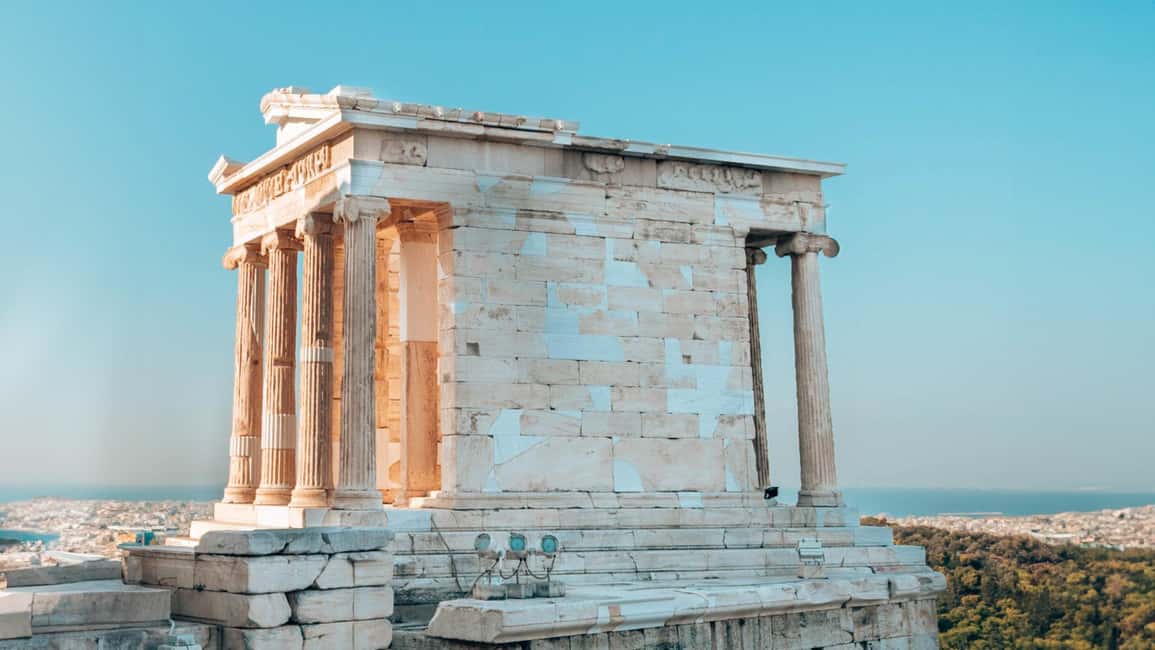
Next comes the Temple of Athena Nike. This site helps you shift from the human world of drama into the religious and political symbolism that runs through the Acropolis.
The practical benefit? It gives your eyes a change of focus. You’re not only chasing the grandest buildings. You’re seeing how different structures had different jobs—some meant for ceremony, others for identity, and some designed to frame the landscape and the city’s pride from the hill.
Even in cooler months, it can feel exposed here. If the sun is out, take advantage of the guide’s pacing and keep water handy.
Erechtheion: Details That Reward Close Looking

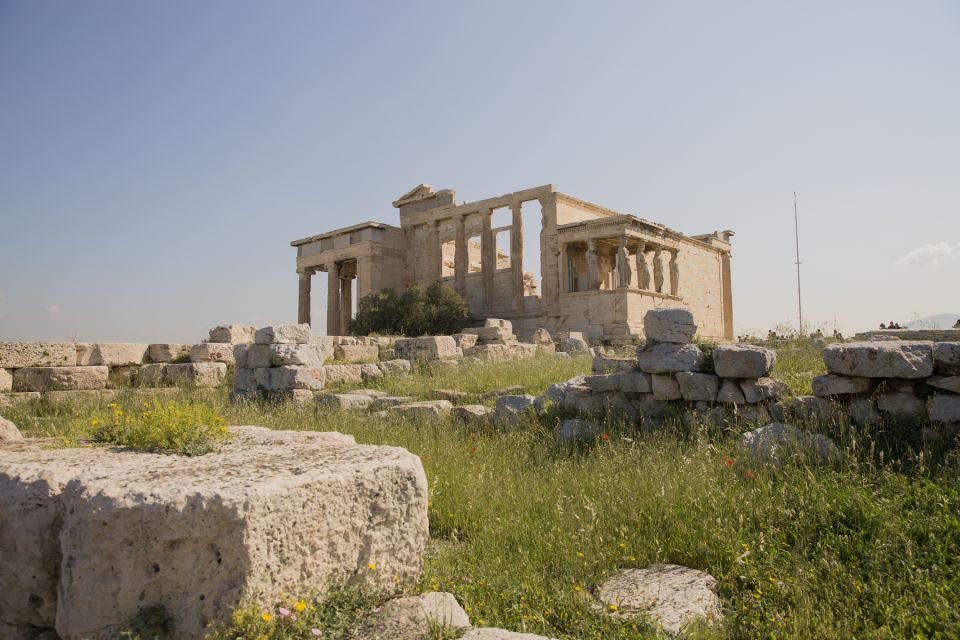
Then it’s on to the Erechtheion. This is where the Acropolis starts to reward the slower look. The guide’s storytelling is especially useful here, because the Erechtheion can feel like a stop with many parts and lots of architectural cues.
If you care about symbolism, this is a good place to pay attention. Temples on the hill weren’t only impressive in size; they were also meaningful through their associations—myth connections, local religious importance, and the way Athens presented itself.
One reason this stop works well on a guided tour is simple: the guide helps you notice what you might otherwise overlook. With enough context, you don’t just see stone. You start to see purpose.
Parthenon Time: The Long Stop That Makes It Worth It

The best payoff comes at the Parthenon, where the tour spends the most time. This is the crowning moment people picture when they say Acropolis. But the difference with a guided visit is how fast you move from wow to understanding.
You get a solid stretch at the Parthenon for guided explanation and time to absorb the details. The guide covers how Athens rose to importance and ties it to major ideas associated with ancient civic life—especially the concept of democracy. That historical framing matters because it changes your relationship to the building. It stops being a photo backdrop and becomes evidence of how a city tried to explain its power and values through architecture.
It’s also where the mythology piece often lands best. The guide connects stories and symbolism to the physical spaces you’re standing in, so your brain has something to hold onto while you’re looking.



A tip that can save your feet
Plan to wear shoes you can trust. The hill is uneven, and you’ll be moving through levels with steps. The tour is timed for a fun flow, but it is not a stroll.
The Pace, the Group, and Why It Feels Different
The biggest reason this tour earns a high rating is the combination of small-group size and a route designed for flow. With up to 15 people, you’re less likely to feel like you’re herded. And because this is an afternoon slot, you typically get a calmer experience than early mornings or peak midday crushes.
I also like the way the structure supports learning. Short guided segments at each stop keep you from zoning out, and the longer Parthenon segment gives your attention time to settle.
In the reviews, guides such as Christina, Michael, and Alex come up for being especially good at storytelling and keeping the experience lively. You can take that as a hint: the value here isn’t only the sites, it’s how the guide translates them into something you can actually picture.
Heat and Crowd Management: Why Afternoon Wins
This tour is built around timing for a reason. The Acropolis is famous, so it attracts lines. It is also famous, so it bakes in sun. An afternoon visit is often the sweet spot when crowds thin and temperatures feel more manageable.
That doesn’t mean it’s cold up there. It means the conditions are usually better for enjoying the hill instead of just surviving it. And survival is not the goal—you want your attention on the architecture, the views, and the stories.
If you’re the type who gets tired easily in heat, afternoon is your friend. If you’re sensitive to sun, still plan for it: hat, water, and sunscreen.
Tickets and Entry Fees: What You Pay vs. What You Get

The tour price is listed at $51 per person for a 2-hour guided experience. That covers the certified guide and a fun map of ancient Athens. Entry fees are not included, but the guide can arrange them, and you can also have entry tickets pre-purchased if you let them know in advance.
This is a common setup for major sites, but it’s worth planning for. Two important points:
- Entry fees are non-refundable and non-exchangeable.
- If you qualify for free admission, you can save money, but you need the right ID or passport.
Free admission notes to keep in mind
Access to the Acropolis is free for European Union citizens under 25 with valid ID or passport. And starting 01 April 2025, admission is free for EU and non-EU citizens under 18, also with valid ID or passport.
If you fall into those groups, this tour can be a very good value because your guided interpretation becomes the main cost driver.
What’s Included vs. What You Must Plan

Here’s the simple breakdown.
Included:
- Professional certified guide
- Fun map of ancient Athens
Not included:
- Entry fees
- Food and drinks
Because the tour is only 2 hours, it’s smart to handle food and water before you start. Don’t plan on buying a meal on the hill. This is a guided ruins experience, not a food stop.
Who This Tour Is Best For
This tour fits best if you want:
- A guided explanation while you’re seeing the Acropolis for the first time
- Greek mythology and civic history context, not only architecture
- A smaller group feel that reduces stress
It can also suit you well if you’re traveling with a partner or a small group and you like having one clear plan instead of wandering into the wrong entrances or losing time to guesswork.
It is not suitable for:
- Children under 4
- People with mobility impairments
- Anyone planning to bring strollers, backpacks, or big bags
That last point matters a lot. The Acropolis doesn’t allow those items, and the tour rules match that. If you’re used to carrying a backpack as your “everything bag,” you may need to rethink how you travel for this day.
Practical Details That Will Make Your Day Smoother
Bring:
- Comfortable shoes for stairs and uneven surfaces
- A water bottle and sun protection
- Your ID/passport if you want to use free-admission eligibility
Wear:
- Something you can handle in sun and heat
- Layers if the afternoon feels cool when the sun drops
Plan for:
- A route that moves with purpose. You’ll be on your feet and looking up a lot.
Should You Book the Athens Acropolis Beat-the-Crowds Afternoon Tour?
If you’re trying to choose between a free-for-all self-guided visit and a structured guided route, this tour is the clear “learning + stress reduction” option. The timing helps you avoid the worst of the crowd energy and harsh heat, and the guide-led storytelling makes the monuments feel connected. The long Parthenon stop is also a big deal—photos are great, but understanding is what turns the Acropolis into a real memory.
I’d skip it only if you need full mobility accessibility, plan to bring a stroller or backpack, or you simply want lots of unstructured wandering. In those cases, a different approach might fit better.
Otherwise, for the $51 price point, the combination of certified guidance, small group size, and myth-and-history context is strong value for an afternoon you’ll remember.
You Might Also Enjoy



More Guided Tours in Athens

More Tours in Athens


More Tour Reviews in Athens
- All Day Cruise -3 Islands to Agistri,Moni, Aegina with lunch and drinks included
★ 5.0 · 4,958 reviews