REVIEW · ATHENS
Ancient Corinth, Mycenae, Epidaurus, Nafplio Full Day Private Tour From Athens
Book on Viator →Operated by CRISPY LOCAL MONOPROSOΡΙ Ι.Κ.Ε. · Bookable on Viator
Three UNESCO sites in one long, easy day.
This private Peloponnese route is built for logistics sanity: you’re picked up in Athens and dropped back at your place, so you focus on the sites instead of maps and taxis. I like that the driver shares the big-picture stories as you ride, so Ancient Corinth, Mycenae, and Epidaurus don’t feel like random ruins.
I also love the balance of “big hits” plus downtime. You get museum time at both Corinth and Mycenae, and then you still reach Nafplio for lunch, harbor views, and wandering at a relaxed pace. The pace matters on a 9 to 10 hour day—too many tours cram in sprinting, and this one aims for checklists with breathing room.
One drawback to plan around: entrance fees are extra for the archaeological sites at Corinth, Mycenae, and Epidaurus, and some parts of Nafplio involve serious steps (Palamidi). If you’re sensitive to that, wear good shoes and decide early whether you’ll climb the full fortress trail.
In This Review
- Key points
- A Peloponnese Day That Actually Starts in Athens
- Corinth Canal: The View-First Stop That Sets the Mood
- Ancient Corinth and the Museum Reset
- Mycenae: Where the Walls Feel Like a Plot Twist
- Treasury of Atreus and the Strange Weight of Stone
- Epidaurus Theatre: A Master Class in Acoustics
- Asclepius Sanctuary: Why Medicine Took This Form
- Nafplio: Lunch, Castles, and the Harbor You’ll Want to Re-See
- Palamidi Castle and Acronauplia: Views With a Step Tax
- Price and What Makes This Feel Worth It
- Best Fit: Who This Tour Suits Well
- Should You Book This Private Tour?
- FAQ
- FAQ
- Is this a private tour or shared?
- Where does pickup happen?
- What time does the tour start?
- How long is the tour?
- Are admission tickets included?
- What sites are UNESCO World Heritage listed on this tour?
- Does the tour include food?
- Is there an official licensed guide at the sites?
- What should I know about weather?
Key points
- Private car, only your group: less waiting, fewer interruptions, and a ride that stays with you all day
- UNESCO classic-site checklist: Ancient Corinth, Mycenae, and Epidaurus in one shot
- Driver talks during the drive: you arrive with context, not just a ticket and a map
- Museums are included in the flow: Corinth and Mycenae museums help you connect what you see
- Nafplio time is real: harbor views, lunch/shopping, and old-town wandering
- Extra costs for site tickets: budget for Corinth, Mycenae, and Epidaurus admissions
A Peloponnese Day That Actually Starts in Athens
The best part of this kind of private tour from Athens is what you avoid: long train/bus transfers, searching for parking, and that moment where you realize you’re late because you misread a schedule. With a pickup from any accommodation in Athens and a dedicated vehicle, your day runs on one plan from 8:00 am to late afternoon.
This is also a smart way to see distant highlights without living in transit. The Peloponnese stretches, and major ancient sites are scattered; stringing them together in one day is efficient, but you still want enough time on-site to absorb what you’re looking at. This itinerary is built around that tradeoff: several focused stops rather than one huge museum marathon.
Finally, the “learn as you ride” part is not fluff. A driver who explains what you’re approaching helps you notice details once you’re walking around, especially at Mycenae and Epidaurus where context changes how you read the space.
You can also read our reviews of more private tours in Athens


Corinth Canal: The View-First Stop That Sets the Mood
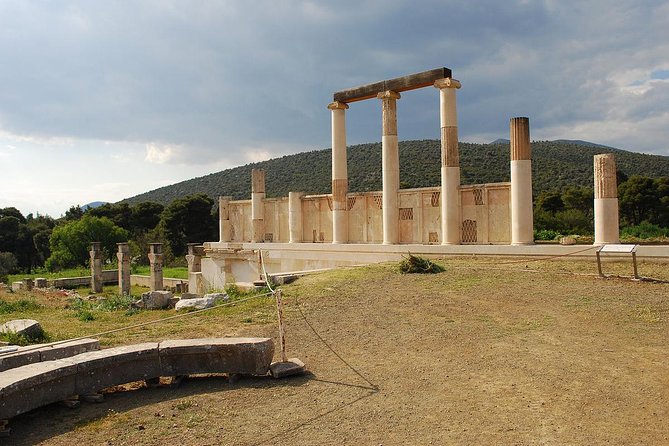
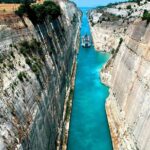
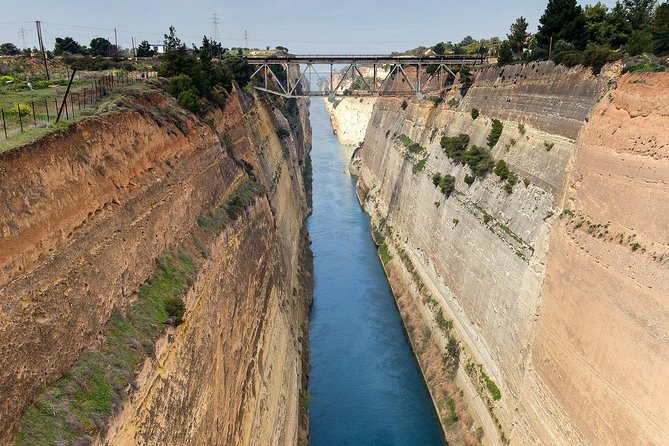
Your first major scenic break is the Corinth Canal, where the narrow land bridge between Greece’s mainland and the Peloponnese feels almost… breakable. The canal cuts through the Isthmus of Corinth at sea level, connecting the Gulf of Corinth to the Saronic Gulf. It’s 6.4 kilometers long and only about 21.4 meters wide at its base, and it’s famously too small for many modern ships.
The reason you pause here matters: you get the higher vantage view of the limestone walls and the ships working their way through. It’s not an ancient ruin, but it’s a sharp reminder that geography drives history. And since the stop notes that admission is free, it’s a low-stress way to kick off the day without adding ticket logistics.
Practical tip: bring a light layer even in warmer months. Coastal wind can make short stops feel colder than Athens streets.
Ancient Corinth and the Museum Reset
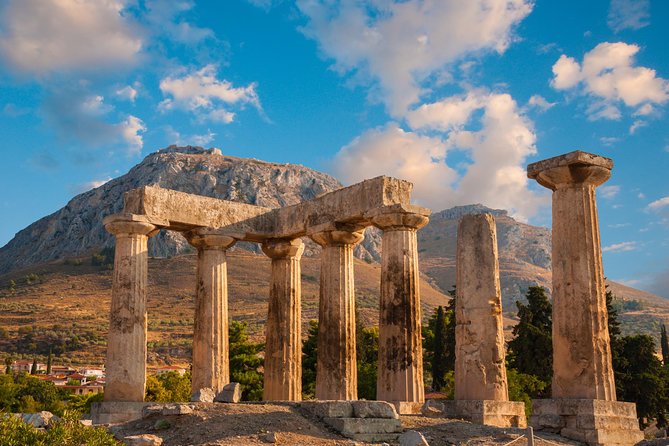
Ancient Corinth is the kind of place where you want a frame before you wander. Corinth was a city-state on the Isthmus of Corinth, roughly halfway between Athens and Sparta, and the modern town sits only a few kilometers away from the ruins. That proximity makes it easy to imagine how much this region mattered.
What really gives the site texture for many visitors is the connection to Saint Paul. Corinth is referenced in the two letters of Saint Paul in the New Testament, and it’s also mentioned in the Acts of the Apostles as part of his missionary travel. On top of that, Pausanias’ Description of Greece devotes material to Corinth, so the city keeps showing up in sources people care about.
You’ll typically spend about an hour on-site. That’s enough time to take in the layout without rushing, especially when you’re not also trying to figure out what to prioritize. Since the museum is nearby, the flow works: you see the bones of the city, then you get artifacts and context.
The Archaeological Museum of Ancient Corinth is a focused 30-minute add-on. It was constructed between 1931 and 1932 to display findings from excavations, and it sits within the broader Ancient Corinth archaeological area. This is the kind of stop that helps if you learn by seeing objects after walking among ruins.
Possible consideration: since Corinth’s admission is not included, plan for that extra cost early so you’re not surprised later mid-day.
Mycenae: Where the Walls Feel Like a Plot Twist
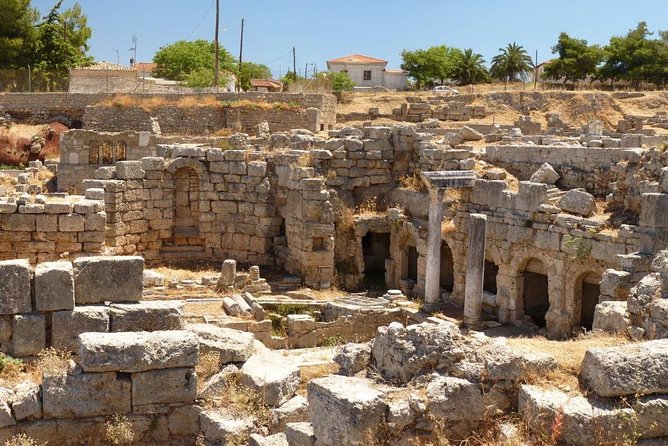
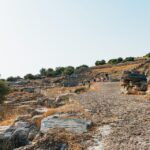
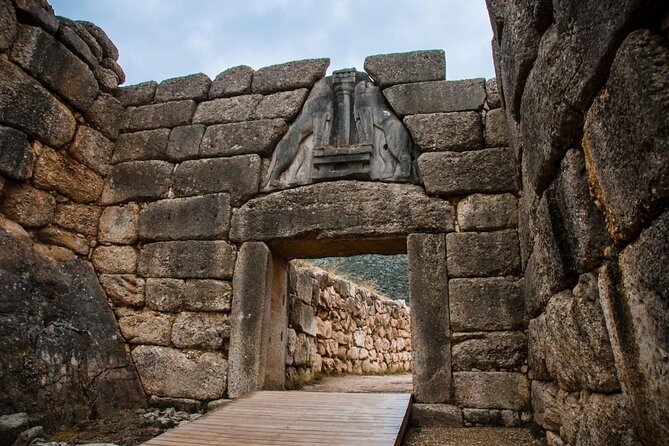
If Ancient Corinth is about connections, Mycenae is about impact. The fortified citadel at Mycenae is tied to the mythical and powerful King Agamemnon, and the site also gave its name to the Mycenaean civilization. You’re walking into a Bronze Age world that became a major center across southern Greece, Crete, the Cyclades, and parts of southwest Anatolia.
What you can look for here is spelled out clearly: the Lion’s Gate, Cyclopean walls, and the Tomb of Clytemnestra. These landmarks help you recognize the dramatic scale of the citadel even if your background is light. The tour time at this stop is about an hour, which is a good window because the site is impressive but can still be mentally tiring if you go too fast.
The ticket note is interesting: Mycenae itself is listed as free for the visit time, while the museum and certain structures have separate charges. That means you can often get the maximum visual pay-off without instantly feeling like every corner costs extra.
At the Archaeological Museum of Ancient Mycenae (about 30 minutes), located right near the entrance a few steps before the Lion Gate, you get another chance to anchor what you’re seeing. Museums at archaeological sites are most valuable when you treat them as a translator between ruin shapes and actual daily life. Even a short visit helps you make sense of the place.
Treasury of Atreus and the Strange Weight of Stone
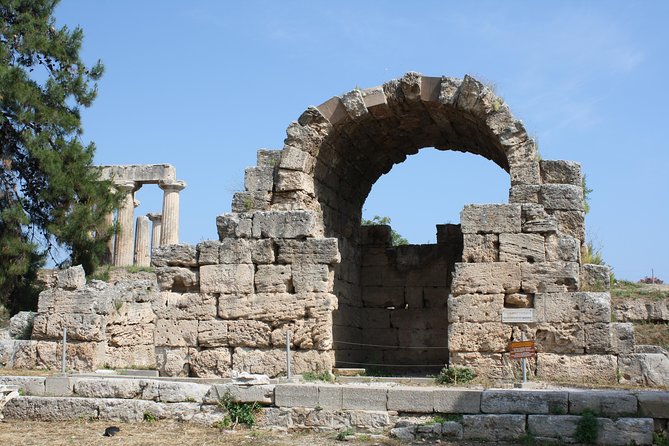
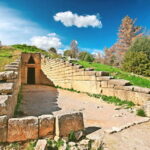
One of the most memorable quick hits on this route is the Treasury of Atreus, also called the Tomb of Agamemnon. It’s a large tholos, sometimes described as a beehive tomb, on Panagitsa Hill and dated to around 1250 BC. Even if you only spend about 10 minutes here, it’s a stop that changes your sense of what ancient people could build.
The details matter: the stone lintel above the doorway is listed at an enormous 120 tons, with approximate dimensions of 8.3 x 5.2 x 1.2 meters. That kind of scale is hard to fully grasp by looking at photos, but the sheer presence of the structure makes the numbers feel real. You’re also reminded that ancient monuments didn’t always disappear after use; Pausanias mentioned the tomb in the 2nd century AD, and it was still visible in 1879 when Heinrich Schliemann discovered shaft graves under the acropolis area.
If you’re the type who likes five-minute stops with strong payoff, this is one. It’s short, but it sticks.
You can also read our reviews of more tours and experiences in Athens
- All Day Cruise -3 Islands to Agistri,Moni, Aegina with lunch and drinks included
★ 5.0 · 4,958 reviews

Epidaurus Theatre: A Master Class in Acoustics
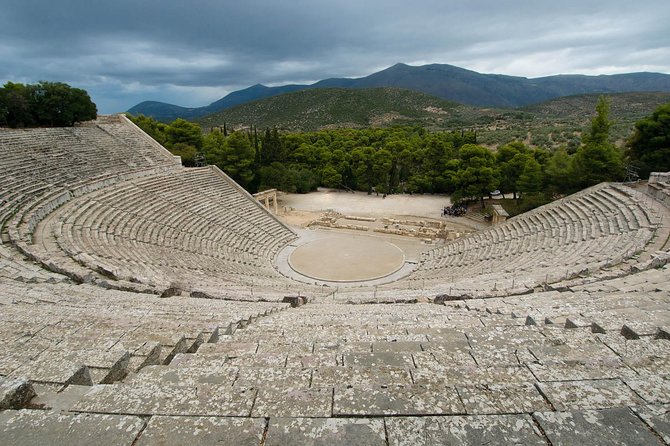
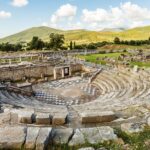
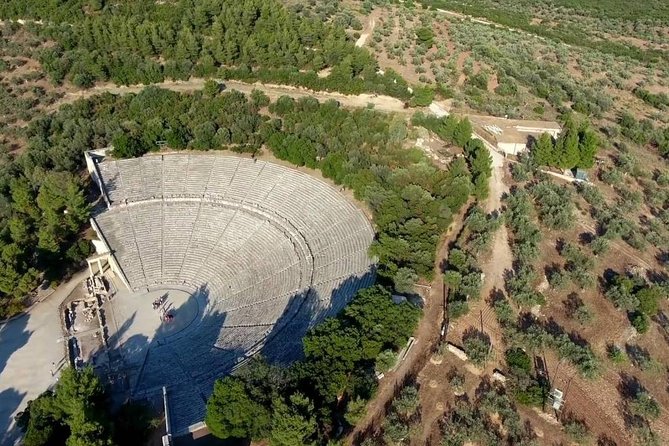
Then comes the stop that many people remember most: the Ancient Theatre of Epidaurus. The theatre sits in Epidaurus at the sanctuary dedicated to Asclepius, the ancient Greek god of medicine. It’s built on the west side of Cynortion Mountain near modern Lygourio, and it’s famous for its acoustics and aesthetics.
What makes it more than a pretty picture is the layout. The monument keeps a characteristic tripartite structure: the theatron, orchestra, and skene. During Roman times, it didn’t suffer many modifications, which helps preserve what Hellenistic design intended.
You typically spend about an hour here, which is a good chunk. Use that time to walk up, scan the seating lines, and look back toward the stage area. If you’re not sure what to focus on, focus on geometry: the way the seating curves and how it frames the space.
Asclepius Sanctuary: Why Medicine Took This Form
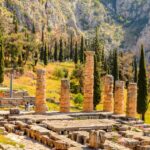
Right after the theatre, you shift from performance to ritual at the Sanctuary of Asklepios. This sanctuary was the main holy site of Asclepius, and the Epidaurus cult center was considered a rival to other big Greek religious sites like Olympia and Delphi.
The temple of Asclepius here is dated to the early 4th century BC. That’s already interesting, but the tour context also highlights what happened later: if the temple were still in use by the 4th century AD, it could have been closed during the late Roman period when Christian emperors issued edicts prohibiting non-Christian worship.
The time is shorter—about 20 minutes—so it’s best to treat this as a moment to step back and see the sanctuary as a whole. Even if you can’t read every stone, you can understand the purpose: this was a place where healing was tied to sacred practice.
Nafplio: Lunch, Castles, and the Harbor You’ll Want to Re-See
By the time you reach Nafplio, you’ve earned the slower pace. Nafplio is often called the Naples of the East, and it fits the nickname with Venetian architecture, cobbled squares, and commanding castles above the Argolic Gulf.
You’ll get around two hours here, including time for a superb lunch, coffee, or shopping. That is the right kind of break after ancient sites. You can sit, eat, and reset your brain instead of continuing to chase monuments.
Nafplio’s place in modern Greek identity also pops up as part of the story. It was the capital of the First Hellenic Republic and later the Kingdom of Greece from the Greek Revolution in 1821 until 1834. If you’re into how cities evolve, this adds a layer that many ancient-only itineraries miss.
A fun, photo-friendly moment comes near the harbor with the view of Bourtzi. Bourtzi is the Venetian castle in the middle of the harbor, and the tour gives you time to snap photos from the harbor side. You get water reflections, castle silhouette, and that classic postcard angle without needing to plan it yourself.
Palamidi Castle and Acronauplia: Views With a Step Tax
If Epidaurus is about seeing well-preserved beauty, Palamidi is about climbing for payoff. Palamidi is a fortress to the east of Acronauplia on a hill about 216 meters high. It was built by the Venetians during their second occupation of the area from 1686 to 1715.
And then comes the part your legs will remember: there are 913 steps from town to the fortress, with locals joking about it being 999 steps to the top. The tour time at Palamidi is about 30 minutes, so you don’t need to dawdle. But you should expect a real climb if you go up to enjoy the views.
From the fortress, you get commanding scenery over the Argolic Gulf and the city of Nafplio. Even if you only have a short window, it’s one of the best ways to understand why people built fortifications here in the first place: the line of sight is the whole point.
Next you have Acronauplia, the oldest part of Nafplio. Before the 13th century it was its own town, then the Venetians and Franks shaped it into part of the larger fortifications. Later it was used as a prison, and then the Greek government shifted the focus toward tourism by building a hotel complex that still stands there.
Practical tip: if climbing is not your thing, ask your driver about what you can comfortably handle. This is a private tour, so you have more flexibility than on a large group bus.
Price and What Makes This Feel Worth It
At $259.03 per person, this is not a budget tour. But it’s also not just a ticket punch for three UNESCO sites. You’re paying for private transportation with an air-conditioned vehicle, pickup from any Athens accommodation, and the convenience of a single driver managing the day.
Included items also help justify the price: bottled water, a culinary gift, and the structure that keeps you on schedule while still allowing you to explore at your own pace. Many people love this setup because it removes the usual Athens friction: the long trek between sites, the uncertainty, and the constant “how do we get there next?”
Where the cost can surprise you is admission fees. The tour price does not include archaeological site admissions. Mycenae is listed at €20 per person, Corinth at €15 per person, and Epidaurus at €20 per person. Add those to your planning so the day feels smooth financially too.
So the value equation looks like this: you’re paying for time savings, private transport, and guided context during transit, plus you’re budgeting for separate site tickets. If you want maximum independence without extra admission management, this could still be a good fit. If you’re trying to keep the whole day under a tight total budget, you’ll need to plan the ticket part carefully.
One more consideration: on any private tour, you’re in close conversation with your driver for hours. One past experience raised concerns about personal religious discussion and inappropriate remarks. If you prefer to avoid those topics, it’s smart to set expectations early and ask your driver to keep conversation neutral.
Best Fit: Who This Tour Suits Well
This private day trip suits you if you want to see multiple major Peloponnese highlights without spending your day planning. It’s a good pick for couples, friends, and small groups who like the idea of a private vehicle and a flexible rhythm at each stop.
It also works well if you like learning in motion. The driver provides historical facts as you ride, so you’re not stuck reading alone on arrival. People who get tired of listening to a formal guide for hours often like this approach because it keeps the information attached to the scenery.
If you’re traveling with older family members or anyone with mobility limits, pay attention to Palamidi’s step-heavy approach. The fortress involves 913 steps to reach the fortress area, so comfort and footwear matter.
Should You Book This Private Tour?
I think you should book it if your priority is a smooth one-day route that hits Ancient Corinth, Mycenae, and Epidaurus without the hassle of coordinating transport. The UNESCO combination plus the Nafplio break is a strong formula, and the driver-led storytelling helps you feel oriented as you walk.
Skip or reconsider if you’re trying to keep the total cost very low once admissions are added, or if you strongly dislike long step climbs. Also, if you’d rather avoid any discussion of religion or personal topics, set those boundaries early so the day stays comfortable.
FAQ
FAQ
Is this a private tour or shared?
It’s a private tour/activity, meaning only your group participates.
Where does pickup happen?
You can be picked up from any accommodation in Athens. Airport or airport-area pickup/drop-off is available with an extra charge.
What time does the tour start?
The start time is 8:00 am.
How long is the tour?
It runs about 9 to 10 hours.
Are admission tickets included?
No. Admission fees for archaeological sites are not included. Mycenae is €20 per person, Corinth is €15 per person, and Epidaurus is €20 per person.
What sites are UNESCO World Heritage listed on this tour?
The tour is described as covering three UNESCO listed classical sites, which match the stops at Ancient Corinth, Mycenae, and Epidaurus.
Does the tour include food?
Food and drinks are not included, though there is time for lunch in Nafplio.
Is there an official licensed guide at the sites?
The driver provides historical facts during the ride and is not described as a licensed site guide. Licensed tour guides are available upon request depending on availability.
What should I know about weather?
This experience requires good weather. If it’s canceled due to poor weather, you’ll be offered a different date or a full refund.
If you want, tell me your group size and whether anyone has trouble with stairs, and I’ll suggest a realistic plan for Nafplio and Palamidi timing within the day.
You Might Also Enjoy


More Private Tours in Athens


More Tours in Athens




More Tour Reviews in Athens
- All Day Cruise -3 Islands to Agistri,Moni, Aegina with lunch and drinks included
★ 5.0 · 4,958 reviews