REVIEW · ATHENS
Acropolis Group Tour in German or Dutch
Book on Viator →Operated by Little Owl Tours · Bookable on Viator
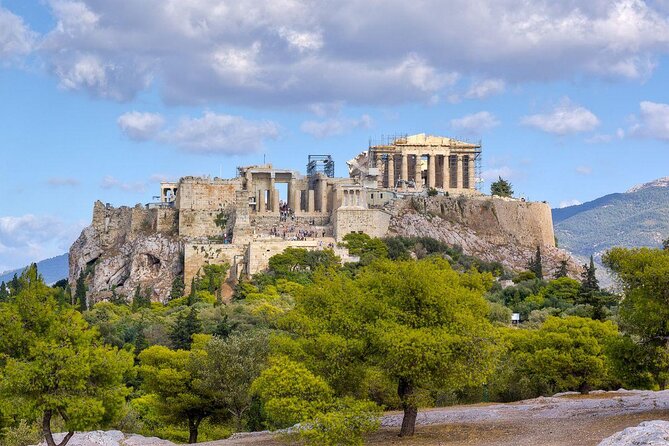
Acropolis gets easier when someone tells the myths. This German or Dutch Acropolis Group Tour turns the big monuments into a story you can follow, from the first entrance up to the best viewpoints, guided by a licensed storyteller. I love the way the guide makes myths and facts click together, and I especially enjoy the built-in reward: a 360-degree view over Athens.
I like two things most. First, the small size (max 20) keeps the pace human, so you can actually hear details without fighting for position. Second, the route is packed but not chaotic, with clear stop points like the Theatre of Dionysus and the Parthenon that explain what you’re looking at and why it mattered.
One consideration: this tour runs in Dutch or German only. If your language comfort zone is English, you may end up wishing for a translation instead of the story.
In This Review
- Key highlights you should care about
- Why this 90-minute Acropolis story tour makes sense
- Price and entrance fees: where the real costs add up
- Stop 1: Acropolis entrance walk and the 360-degree view payoff
- Stop 2 to 6: Theatre of Dionysus, Nike, Propylaea, Parthenon, and Erectheion
- Theatre of Dionysus Eleuthereus: where theater grows from worship
- Temple of Athena Nike: a tiny temple with big symbolism
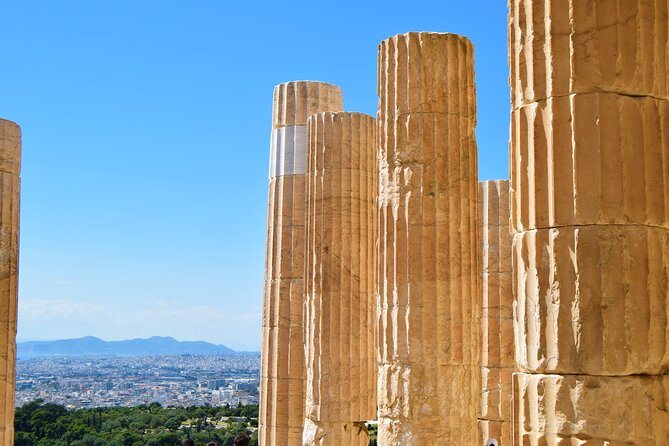
- Propylaea: the monumental gate that sets the tone
- Parthenon: why it does not have straight lines
- Erectheion and the Caryatids: columns with a story
- Stop 7: Herod Atticus Odeon and the Roman connection to modern concerts
- Who this tour fits best (and who might prefer something else)
- Should you book the Acropolis group tour with Little Owl Tours?
- FAQ
- What language is the Acropolis group tour offered in?
- How long is the tour?
- What is the group size limit?
- Where do I meet the guide?
- Where does the tour end?
- Is the entrance fee included in the tour price?
- How much are the entrance fees?
- Is bottled water included?
- What happens if the weather is bad?
- Is free cancellation available?
Key highlights you should care about
- Small groups up to 20 with a licensed guide, so the route stays manageable.
- Meeting at Acropoli metro Exit Makriyianni/Dionysiou Areopagitou, then a quick walk to the site entrance.
- Storytelling that connects monuments to mythology, from Dionysus to Athena and Poseidon.
- A real payoff at the top with panoramic 360-degree views over Athens.
- Parthenon explanations that go beyond the postcard, including how the temple avoids straight lines.
- Herod Atticus Odeon gets special attention, with its Roman origin story and summer concert connections.
Why this 90-minute Acropolis story tour makes sense
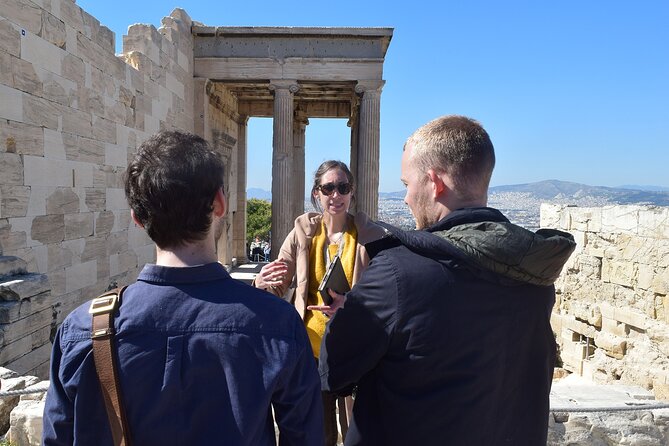
The Acropolis can feel like a checklist if you’re wandering alone. This is a tight, guided loop, about 1 hour 30 minutes, with short stop times so you get oriented fast and still move through the main sights in a logical order. For me, the value isn’t just seeing things. It’s seeing them in the right sequence, with a guide narrating what you’re looking at.
I also like the group size. With a max of 20 people, you don’t feel swallowed by the crowd. You can look up at the stone details, then turn back to the guide without losing the thread. It’s an easier experience when you’re not constantly doing shoulder-to-shoulder math.
One more practical point: this tour includes the “where do I start?” problem-solving. The guide meets you at the Acropoli metro station exit (Makriyianni/Dionysiou Areopagitou) and leads you toward the entrance. That saves time and stress before you even reach the hilltop.
You can also read our reviews of more tours and experiences in Athens.


Price and entrance fees: where the real costs add up
The tour price is $46.26 per person, and it includes a licensed guide. The part to budget for is the entrance ticket: it’s not included, and the tour states 30 EUR per adult. The operator arranges your entrance fees, so you’re not left figuring out what to buy at the gates, but you should still plan on paying the admission amount on top of the tour price.
When I think about value, I weigh what you’re getting for that money: a structured route, multiple monuments explained, and time on the hill with a guide handling the storytelling. You’re not paying only for “being there.” You’re paying for an organized experience that helps you understand what the monuments are doing, myth-wise and architecture-wise.
This is also a tour that tends to book in advance (on average about 63 days ahead). If you’re traveling during peak season, I’d treat it as a “book it once you know your dates” kind of activity, not a last-minute plan.
Stop 1: Acropolis entrance walk and the 360-degree view payoff
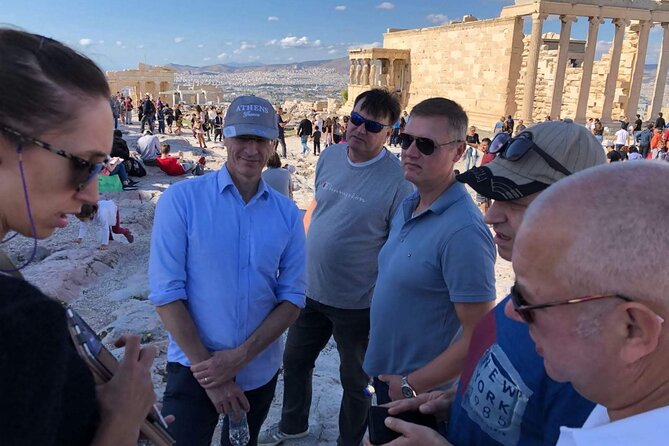
The tour starts at a very specific point: the guide meets you at the exit of the Acropoli metro station (Exit Makriyianni/Dionysiou Areopagitou). From there, you walk to the entrance and begin passing the monuments on the hill. If you’ve ever looked at the Acropolis from below, the first “oh wow” moment usually comes fast once you’re actually inside the sacred space.
This stop is all about orientation. As you move around, the guide helps you place key structures in context instead of treating everything like separate photo stops. And then you get the payoff: from the top, you’re rewarded with a stunning 360-degree view over Athens.
What I like about that plan is that the view isn’t an afterthought. It’s built into the schedule early enough that you still have momentum for the rest of the monuments. The guide’s narrative also makes the scene feel bigger than one building at a time.
Practical note: the schedule gives you about 20 minutes at this first stop, so you’ll have time for photos and a quick sit-down moment if needed, but it’s not a long “wander and linger” window.
Stop 2 to 6: Theatre of Dionysus, Nike, Propylaea, Parthenon, and Erectheion
This middle stretch is where the storytelling really earns its keep. You move from religion and performance into architecture and myth, with stops designed to explain what you’re seeing instead of leaving you to guess.
Theatre of Dionysus Eleuthereus: where theater grows from worship
You’ll visit the Theatre of Dionysus Eleuthereus, described as the birthplace of ancient Greek theater. The guide connects the origins of theater to the cult of Dionysos, the god of wine. It’s a clever way to think about theater: not as entertainment that showed up out of nowhere, but as something rooted in ritual.
You also get to admire the ancient marble seats with incised names. That detail matters because it reminds you this wasn’t anonymous “audience seating.” People had identities tied to their place in the space.
This stop is about 15 minutes, so focus on understanding the origin story, then look at the seat inscriptions before you move on.
- All Day Cruise -3 Islands to Agistri,Moni, Aegina with lunch and drinks included
★ 5.0 · 4,958 reviews



Temple of Athena Nike: a tiny temple with big symbolism
Next comes the Temple of Athena Nike, the goddess of victory. It’s noted as the smallest temple on top of the Acropolis hill, which makes it easy to miss if you’re only chasing the biggest buildings. The guide helps you notice it and makes the point that even small monuments carried serious meaning.
One of the interesting connections here is how the victory goddess inspired a famous sports brand. The guide doesn’t just say “Nike, victory”—it ties the ancient symbolism to something you’ll instantly recognize today.
This is only 5 minutes on the schedule, so treat it like a quick, focused stop: look up, get the meaning, and keep going.
Propylaea: the monumental gate that sets the tone
You’ll also see the Propylaea, the monumental entrance gate. This is more than a hallway into the Acropolis. It’s a statement, and the tour uses the time to help you understand what it signals as you pass through on your way higher.
You’ll move past a huge marble block up close. I like this kind of stop because it breaks up the long-distance sightlines. Up close, you get a sense of scale and craftsmanship that photographs often flatten.
Parthenon: why it does not have straight lines
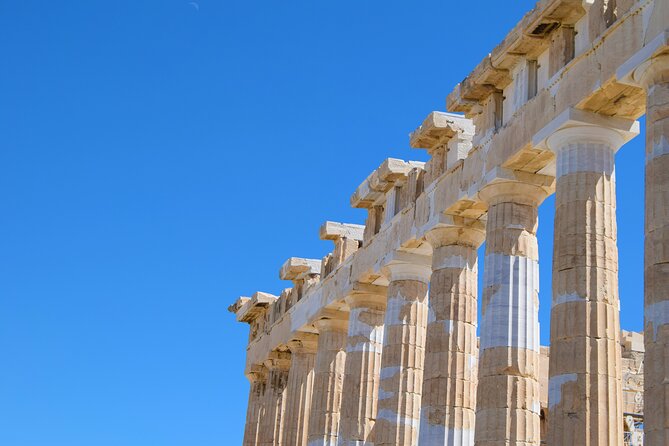
The Parthenon gets a full 20 minutes. This is the biggest temple on the Acropolis hill dedicated to Athena, and the guide explains why it’s more than a clean, geometric box. You’ll learn that the building doesn’t have straight lines and that this approach influenced architecture around the world.
That’s the kind of detail that changes how you look at the Parthenon. After the guide explains the logic, you can spot the “nothing is exactly what it looks like” qualities that make the temple feel so precise. It becomes less of a static monument and more of an intentional design achievement.
Erectheion and the Caryatids: columns with a story
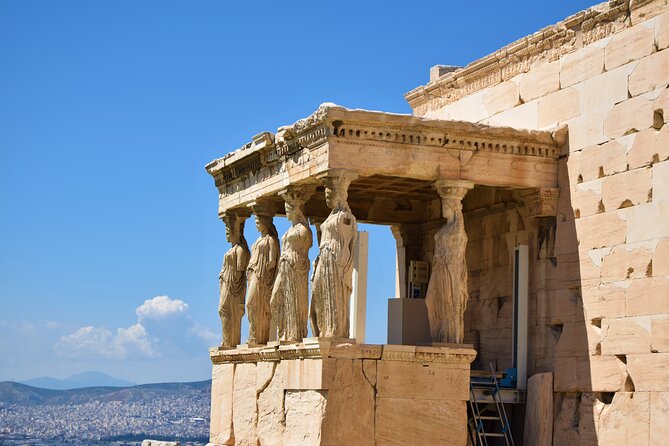
Next is the Erectheion, famous for the Caryatids, the female columns. The tour focuses on myth and consequence: you’ll discover what happened to one of the six Caryatids and where it is nowadays. The point isn’t just that something is missing; it’s how history kept changing the collection over time.
You’ll also hear the myth about the battle between Athena and Poseidon. That story gives you a reason to connect the architecture to the larger Greek worldview, where gods competed and land gained meaning through their contests.
This stop is about 10 minutes, so keep your eyes up for the Caryatids first, then let the myth story anchor what you’re seeing.
Stop 7: Herod Atticus Odeon and the Roman connection to modern concerts
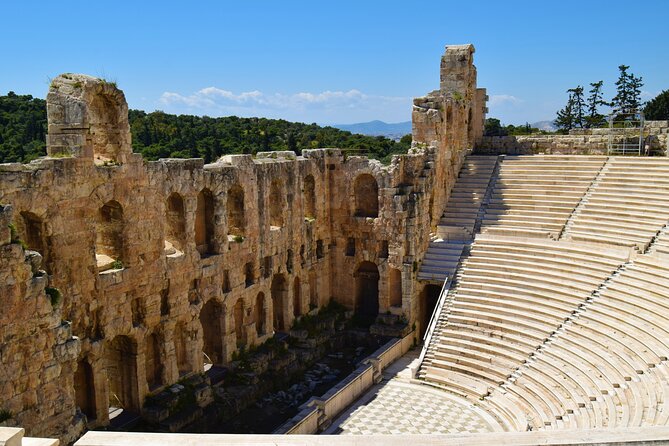
The final stop is the Herod Atticus Odeon, a restored Roman concert hall built in AD 161 by wealthy Roman Herodes Atticus in memory of his wife Regilla. That date detail helps. You start to see the Acropolis as a place that kept getting reused and reinterpreted across centuries.
You can still see great artists perform during the summer, with examples given like Sting and Patti Smith. Even if you’re not there during a concert week, it’s a great reminder that this setting still has live-audience energy, not just museum stillness.
You’ll have about 10 minutes here, which is enough for the big context: Roman power, a memorial purpose, and a stage that never really went out of use.
Who this tour fits best (and who might prefer something else)
This tour works best if you like being guided through a set route with clear explanations, rather than doing a self-guided sprint. With most travelers able to participate and a schedule built around short visits, it suits people who want the major monuments without spending half a day stuck on one spot.
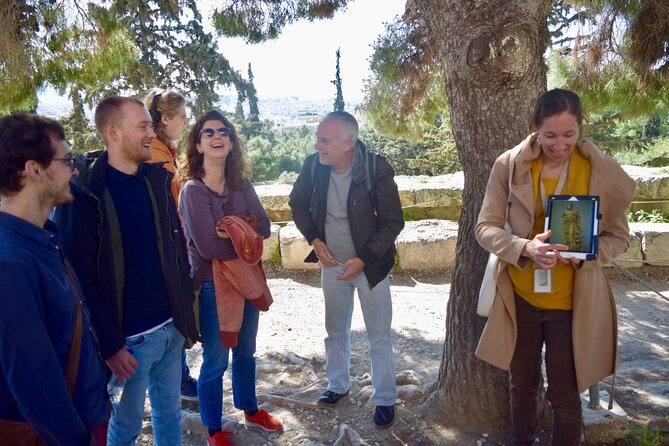
It also has a strong family vibe. The tour’s review feedback highlights it as child-friendly, and one named example is Jessica, described as very kind, storytelling-focused, and patient with children. That kind of approach matters on the Acropolis, where kids can get bored fast if the explanation is either too long or too abstract.
Where it might not fit: if you need English narration, you’ll want a different tour. The language options are Dutch or German, and you’ll feel that limitation quickly if you can’t follow along.
Also keep in mind the tour ends on top of the Acropolis Hill. That’s part of the payoff, but it means your return plan is on you after the tour wraps.
Should you book the Acropolis group tour with Little Owl Tours?
If you’re looking for a fast, well-structured Acropolis experience with a licensed guide and a story-first approach, I’d say yes—especially if you’re comfortable with Dutch or German. The mix of stops covers the headline sights (Acropolis and Parthenon) and the “better than expected” sites like the Theatre of Dionysus and the Caryatids, with enough time to understand each one instead of just snapping pictures.
I’d hesitate only if your top priority is maximum time at each monument or if you need a language you don’t see offered here. With a max group size of 20 and a tight 90-minute format, this is built for people who want clarity and momentum, not for slow wandering.
FAQ
What language is the Acropolis group tour offered in?
It’s offered in Dutch or German.
How long is the tour?
The duration is about 1 hour 30 minutes.
What is the group size limit?
The group size has a maximum of 20 participants.
Where do I meet the guide?
The guide meets you at the exit of the Acropoli metro station, Exit Makriyianni/Dionysiou Areopagitou, and then takes you to the entrance of the site.
Where does the tour end?
The tour ends on top of the Acropolis Hill at the Acropolis of Athens.
Is the entrance fee included in the tour price?
No. Entrance fees are not included.
How much are the entrance fees?
The entrance fees are listed as 30 EUR per adult, and the tour operator will arrange your entrance fees.
Is bottled water included?
Bottled water is not included. The tour notes that a bottle of water is highly recommended.
What happens if the weather is bad?
This experience requires good weather. If it’s canceled due to poor weather, you’ll be offered a different date or a full refund.
Is free cancellation available?
Yes. You can cancel for a full refund up to 24 hours in advance.
You Might Also Enjoy
More Tours in Athens


More Tour Reviews in Athens
- All Day Cruise -3 Islands to Agistri,Moni, Aegina with lunch and drinks included
★ 5.0 · 4,958 reviews