REVIEW · ATHENS
St. Paul’s Footsteps: Biblical Ancient Corinth & Daphni Monastery
Book on Viator →Operated by Athens Taxi Travel · Bookable on Viator
If you like your Ancient Greece days with breathing room, this one hits the mark. I love how the plan mixes big-photo stops like the Corinth Canal with hands-on time at Ancient Corinth, and you get onboard Wi‑Fi so you’re not paying roaming charges while you plot the next photo spot. I also like the private-group format, so the schedule feels like it’s built around you, not around 40 strangers.
One thing to consider: this is a driver-led experience at the sites. You won’t have a licensed guide walking into every ruin with you, though the driver can explain a lot on the road and give practical guidance for what to notice on the ground.
In This Review
- Why this tour works so well
- Key highlights you should actually care about
- Setting off from Athens (or Piraeus) with a plan that doesn’t waste time
- Corinth Canal: the “wow” stop that also explains the region
- Ancient Corinth: the heart of the Paul connection (and where you’ll want good shoes)
- Temple of Apollo: classic Doric drama, with just enough time
- Archaeological Museum of Corinth: the “why” behind the ruins
- Acrocorinth: fortress walking and some serious viewpoint time
- Kechries: the port side of the story (less crowded, more reflective)
- Monastery of Daphni: Byzantine mosaics that actually look alive
- How the driver-led format affects your day (and how to use it)
- Tickets and what you’ll pay on-site
- Getting value from the $425.85 per group price
- Who this tour is best for
- Should you book St. Paul’s Footsteps in Corinth & Daphni?
- FAQ
- Do you get picked up from Athens hotels and residences?
- Can I start from Piraeus port instead of Athens?
- Is the tour private?
- Are the entrance fees included for Ancient Corinth and the museum?
- Is there Wi‑Fi during the trip?
- Do you provide a licensed tour guide at every site?
- How long is the day trip?
Why this tour works so well
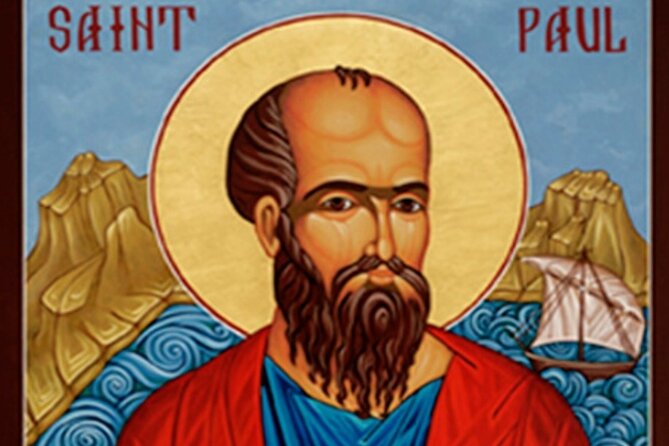
This is a full 8-hour loop that connects key Corinth locations tied to the Apostle Paul, then finishes with the famed Daphni Monastery outside Athens. You’ll move by air-conditioned vehicle, with bottled water and a mobile ticket, and you can start from your Athens address or the Piraeus port. It’s a great option if you want the “biblical sites” angle without losing the architectural and museum side of the story.
The itinerary also uses timing well: some stops are free, others require entrance tickets you can buy on-site (Ancient Corinth and the Archaeological Museum).
Key highlights you should actually care about
- Private pacing (up to 4 people) so you can pause for photos without syncing with a large group.
- Corinth Canal photo stop with time to appreciate the 6.4-kilometer engineering feat.
- Ancient Corinth + Temple of Apollo together so you get both ruins and major Doric architecture.
- Acrocorinth fortress views with about an hour to walk the walls and gates.
- Daphni Monastery mosaics (UNESCO) for Byzantine art that looks stunning in person.
- Onboard Wi‑Fi + bottled water to keep the day smooth from pickup to return.
You can also read our reviews of more tours and experiences in Athens.


Setting off from Athens (or Piraeus) with a plan that doesn’t waste time
The biggest practical win here is that you can be picked up from your Athens address or from Piraeus port. That removes one of the most annoying parts of day trips: figuring out how to get to the right departure point on time, especially when you’re juggling luggage, hotel check-out, or a cruise schedule.
You’ll travel in an air-conditioned vehicle, and the tour is priced per group (up to 4). That’s important value math. Instead of paying per person for a small-group bus ride, you’re effectively buying a private day of transport plus a history-focused driver commentary. You still cover two paid entrance areas on your own: Ancient Corinth and the Archaeological Museum of Corinth (on-site purchase).
Also, the experience is listed in English, and the onboard Wi‑Fi helps a lot. I like that it’s there for navigation, translating signage, and quick searches for context while you’re in transit—no chasing a roaming plan while you’re trying to read a sign or confirm your next walk.
Corinth Canal: the “wow” stop that also explains the region
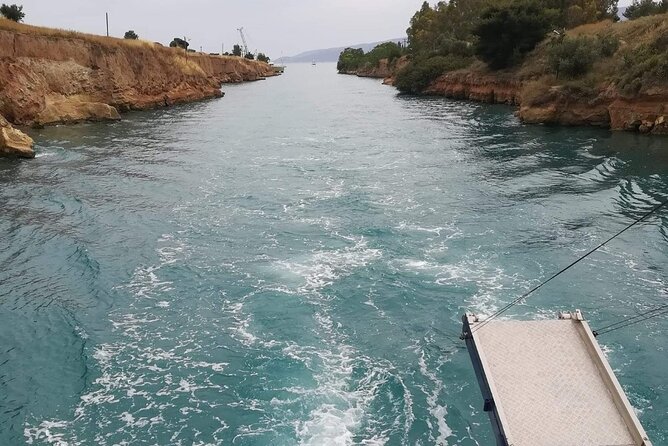
You start with the Corinth Canal for about 30 minutes. This is a perfect early stop because it gives you scale fast. You’re looking at a narrow cut through the Isthmus of Corinth that connects the Aegean Sea to the Ionian Sea. The canal is about 6.4 kilometers long, and it’s a 19th-century engineering project—so it’s not “ancient ruins,” but it’s still tied to why Corinth mattered: ships, trade routes, and the politics of geography.
What I like about this stop is that it sets up the rest of your day. When you later see Corinth’s port area and the acropolis fortress, the canal stop makes the terrain feel less random. You’ll also get straightforward photo time: no rush, just enough time to frame the canal and soak in the idea of one of Greece’s most strategic chokepoints.
Ancient Corinth: the heart of the Paul connection (and where you’ll want good shoes)
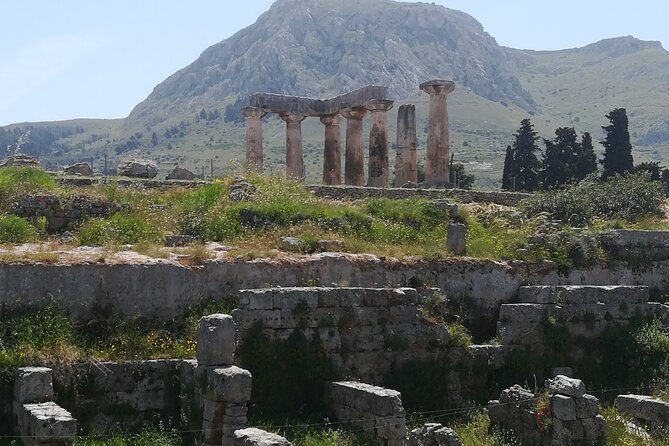
Next is Ancient Corinth for about 1 hour. This is the main site where the biblical thread becomes physical. You’re walking through ruins of one of Greece’s most powerful city-states—places associated with trade and culture, and also tied to the Apostle Paul’s missionary journeys.
Even without a licensed site guide walking beside you, this is still a strong stop because you’re not just looking at scattered stones. You’ll be able to move through key areas like temples and marketplaces. The practical tip I’d give you: don’t sprint through it. Ancient Corinth reads best when you slow down and let your eyes do the work—spot building lines, imagine street-level movement, then connect it to what you’re trying to picture from the Paul story.
The on-site entrance fee isn’t included, so plan for that. You’ll buy it when you arrive, and having that flexibility is handy if you want to adjust your pace on the day.
Temple of Apollo: classic Doric drama, with just enough time
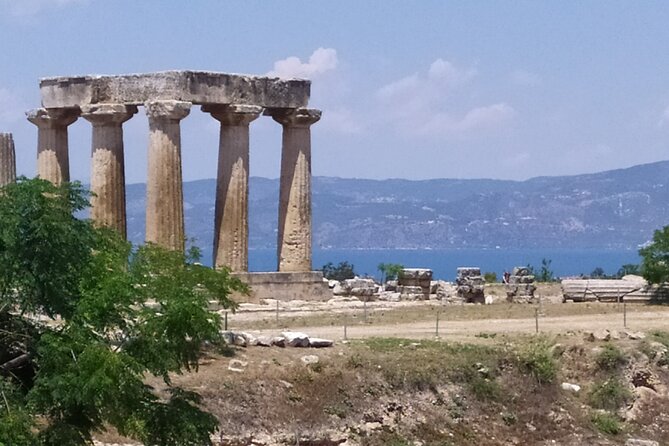
After Ancient Corinth, you’ll spend about 30 minutes at the Temple of Apollo. This is a major landmark tied to Doric architecture, dating to the 6th century BC. If you’ve seen Doric columns in books, this is where it clicks: you get real proportions, real stone, and the sense of why ancient Corinth was a major center.
Why 30 minutes can work here: it’s a focused architectural stop. You can circle, take photos, and read enough to understand how this kind of temple functioned as a statement of power and religion. The entrance for this stop is free, which makes it a low-cost add-on that still delivers big visual payoff.



Archaeological Museum of Corinth: the “why” behind the ruins
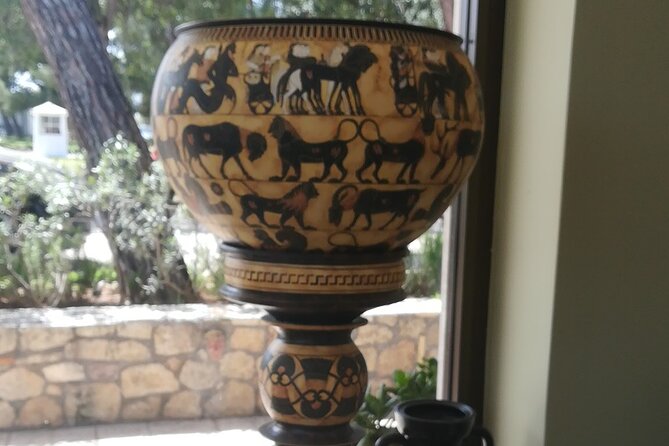
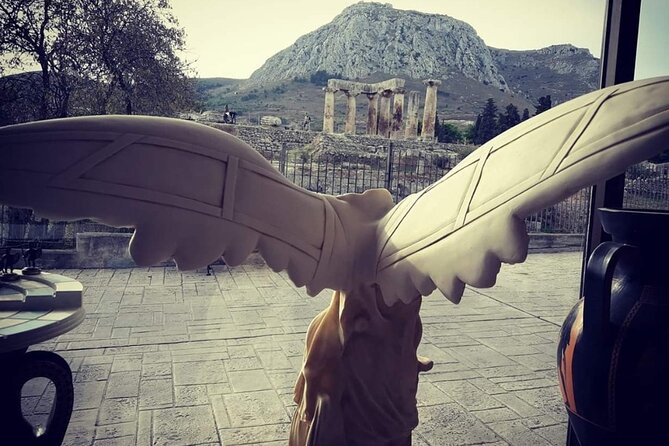
Then it’s about 1 hour at the Archaeological Museum of Corinth, with admission not included. This is where you connect fragments you saw outside to actual objects and evidence: pottery, sculptures, and Roman mosaics plus everyday items from different periods of Corinth’s life.
I like this stop because it prevents the “ruins only” problem. When you pair ruins with artifacts, you stop wondering what anything looked like when it was whole. You’ll also find pieces related to early Christianity themes connected to the time of Saint Paul, which helps you place the biblical story in a larger material context rather than treating it like a checklist of locations.
If you’re someone who enjoys details—materials, small carvings, how objects were used—you’ll likely get a lot from this museum hour.
Acrocorinth: fortress walking and some serious viewpoint time
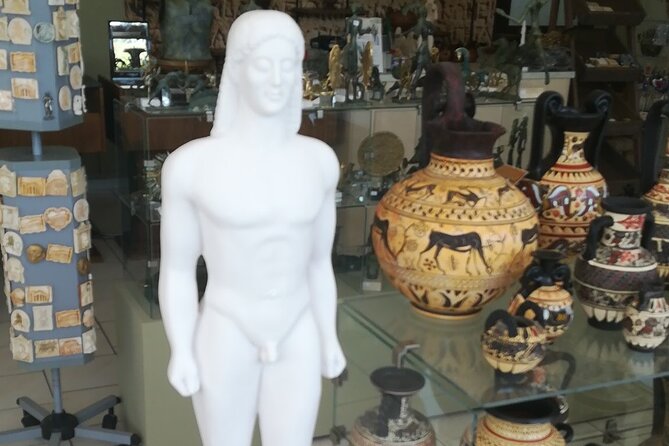
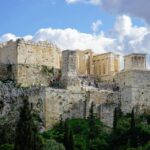
Next is Acrocorinth, about 1 hour. This is the towering fortress above Ancient Corinth, and it’s one of those places where the geography does half the explaining.
You’ll be walking through massive walls, gates, and remains of ancient temples, and you’ll also see how the stronghold served defensive roles across ancient Greek, Byzantine, and Ottoman periods. The practical upside: even if you don’t know every historical layer, the fortress logic is visible. Higher ground. Thick walls. Controlled entry points.
If you want photos, this stop is strong. You get wide views over the region, and you’ll feel the “control point” energy of a place that was meant to be hard to take.
One consideration: comfortable footwear matters. Acrocorinth is about walking on uneven ground in a historic setting, so it’s not the time for fashion shoes.
Kechries: the port side of the story (less crowded, more reflective)
After the fortress, you’ll go to Kechries, the ancient port of Corinth, for about 30 minutes. This is another free stop, and it’s a smart one because it changes your angle from inland power to maritime life.
Kechries is tied to the city’s Roman-era harbor and trade, and it also connects to Paul’s journeys as the port from which he set sail on a missionary journey. Today, the ruins feel quieter. You can walk through remains of docks and warehouses, then take a moment to imagine goods moving in and out.
I like this stop because it breaks up the day’s heavier archaeology rhythm with something more reflective. It’s also a great place to get photos where the background isn’t “just more ruins.”
Monastery of Daphni: Byzantine mosaics that actually look alive
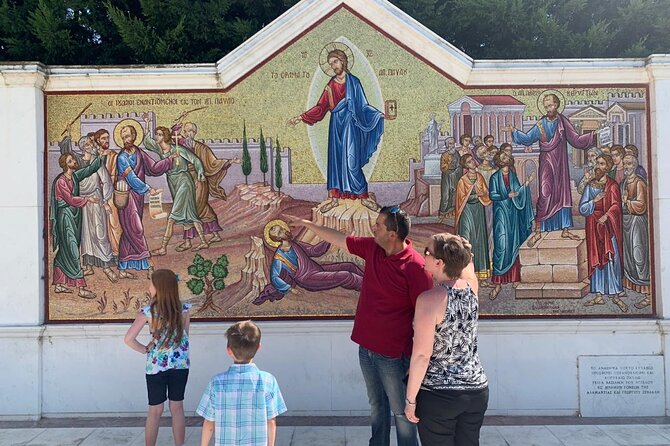
You finish at the Monastery of Daphni, about 1 hour. This UNESCO-listed site sits just outside Athens and is known for Byzantine art and architecture. The standout is the mosaics—religious scenes executed with detail that tends to jump out once you’re standing there.
This is not a quick roadside “check the box” church stop. You’ll have time to walk the serene grounds and see the preserved monastery church. The experience makes sense for a biblical-themed itinerary because it adds a later chapter: how Greek Orthodox tradition carried forward religious art and worship practices in a way you can still see centuries later.
For many people, this final stop is the emotional payoff. Corinth gives you the geography and early story. Daphni gives you the art that grew from the region’s long religious tradition.
How the driver-led format affects your day (and how to use it)
Here’s the important detail: the tour includes professional drivers who can explain what you’re seeing, but they are not licensed to accompany you inside each site. In practice, that means you’ll explore most locations on your own while relying on guidance on what to notice.
I think this can be a positive if you travel with curiosity. You’re not stuck listening to one script while you wait for a group line. You can stop when you want, linger when something catches your eye, and still get context from the driver when you’re in transit.
In one standout personal note from a previous experience with Spiro (a driver who also acted like a guide), the instruction was very specific: you were guided on how to view the ruins effectively, including the Bema Seat. That’s the kind of practical guidance that turns “open ruins” into a meaningful walk, even without a licensed site guide inside the walls.
Tickets and what you’ll pay on-site
Entrance fees are not included for:
- Ancient Corinth
- Archaeological Museum of Corinth
The listed on-site cost is €15.00 per person for those two. Other stops in the day are listed as free:
- Corinth Canal
- Temple of Apollo
- Acrocorinth
- Kechries
- Daphni Monastery
So your budgeting is pretty straightforward: one on-site ticket set for the two paid stops, plus your tour price (which covers transport, water, Wi‑Fi, and pickup/return).
Getting value from the $425.85 per group price
This price is for a group up to 4, and it includes:
- Athens hotel/residence pickup and return
- Private transportation in an air-conditioned vehicle
- Bottled water
- Wi‑Fi on board
- Mobile ticket
- Driver commentary and history-focused explanations
That’s solid value if you’re traveling as a small party. You’re essentially buying a private “logistics solved” day: transportation between distant sites, a plan that hits the major Corinth locations, and a final UNESCO stop at Daphni without you having to coordinate every segment yourself.
If you’re a solo traveler or a couple, this is still worth considering when you compare it to piecing together taxi/car service plus separate guided entries. The private format is what makes it feel efficient rather than random.
Who this tour is best for
This works especially well if:
- you want the Apostle Paul theme but still care about architecture and museums
- you hate large tour groups and prefer to move at your pace
- you like a day with photo stops plus actual time on the ground
- you’re okay exploring sites independently while relying on a driver’s guidance
It’s less ideal if you strongly prefer a licensed guide inside every site for a full commentary at each location. You can request a licensed tour guide depending on availability, but it’s not presented as guaranteed in the standard format.
Should you book St. Paul’s Footsteps in Corinth & Daphni?
Yes—if you want a tight, thoughtful day that connects Corinth’s ancient power, the port-world angle, and the later Byzantine art of Daphni without the stress of figuring out transportation. The private pacing, onboard Wi‑Fi, and the way the day is structured around key locations tied to Paul make it feel more purposeful than a general sightseeing drive.
I’d hesitate only if you need a licensed guide inside every ruin and museum room. If that’s your top priority, you may want to compare options that explicitly include a guide for every indoor/outdoor stop.
FAQ
Do you get picked up from Athens hotels and residences?
Yes. Pickup and return are included from Athens hotels or residences.
Can I start from Piraeus port instead of Athens?
Yes, transfer from Piraeus port is offered.
Is the tour private?
Yes. It’s private, and only your group participates (up to 4 people).
Are the entrance fees included for Ancient Corinth and the museum?
No. Entrance fees for Ancient Corinth and the Archaeological Museum of Corinth are not included, and you can purchase them on-site for €15.00 per person.
Is there Wi‑Fi during the trip?
Yes. Wi‑Fi on board is included.
Do you provide a licensed tour guide at every site?
No. The included commentary is from the driver, and they are not licensed to accompany you into the sites. A licensed tour guide can be requested depending on availability.
How long is the day trip?
The duration is approximately 8 hours.
You Might Also Enjoy



More Tour Reviews in Athens
- All Day Cruise -3 Islands to Agistri,Moni, Aegina with lunch and drinks included
★ 5.0 · 4,958 reviews