REVIEW · ATHENS
From Athens: Delphi Day Trip & Arachova Village Stop
Book on GetYourGuide →Operated by SIGHTS OF ATHENS-GRAY LINE · Bookable on GetYourGuide
Delphi in one day beats guesswork. This trip is a smooth way to reach a top ancient site with VR and audioguide help built in.
I like that you start in central Athens with a choice of four pickup points, then get guided context on the drive so the ruins make sense fast. The bus is air-conditioned, and the tone is practical: see the key spots, learn what you’re looking at, then move on.
My favorite part is the storytelling setup. You get an English-speaking driver and tour leader on the bus, plus an audioguide that supports multiple languages, so you’re not standing around wondering what matters.
One thing to plan around: the day is packed, so the Delphi site time can feel tight if you want to linger at every viewpoint or shop a lot in the mountain village.
In This Review
- Key highlights worth your attention
- From Athens to Delphi: central pickups and a stress-free start
- On the bus ride: multilingual listening that helps you read the ruins
- Delphi Archaeological Site: Apollo, the Omphalos, and the walk you can actually manage
- The VR/audio advantage at the ruins
- Delphi Archaeological Museum: when the story gets specific
- Delphi village lunch and shopping: a real taste of mountain Greece
- Arachova photo stop: quick panoramas without the detour
- The drive time works, but it is still a long day
- Price and what $30 buys you (and what it doesn’t)
- Which kind of traveler should book this?
- Should you book this Delphi day trip?
- FAQ
- What time do pickups start in Athens?
- Where are the pickup and drop-off locations?
- Is transportation air-conditioned?
- Is an audioguide included, and what languages are available?
- Are entry tickets to Delphi included?
- What’s included for food and drinks?
- Is the tour suitable for wheelchair users?
Key highlights worth your attention
- Air-conditioned roundtrip bus with four pickup/drop-off points in Athens
- Multilingual audioguide plus VR/audio elements at Delphi for faster understanding
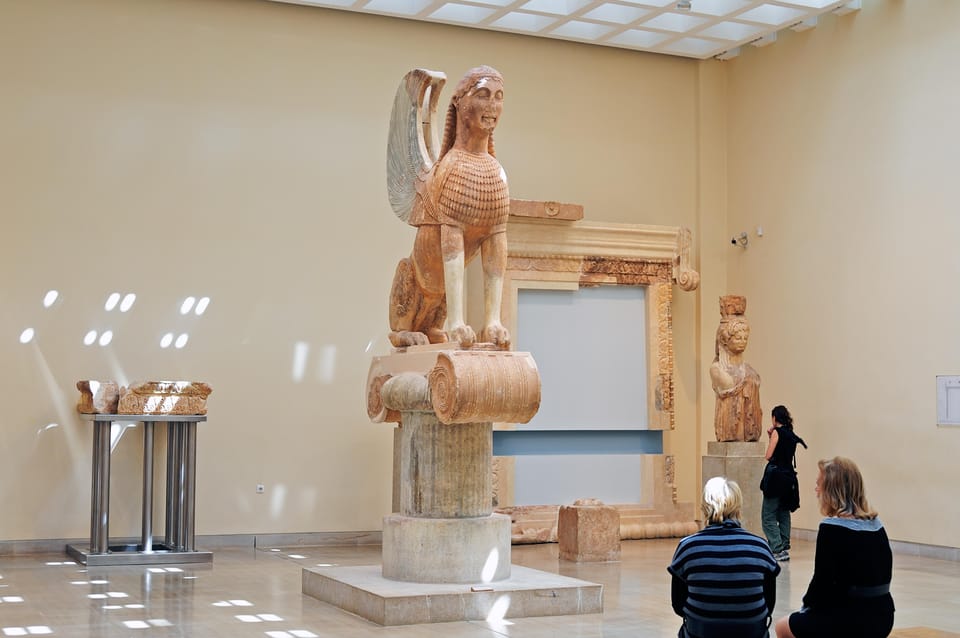
- Apollo sanctuary + Delphi Archaeological Museum, with enough time to actually see the main things
- Delphi village stop for lunch, coffee, or handmade-craft browsing at your pace
- Arachova photo stop for quick panoramic hits without derailing your schedule
From Athens to Delphi: central pickups and a stress-free start
This is the kind of day trip that saves you from the biggest pain of Delphi on your own: getting there without a plan, and trying to figure out what you’re looking at once you arrive. You’re picked up from four central Athens locations, with staggered times meant to keep you on schedule even with city traffic. That means you can usually join the group without crossing town.
A practical detail I appreciate: you’re told to wait at the blue sign of the hop-on, hop-off buses. That’s the kind of instruction that prevents that awkward 10-minute search where everyone’s already boarding.
Then you’re on a modern, air-conditioned bus heading out of Athens. The drive is scenic in the way central Greece often is—mountain roads, long stretches of countryside, and the feeling that you’re leaving the city behind for real. If you’re the type who worries about being stuck on a bus for hours, don’t. The tour leader’s role on the road is to keep the information moving so the time doesn’t feel dead.
You can also read our reviews of more tours and experiences in Athens



On the bus ride: multilingual listening that helps you read the ruins
The bus portion isn’t just transit. It’s where the trip earns its value. You get an English-speaking driver and tour leader, and you’ll be listening to history as you pass through areas on the mainland. This matters because Delphi can be confusing if you only know it from one famous myth. When you later stand among the remains, the names and symbols stop being random.
You also have audioguides available in multiple languages, including English, French, Italian, German, Polish, Russian, Spanish, Portuguese, and Chinese. That’s a big deal if you’re traveling with someone whose English level is limited—or if you just like comparing how different language versions explain the same things.
And yes, at Delphi there’s a VR/audio component paired with the audio experience. Some people find the tech a bit quirky, but the overall effect is useful: it gives you a way to connect the present landscape of stone and slopes with what the site would have felt like in ancient times.
Delphi Archaeological Site: Apollo, the Omphalos, and the walk you can actually manage
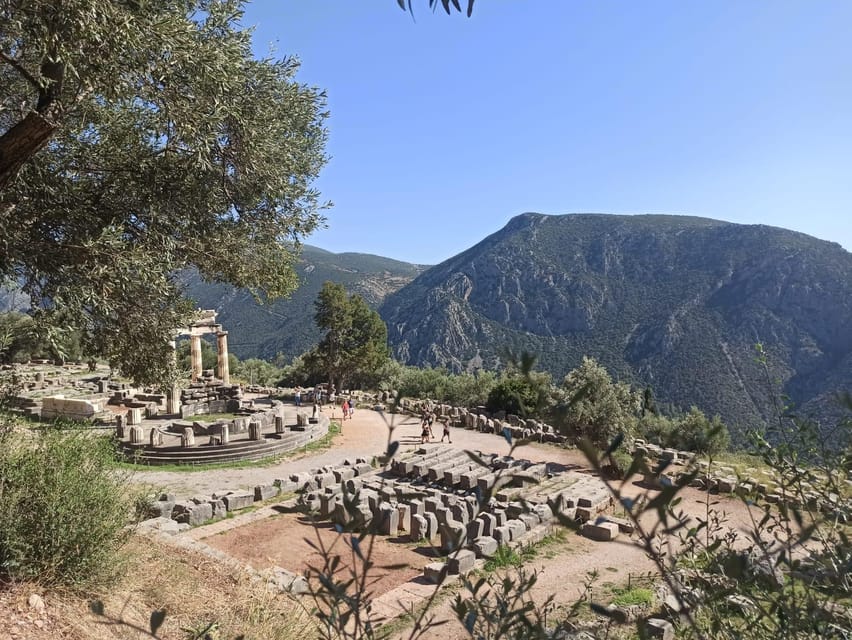
Your main Delphi time is built around the Archaeological Site first, with about 2.5 hours for site exploration and sightseeing. That’s a realistic window for most visitors: you won’t be rushing every step, but you also won’t have unlimited time to wander off-script.
Here’s what you’re set up to see:
- Temple of Apollo
- Omphalos, described in ancient tradition as the center of the world
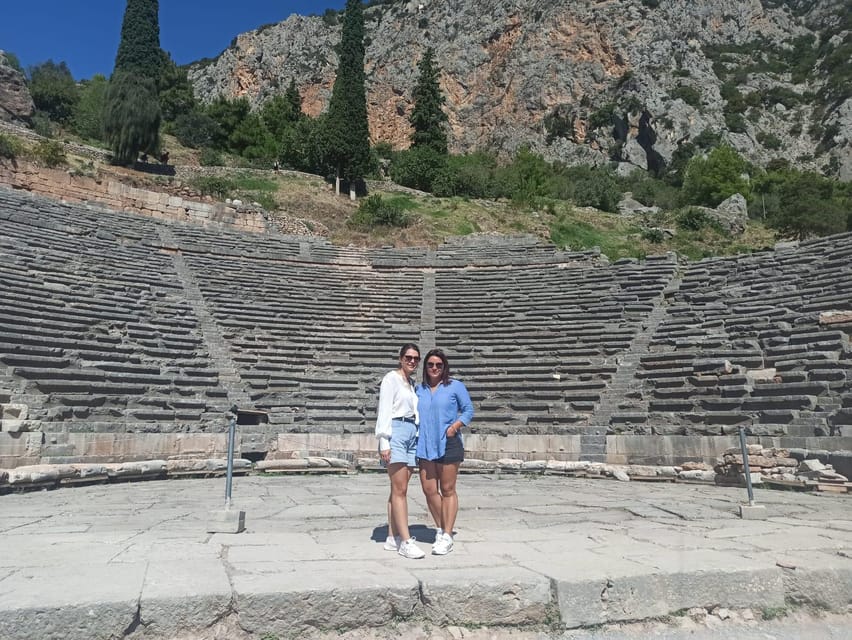
- Ancient theater
- Hippodrome
- Stadium
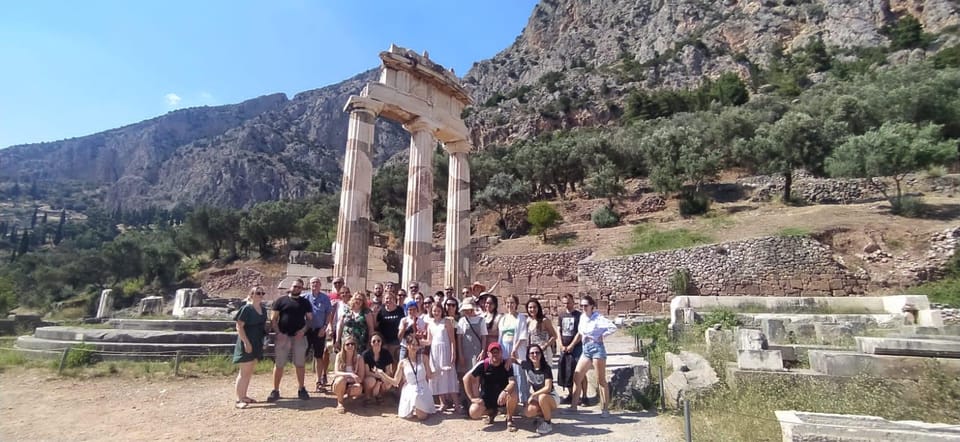
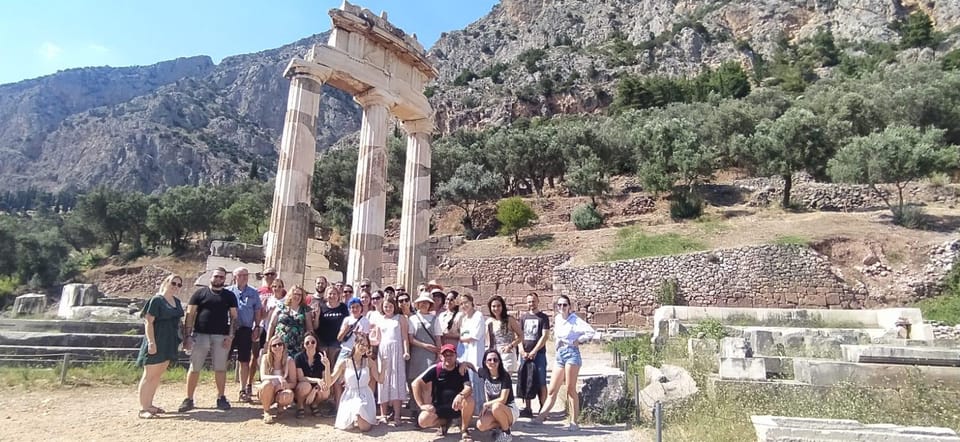
- Tholos
What I like about this selection is that it shows Delphi as more than one temple ruin. The theater area helps you picture public gatherings. The hippodrome and stadium remind you that these weren’t just spiritual stops; there was athletic life here too. The Tholos is the kind of structure that rewards you for paying attention to how it sits and why it was built.
If you’re the type who likes photos, you’ll also find there are natural places to stop for panoramic views, especially once you start moving between different terraces. If the weather is damp or slippery, take your time on the uneven ground. Comfortable shoes aren’t a suggestion here—they’re the difference between enjoying the walk and watching every step.
One consideration: the site is on slopes, and you’ll be walking. This tour isn’t suitable for wheelchair users. If you have mobility limits, you might find the climb and transfer between areas slower than you’d hoped.
The VR/audio advantage at the ruins
Delphi is famous, which means you might be tempted to treat it like a quick photo stop. This tour pushes you to do better, without making you join a live guide at every point. Instead, the mix of audio plus VR/audio tools gives you a chance to get context while you’re standing in the exact spot where it matters.
In practical terms, it helps you avoid two common problems:
1) You stare at ruins, but don’t know what each part once did.
2) You rely on a phone and end up reading half the time instead of looking around.
With audioguides, you can keep your eyes on the site and still get the explanations. The best use of the tech is to plan one or two short moments at key monuments, then keep walking. You’ll get more from it that way than if you constantly pause and re-start.
Delphi Archaeological Museum: when the story gets specific
After the main ruins, you’ll go to the Delphi Archaeological Museum, which completes the picture. The timing is about 75 minutes in Delphi overall for a mix of break time, photo stops, museum time, and some free roaming.
The museum is valuable because it’s where names and artifacts stop being vague. Ruins can look similar to non-experts—columns, walls, and fragments everywhere. A museum does the work of identification and context, so you can connect what you saw outdoors with what the site tells you happened there.
You don’t get infinite hours here, so I’d use your time like this:
- Start by checking the display highlights tied to Apollo and sanctuary themes.
- Then shift to artifacts that explain Delphi’s role as a major center in the ancient world.
- Don’t try to read every label end-to-end if you’re tight on time. Pick what matches what you saw outside.
Some visitors feel the total schedule can run a bit fast through the museum. If you’re the kind of person who reads every sign, you may want to think about adding an extra hour on a separate visit later.





Delphi village lunch and shopping: a real taste of mountain Greece
Once the ruins and museum are handled, the day turns more human. You get to stop in the traditional mountain village of Delphi. This is where the trip becomes less about history on stone and more about how people live now.
You’re given time for lunch, a quick coffee, or shopping at your pace. That matters because it turns the trip into a full day experience rather than only an academic outing. The village setting also helps you reset your energy after hours of walking and listening.
A nice detail: the village is known for handmade crafts and traditional Greek architecture. You don’t need to buy anything to enjoy the stop. Even a short walk lets you see how the town’s style matches the mountain setting and the old-world feel you were expecting.
If your main goal is photos, aim for a slower pace here than at the ruins. The contrast—ancient site to village street—makes the whole day feel more balanced.
Arachova photo stop: quick panoramas without the detour
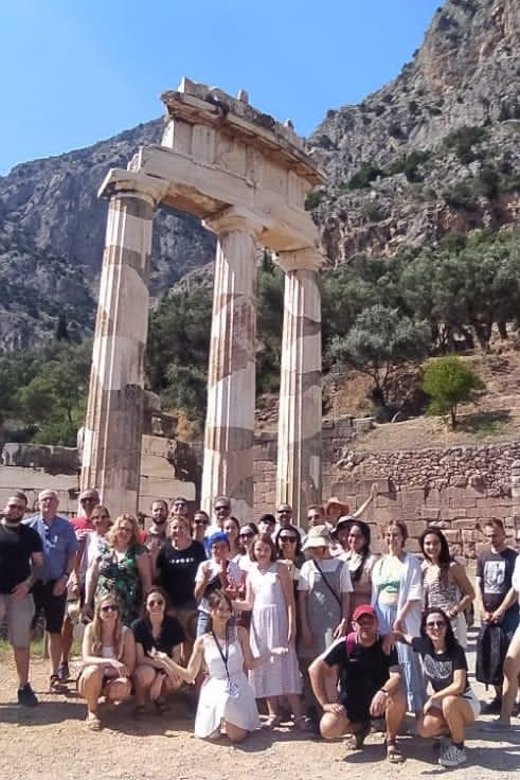
Between Delphi and the return ride, you’ll have a quick stop in Arachova for panoramic photos. Expect it to be short—about 10 minutes—so treat it like a bonus, not a full second town visit.
This is perfect for visitors who want the look of Arachova without burning time. It also works well if you’re traveling with someone whose attention span for buses is limited. You get the snapshot of the mountain town vibe, then you’re back on the road.
The drive time works, but it is still a long day
The total duration is about 10 hours, including the return to Athens. You’ll have a couple of breaks along the way, including a quick local café break (around 15 minutes) and additional bus time segments.
Here’s the reality check: even with a well-run schedule, traffic can affect your return. If you’re on a weekday, you may notice Athens traffic creeping into the end of the day. Going on a weekend sometimes feels smoother, but you don’t control that. The main thing you can control is being ready at the pickup point and keeping a calm attitude about the timing.
Also remember: this is not a private charter with unlimited stops. It’s a group day trip with a set plan. That’s exactly why it’s good value—but it’s also why the pacing can feel tight if you want more time at the site or more time in the village.
Price and what $30 buys you (and what it doesn’t)
At $30 per person, this is priced like a true budget-friendly way to get a major ancient site plus guided context and transport. For that price, you’re paying for:
- Roundtrip air-conditioned bus transport
- Pickup and drop-off at four central Athens locations
- An English-speaking driver and tour leader
- Audioguides in multiple languages
- Planned time at the Archaeological Site and the Museum
- A village stop for food/shopping on your schedule
What you should budget for separately:
- Entry tickets (not included)
- Food and drinks (not included)
That “not included” part is the main place people get surprised. Delphi costs can add up fast if you’re also paying for lunch. But even with separate entry fees and meals, the trip still tends to feel like value because transport, timing, and context are handled for you.
If you compare this to going fully DIY, you’re basically buying convenience plus interpretation. For many visitors, that’s worth it—especially if you don’t read Greek and you’d otherwise be stuck piecing together what Delphi’s monuments meant.
Which kind of traveler should book this?
I’d book this if:
- You want a single-day Delphi experience without renting a car or figuring out logistics
- You like having structure, but still want some free time in the village
- You’re comfortable walking uneven ground for a few hours
- You want multilingual help, not just one-language explanations
I’d think twice if:
- You want long, slow museum time or you love reading every single exhibit label
- You have mobility limitations that make slopes difficult
- You need full wheelchair access
If your travel style is “I want to see the big highlights and understand them,” this trip matches that perfectly.
Should you book this Delphi day trip?
Yes, if you want Delphi without the headaches and you value built-in context. The strongest selling points are the transport convenience, the audioguide plus VR/audio support at the site, and the fact that you don’t just do one monument—you see Apollo-related highlights and finish with the museum.
Book with clear expectations: it’s a full day, and the schedule moves. If you can handle walking, accept that the museum and site time are limited, and bring your own plan for meals, this is a smart way to experience Delphi while staying efficient and not stressing out.
FAQ
What time do pickups start in Athens?
Pickups start between 07:45 and 08:05 am, depending on the meeting point: Plaka / Melina Mercouri Monument (07:45), Greek Parliament (07:50), Omonoia Square (08:00), and Karaiskaki Square (08:05).
Where are the pickup and drop-off locations?
You’ll be picked up and dropped off at four central Athens meeting points: Hondos Center, Melina Mercouri Monument, Platia Karaiskaki, and Hellenic Parliament.
Is transportation air-conditioned?
Yes. The tour uses an air-conditioned modern bus for roundtrip transport.
Is an audioguide included, and what languages are available?
An audioguide is included and supports: English, French, Italian, German, Polish, Russian, Spanish, Portuguese, and Chinese.
Are entry tickets to Delphi included?
No. Entry tickets are not included in the tour price.
What’s included for food and drinks?
Food and drinks are not included. You’ll have time to eat in the Delphi village stop, but you’ll pay on your own.
Is the tour suitable for wheelchair users?
No. It’s not suitable for wheelchair users.
You Might Also Enjoy

More 1-Day Tours in Athens

More Tour Reviews in Athens
- All Day Cruise -3 Islands to Agistri,Moni, Aegina with lunch and drinks included
★ 5.0 · 4,958 reviews