REVIEW · ATHENS
Athens Riverside: A Journey in Mythical Athens
Book on Viator →Operated by Urban Athens Collective · Bookable on Viator
Athens has a way of hiding its past in plain sight. This tour follows two ancient rivers—some of it above ground, some of it underground—so you connect myth to real streets and stones without doing the usual checklist. I especially like how the guide points out the ancient Heridanos river where it was uncovered during the metro works in the 1990s, and I also love the mix of city-walking with real archaeological stops. One thing to consider: it is a walking-focused route, and in hot months the hill segments can feel long.
What I like second-most is the way the route links big-name places with smaller stops that change your view of the whole city. You’ll hit the Ancient Agora and the Acropolis area, then step onto hill viewpoints like Pnyx and Philoppapos for the panoramic payoff. If your Athens plan is mostly museum time or you hate uphill walking, you may want to pair this with something flatter.
You meet in central Athens at Ermou 111 (Monastiraki area) and end near the Acropolis Museum, so it fits cleanly into a half-day. It runs about 3 hours, in English, and offers several daily departure times so you can pick the light that works for you.
In This Review
- Key things that make this tour special
- Why Athens’ Riverbeds matter more than you think
- Meeting at Monastiraki, then walking the ancient starting line
- From the Heridanos and Ilissos to the Agora and Acropolis
- The myth stops: Ares, nymphs, Muses, and the Athenian Assembly
- Panoramic hills and when sunset can actually happen
- What the route feels like on the ground (and what you should watch for)
- Price and value: what $83.77 buys you in Athens
- Who should book this (and who might prefer something else)
- Final call: should you book Athens Riverside?
- FAQ
- How long is the Athens Riverside tour?
- Where does the tour start and where does it end?
- What’s included in the price?
- Is food and drinks included?
- What language is the tour offered in?
- What’s the cancellation policy?
Key things that make this tour special
- Two living river stories: the Heridanos path and the mostly underground Ilissos course
- Ancient + modern Athens in one walk: sanctuaries, church remnants, caves, and Roman bath ruins along the route
- The mythology isn’t random: Ares, nymphs, Muses, and the Athenian Assembly connect to specific spots
- Views that feel earned: Pnyx and Philoppapos hills give you skyline moments
- Agora and Acropolis, but with context: you understand why these places sit where they do
- Guides who teach in layers: past departures have been led by guides including Helena, Dionysus, Eleni, and Arthur
Why Athens’ Riverbeds matter more than you think
Most Athens sightseeing treats the city like a set of separate attractions: Agora over here, Acropolis over there, a viewpoint somewhere else. This experience treats the city like a single story told through waterlines.
You start with the Heridanos—a waterway originally tied to myths and everyday life, now partly visible because construction and the metro works uncovered a section. The guide uses this as your reference point: where the ancient river flowed, why it mattered, and how that influence shows up in what you see as you walk. That matters because it trains your eyes. Instead of wandering past street names, you start spotting layers: ancient edges that don’t match modern maps, and neighborhoods that grew in relation to older movement corridors.
Then you follow the Ilissos, another ancient river that runs mostly underground through modern Athens. The payoff here is the connection to how the Greeks used geography in stories and teaching—especially in writing and in philosophical tradition. When a guide can point to a place and explain how it became part of myth and culture, you get a deeper understanding than you’d get from a sign and a quick photo.
This is why the tour feels different even when it includes headline sites. You’re not just going to ancient monuments. You’re tracking how Athens’ original “infrastructure” shaped where people lived, gathered, argued, and believed.
You can also read our reviews of more tours and experiences in Athens.


Meeting at Monastiraki, then walking the ancient starting line
The tour begins in central Athens at Ermou 111, in the Monastiraki area. It’s a smart pick because you’re not starting on the far side of town. You can also reach it easily via public transport, which matters when you’re planning a half-day around other stops.
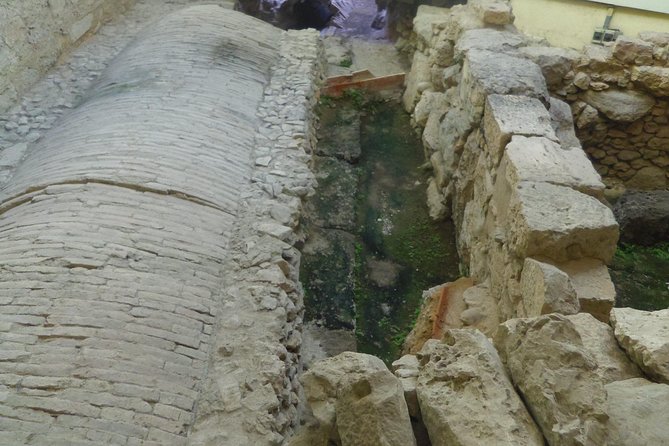
Right at the start, you get a concrete link to the modern city: you’ll see a portion of the Heridanos that was uncovered during the metro construction in the 1990s. That’s a rare kind of “aha.” Athens doesn’t only preserve ruins. It also keeps rediscovering them while building new infrastructure. This tour uses that moment as your launch pad, so you immediately understand what the day is really about.
Expect a guided walk that moves from this visible river relic into a longer route tracing the original riverbeds and their surroundings. You’ll pass multiple types of remains as you go—think sanctuaries built for Greek gods, remnants of Christian churches, and even mystical caves and Roman bath ruins. That variety is the point. You’re looking at Athens as a series of overlapping eras, not a single timeline.
The walk also ends near the Acropolis Museum (in front of it, at Str. Makryianni 1 area). So once you finish, you’re naturally positioned to keep going—either with more self-guided exploring around the Acropolis zone or with a meal nearby.
From the Heridanos and Ilissos to the Agora and Acropolis
After the river introduction, the route builds toward major archaeology. You’ll visit the Ancient Agora and the Acropolis area, but what makes these stops feel worth it is the connective tissue.
The Agora is where Athens operated as a city—politically, socially, and intellectually. When you approach it after learning how water shaped movement and settlement, you understand why gatherings clustered where they did. It becomes less of a standalone “must-see” and more of a natural consequence of the city’s geography.
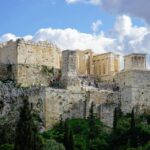
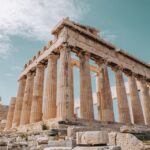
Then there’s the Acropolis area, the place everyone pictures. Here, the advantage is timing and framing. Instead of jumping straight into stone monuments, you’ve already trained yourself to notice the city’s edges—old routes under modern streets, myth anchored to geography, and the sense that Athens keeps changing while still reusing the same powerful terrain.
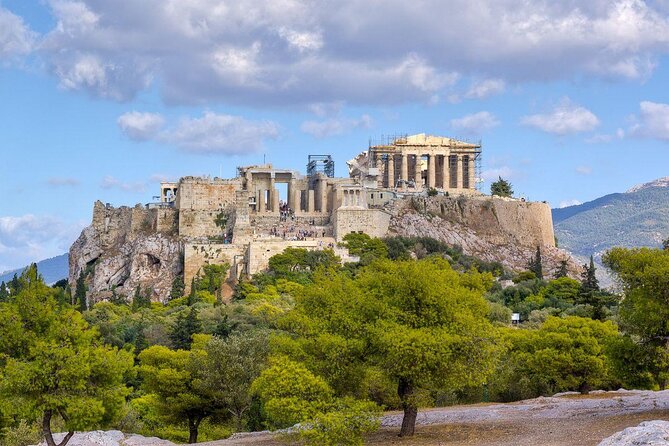
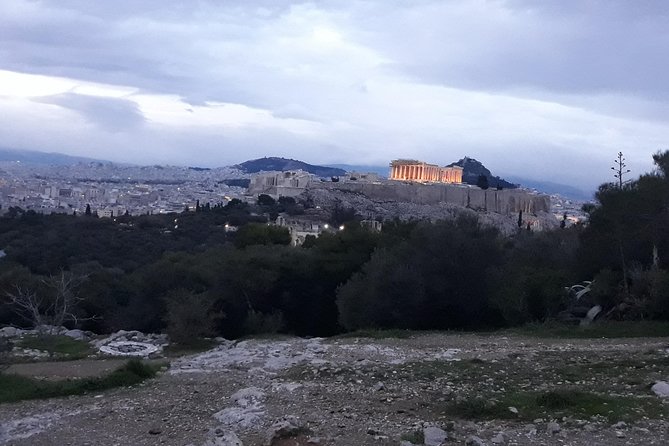
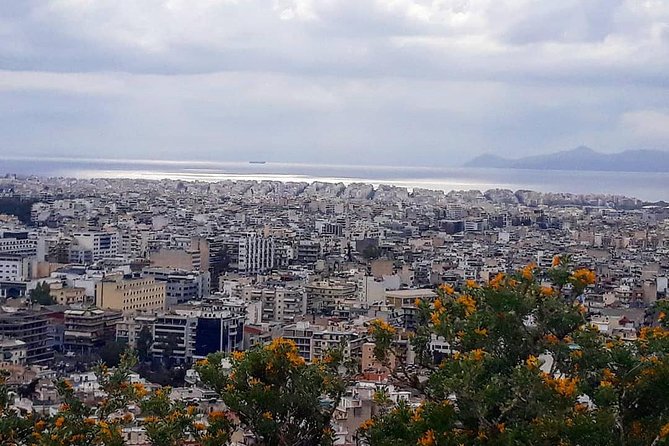
You’ll also spend time on the hills as part of the route, including viewpoints connected to Pnyx and Philoppapos. That panoramic element is not just pretty. From those heights, you can mentally map the river paths and understand the “why” behind ancient choices—why a place would be chosen for assembly, worship, or defense.
The myth stops: Ares, nymphs, Muses, and the Athenian Assembly
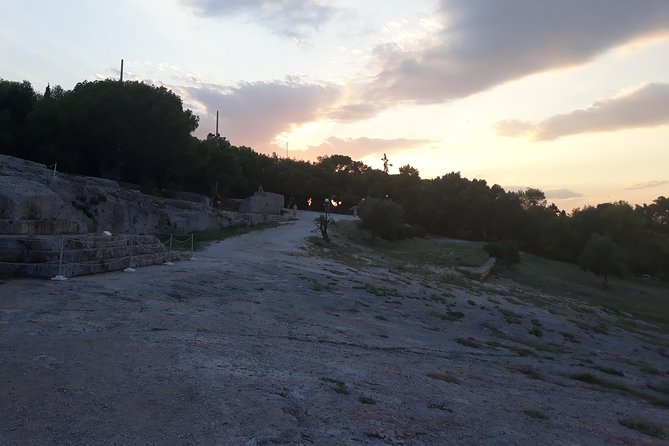
This is the part that makes the walk feel like more than history. The tour doesn’t treat mythology like a separate theme park. Instead, it threads legends through specific locations you pass or visit.
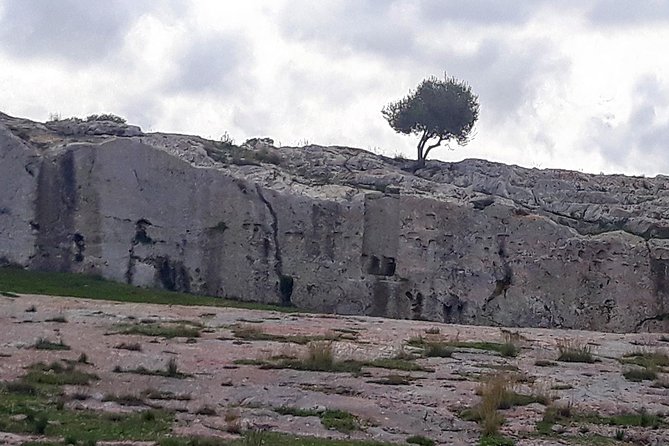
One of the stops centers on the sacred hill and its slopes, where you’ll take in the big viewpoint factor while hearing stories tied to the city’s identity. Another stop focuses on the small naked rock of Ares, which helps you connect a named deity to a physical feature you can actually point to. That is a subtle but powerful way to make myth memorable: it sticks to something real.
Then comes the route through the mythical hill of Nymphs toward the Athenian Assembly. This matters because it connects the word “assembly” to a place and a concept, not just to the idea of democracy. When a guide explains how that assembly space fits into Athens’ setting, the stones start to feel purposeful rather than simply old.
You’ll also walk on the hill of Muses. That stop is a reminder that Athens didn’t just legislate and fight—it made art, taught ideas, and shaped culture. The guide’s job here is to keep the mythology grounded, so you feel the relationship between worship, learning, and civic life.
Finally, you pass by the Roman Conservatory of Athens. It’s a small contrast point that helps you see how later civilizations reused and reshaped the Athenian setting. You don’t end the tour stuck in one era. You see continuity and change.
Panoramic hills and when sunset can actually happen
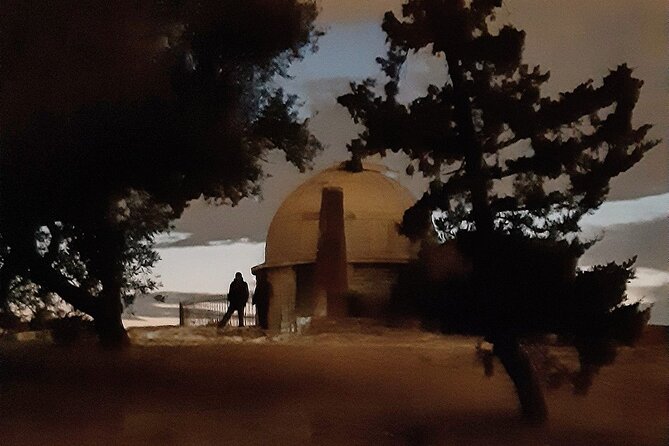
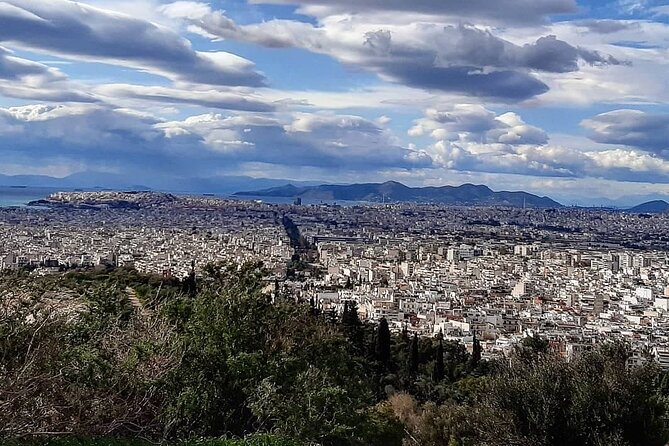
The views are a real selling point here, and it’s not just marketing language. You’ll get panoramic city sights from Pnyx and Philoppapos Hills, both of which give you strong sightlines across Athens.
If you pick a later departure time, you might catch a sunset feel while strolling the hillside route. The exact outcome depends on the day and your chosen start, but the structure of the tour is set up to give you open-air moments where lighting and shadows matter.
Just be realistic about the walking. Hills mean effort, and effort means temperature matters. One practical note from the kind of feedback this tour has gotten in the past: summer can feel brutally hot on hill segments. If you’re visiting in July or August, plan your day so you’re not doing this as the hottest hour of your trip.
A good tactic is to bring what you need to stay comfortable:
- water (you’ll need it since food and drinks aren’t included)
- sun protection
- shoes with solid grip for uneven stone and sidewalks



What the route feels like on the ground (and what you should watch for)
This is a walking tour with an archaeological focus, so your experience level depends on your comfort with strolling plus occasional uphill segments. It’s about 3 hours, so you’re not stuck on a long grind. Still, this is not a “sit down every 10 minutes” style tour.
Here’s what tends to make the experience click:
- You like stories tied to place, not just dates.
- You enjoy seeing how different eras overlap—Greek sanctuaries, Christian remnants, and Roman bath ruins.
- You want the less obvious Athens routes, not only the busiest photo spots.
If you’re the type who needs constant wow-moments every few steps, you might find stretches that feel more educational than scenic. The route balances viewpoint stops with “look closely” instruction. For me, that balance works because it changes how you look at normal Athens streets.
Also, keep an eye on group energy. This tour is private in the sense that it’s only your group. That can make it feel more flexible, but it also means your pace and questions are more influential. If you want time for photos at every stop, say so early.
Price and value: what $83.77 buys you in Athens
At about $83.77 per person for roughly 3 hours, the value hinges on what you care about most: guided interpretation and a route that combines multiple types of sites.
You are paying for:
- a local guide (included)
- English-language storytelling
- access to a route that stitches together Heridanos/Ilissos themes with major archaeology (Ancient Agora and Acropolis area) and viewpoint hills (Pnyx, Philoppapos)
Food and drinks are not included, so you’ll want to budget for water and a snack if you need it. But the tour does give you a lot of structure for your time. Instead of piecing together directions, you get a planned flow from Monastiraki area through the city layers and ending near the Acropolis Museum, which can save real effort on a short Athens day.
If you’ve already done a classic Acropolis + museum day, this route often feels like the missing half: the “how the city worked” layer. And if you’re a repeat visitor, the riverbeds and myth stops can be the sort of thing you haven’t seen before—because most sightseeing doesn’t follow waterlines through modern streets.
Who should book this (and who might prefer something else)
You’ll love this tour if you:
- want Athens myths tied to real geography
- like walking and want a route with stops that explain what you’re seeing
- want both Agora/Acropolis and viewpoint hills in one guided loop
- prefer a quieter, less checklist feel, with neighborhoods and lesser-visited archaeological pockets
You might skip it if you:
- hate hills or have limited walking stamina
- want only indoor stops or mostly museum time
- are traveling with a schedule that can’t handle a continuous 3-hour walk
Because it operates in all weather conditions, dress for rain or heat. Casual dress works, but make sure your shoes match the walking.
Final call: should you book Athens Riverside?
If your goal is to understand Athens beyond the postcard, I think this is a strong booking. The best part is the concept: you’re not only visiting ancient sites—you’re walking the ancient river logic that shaped daily life and myths, then watching that logic show up again in places like the Agora and the Acropolis zone.
I’d book it when you want variety in one afternoon: riverbeds, archaeology, hill views, and myth stops like Ares’ rock and the Athenian Assembly area. I’d be careful about timing in peak heat and choose a departure that matches the weather—and your stamina.
If you want a guided day that makes Athens feel like a single connected story, this one delivers.
FAQ
How long is the Athens Riverside tour?
It’s approximately 3 hours.
Where does the tour start and where does it end?
You meet at Ermou 111, Athina 105 55 (Monastiraki area). The tour ends at Str. Makryianni 1, Athina 117 42, in front of the Acropolis Museum.
What’s included in the price?
A local guide is included.
Is food and drinks included?
No. Food and drinks are not included.
What language is the tour offered in?
The tour is offered in English.
What’s the cancellation policy?
You can cancel for a full refund up to 24 hours in advance. If you cancel less than 24 hours before the start time, the amount you paid won’t be refunded.
You Might Also Enjoy


More Tour Reviews in Athens
- All Day Cruise -3 Islands to Agistri,Moni, Aegina with lunch and drinks included
★ 5.0 · 4,958 reviews