REVIEW · ATHENS
Steps to tradition: Greek traditional dances in Athens
Book on GetYourGuide →Operated by Hidden Greece · Bookable on GetYourGuide
Greek dancing is more than steps.
In this 2.5-hour class on Philopappos Hill, you learn traditional dances close to the Acropolis, with Tania guiding you in English and keeping things fun. Two things I’d prioritize: the hilltop setting (it feels calm and scenic) and the supportive teaching style that helps you pick up the moves without stress. One consideration: the experience isn’t suitable for wheelchair users, and it may be a rougher pick for anyone dealing with heart issues or motion sickness.
You’ll start at the main entrance of Philopappos Hill, walk for about 10 minutes with Acropolis views, and then settle into a spot in the nature of the hill. From there, you’ll learn hand-in-hand dances from different regions of Greece, step by step, to the rhythm of the music.
By the end, you’re not just leaving with memories. You’ll also have photos and videos, plus a printed program, so you can recreate the dances at home and share the story with friends.
In This Review
- Key Highlights You’ll Care About
- Philopappos Hill: Why This Setting Makes the Dancing Click
- Meeting at the Entrance and the Quick Acropolis Walk
- Who Tania Teaches and How the Class Feels
- What You’ll Learn: Greek Traditional Dances by Region
- The Rhythm and the Group Factor: Why Hand-Holding Matters
- What You Take Home: Printed Program + Photos and Videos
- Price and Value: Is $41.33 Worth It?
- Who Should Book This Athens Dance Workshop
- Practical Tips Before You Go
- Should You Book It?
- FAQ
- Where is the meeting point for the dance workshop?
- How long is the experience?
- Who teaches the Greek traditional dances?
- Is the workshop taught in English?
- What happens at the start of the activity?
- What’s included in the price?
- Is the activity suitable for wheelchair users?
- What is the cancellation policy?
Key Highlights You’ll Care About
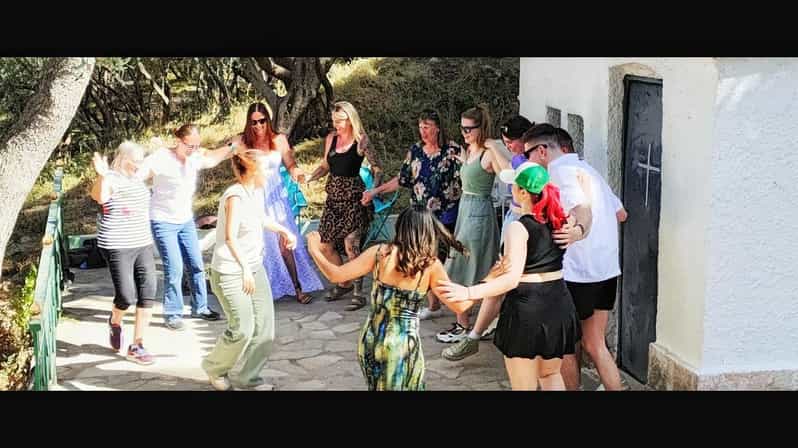
- Philopappos Hill location by the Acropolis for views and a more peaceful dance setting
- Tania’s English instruction and supportive pace for first-timers
- Regional Greek dances taught as real traditions, not just party moves
- Music-led group dancing with hand-holding so you blend in fast
- Take-home program plus photos and videos for real keepsakes
- Fun atmosphere that still teaches meaning behind the steps
Philopappos Hill: Why This Setting Makes the Dancing Click
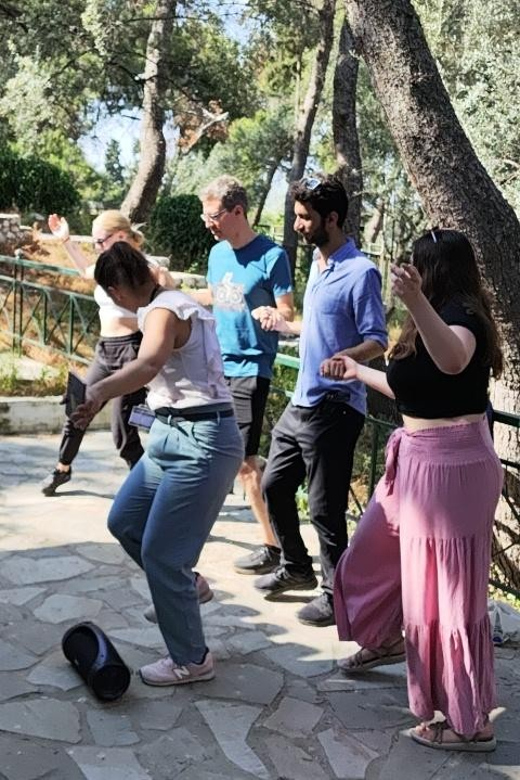
There are plenty of ways to see Athens. This is a way to feel it.
Philopappos Hill sits right up against the Acropolis zone, but it doesn’t feel like you’re trapped in the main crowd. You meet next to the touristic buses at the main entrance of Philopappos Hill. That matters because it’s easy to find, and you start right where the experience begins—no long transfers, no guessing.
Once you begin, the environment does half the work. The walk toward the class spot is only about 10 minutes, but it gives you that pre-dance shift: you’re suddenly outside the traffic and inside the older pace of the city. Even better, you get a view of the Acropolis as you move. That kind of visual cue helps your brain connect the dancing to the place, not just the performance.
And the class location itself is described as a nature spot on the hill. Translation: you’re learning in a calmer patch of Athens, which makes it easier to focus on the music and the pattern of the steps.
You can also read our reviews of more tours and experiences in Athens.


Meeting at the Entrance and the Quick Acropolis Walk
Plan on arriving a little early so you’re not rushing when the group forms.
You’ll meet at the entrance of Philopappos Hill, specifically next to the tourist buses. The experience ends back at that same meeting point, so you’re not stuck navigating back down on your own afterward.
Once the group gathers, Tania leads a short 10-minute walking route with a view of the Acropolis. This is not just a scenic warm-up. It also acts like a guided “setup” time: everyone lands together, the group energy starts syncing, and you transition from sightseeing mode into learning mode.
Then you’ll reach a spot on the hill where the course begins. The pace here is important. The tour structure is built so you’re not thrown into complicated choreography right away. It’s more like: arrive, settle, and then learn step by step with the group.
If you hate walking or struggle with uneven ground, this is where you’ll want to think carefully. The experience is not suitable for wheelchair users, and motion sensitivity could be an issue since it’s outdoors and includes walking.
Who Tania Teaches and How the Class Feels
This experience is led by Tania, an experienced Greek traditional dance teacher. The instruction is in English, which is a big deal in Athens because you want to understand the cues and the meaning without playing translation games.
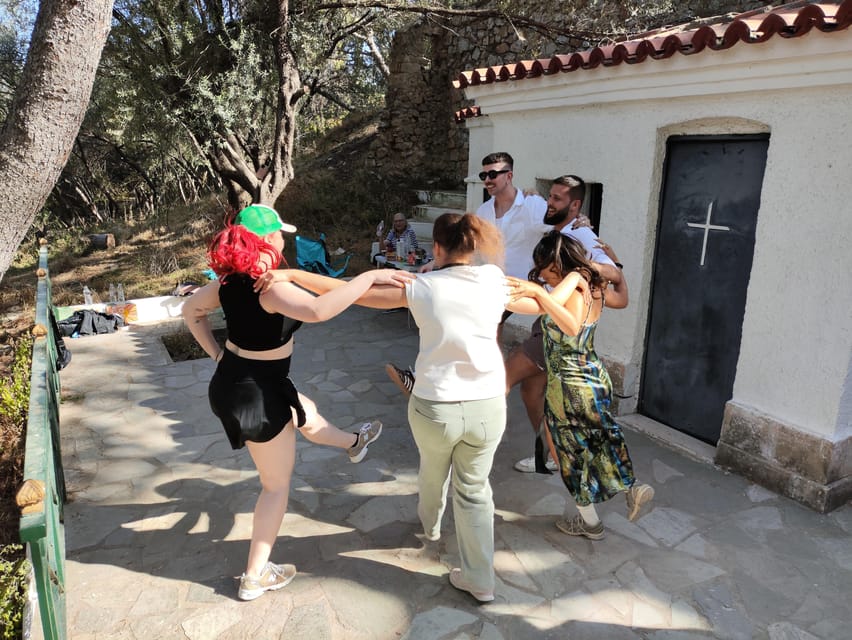
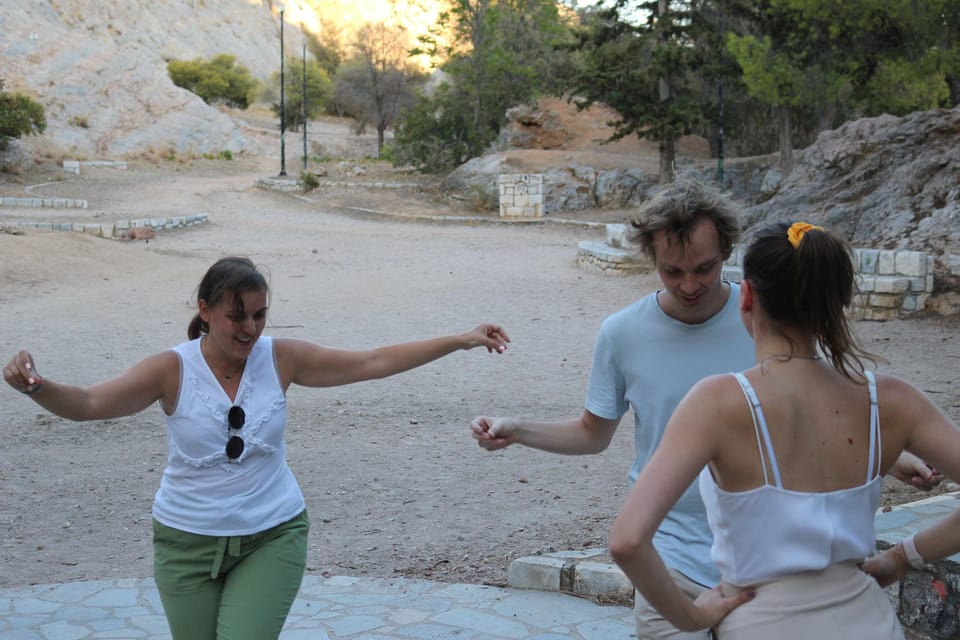
What stands out is the teaching style. The vibe is clearly built for participation, not performance pressure. You learn by doing with other people, and the group format helps you catch the timing. The dances are taught so you can get your footing and then feel brave enough to increase your enthusiasm.
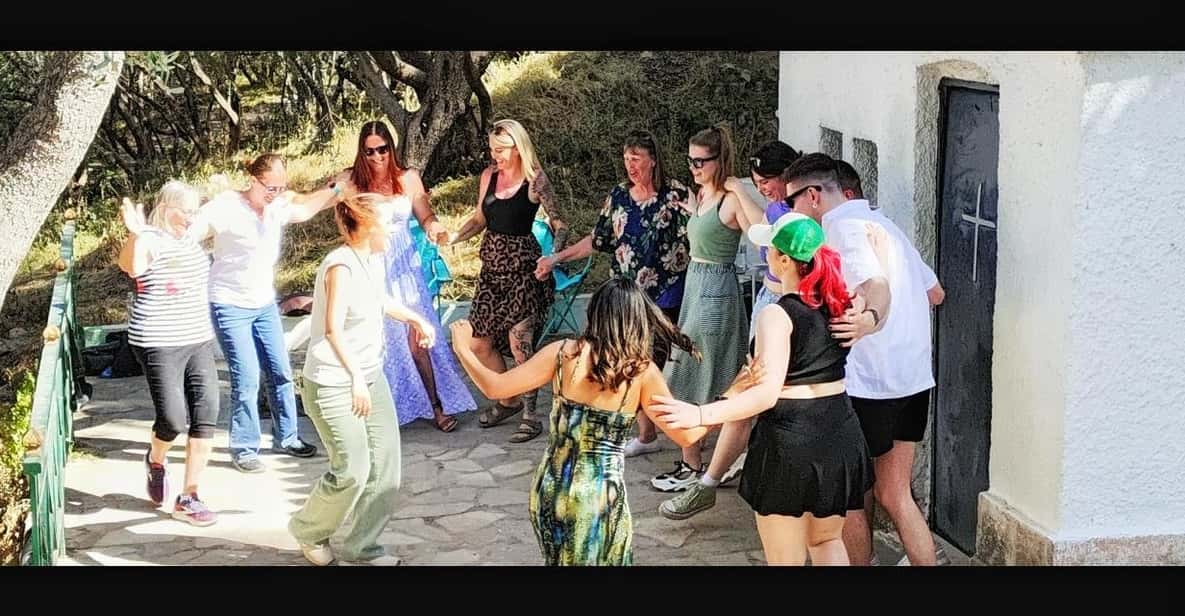
Expect a hands-on, music-led session. You’ll be holding hands as you dance, which sounds simple, but it’s actually one of the fastest ways to coordinate. It also changes the feel of the class from individual “I’m trying my best” to “we’re doing this together.” That’s a key part of why traditional dances work: they’re social by design.
And even though the format is active, you’re not left on your own. The teacher supports the group and keeps you moving in the right direction when the steps get tricky.
What You’ll Learn: Greek Traditional Dances by Region
The core of this class is learning authentic Greek traditional dances that represent the main regions of Greece.
There’s a helpful way to think about the material you’ll study: these dances come from ancient roots, then changed through time as Greek culture interacted with different eras and influences. The big takeaway is that tradition isn’t frozen. It’s living—passed from family to family, from parents to kids, and kept alive by people doing it, not just watching it.
In your 2.5 hours, you’ll learn some of these dances step by step. The class also includes a printed program with the dances. That’s not a throwaway item. It helps you remember patterns and gives you something practical to reference when you want to repeat the steps later.
You’ll also learn the rhythm and the practical feel: how the music drives your body, how the group timing matters, and how the steps connect to the cultural meaning behind them. That’s where a dance class stops being a workout and becomes a cultural experience.
The Rhythm and the Group Factor: Why Hand-Holding Matters
If you’ve ever tried group dancing with strangers, you know the awkward part: everyone watches everyone else, and nobody moves with confidence.
Here, the structure is designed to reduce that friction. Because you dance with others and hold hands, you’re not just “learning moves.” You’re learning the flow of a group tradition. That hand connection helps your coordination because you’re physically anchored to the rhythm and the direction of travel.
The class pacing matters too. You don’t start with the most complex move in the world. You start with fundamentals and then build. It’s step by step, which is exactly what first-timers need.
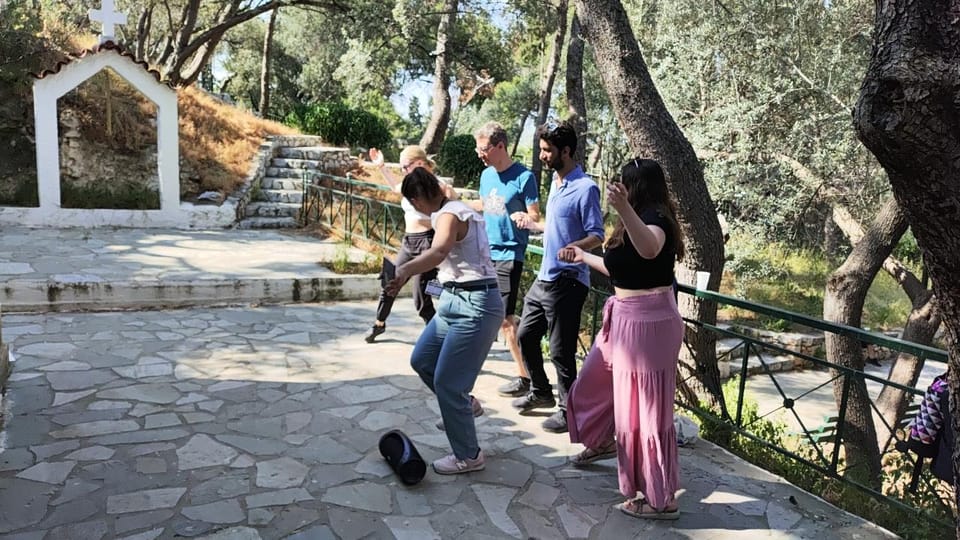
And the environment helps. Being on the hill near ancient ruins under the Greek sun adds energy. It’s not just scenery. It’s motivation. When the setting feels meaningful, you’re more likely to relax into the steps and actually enjoy them.



What You Take Home: Printed Program + Photos and Videos
Most tours end when your photos end. This one gives you more than that.
You’ll receive a printed program with the dances, plus photos and videos from the course. That combination is ideal if you’re the type who wants to remember the details, not just the vibe.
Here’s why this matters for value:
- The printed program gives you a reference point after you return to your hotel.
- The photos/videos let you see how you looked and how the group moved, which helps you learn faster when you replay the steps later.
- The commemorative of participation adds a small keepsake that’s actually connected to what you did, not just a generic souvenir.
If you’re traveling with friends or family, these keepsakes help you share the experience without retelling every step from memory.
Price and Value: Is $41.33 Worth It?
At $41.33 per person, you’re paying for more than a dance lesson. You’re paying for an experience package built around three things: cultural coaching, a special setting, and take-home media.
A couple value points to consider:
- You get a teacher-led course (not a DIY “follow the steps” situation). Tania is the key here, and English instruction removes a major barrier.
- You get the Acropolis-adjacent hill setting, which transforms the class from a generic activity into something more atmospheric.
- You get photos and videos plus a printed program, which means you’re not just spending money to have fun in the moment. You’re buying the ability to remember and repeat later.
The duration is about 2.5 hours, which is a nice sweet spot. It’s long enough to learn, adjust, and feel progress. It’s short enough to fit into a day of Athens sightseeing without stealing your entire afternoon.
If you love hands-on cultural activities and you’re open to moving your body, this price tends to feel reasonable for what’s included.
Who Should Book This Athens Dance Workshop
This is a great match if you want:
- A fun, social cultural activity in Athens
- A chance to learn dances from multiple regions of Greece
- A teacher-led experience in English
- Real keepsakes: printed program plus photos and videos
It’s also a strong option if you enjoy doing something active while still learning context—traditional dances with ancient roots and evolving meaning.
It may not be your best choice if:
- You have heart problems (not suitable)
- You’re a wheelchair user (not suitable)
- You have motion sickness concerns, especially with outdoor walking and movement (not suitable)
Practical Tips Before You Go
A dance class sounds carefree. It isn’t complicated, but it has a few practical realities.
Bring comfortable footwear. You’ll be on Philopappos Hill, and outdoor ground can be uneven. You don’t need special dance shoes. You need stable steps.
Wear clothing that lets you move freely. You’ll be holding hands, shifting positions, and following the rhythm. If your outfit restricts movement, you’ll feel it quickly.
Arrive with a simple mindset: you’re there to learn and have fun. Traditional dance isn’t about getting every move perfect in one go. The process is part of the experience.
Also, if you’re planning to pair this with other Acropolis sights, keep the timing flexible. Your class lasts about 2.5 hours, and you’ll want enough time before and after so you’re not rushing across the hill.
Should You Book It?
Yes, if you want an Athens experience that’s hands-on and culturally grounded. This workshop pairs a memorable setting near the Acropolis with a real teacher, and it doesn’t treat dancing like a performance. It treats it like a tradition you join for a couple hours.
I’d book it especially if you care about the learning part and you like the idea of taking home photos, videos, and a printed dance program. That combination turns the day trip into something you can actually revisit later.
Skip it if mobility or health concerns apply, since it’s not suitable for wheelchair users and it’s not recommended for heart problems or motion sickness.
FAQ
Where is the meeting point for the dance workshop?
You meet at the main entrance of Philopappos Hill, next to the touristic buses.
How long is the experience?
The duration is about 2.5 hours. Starting times depend on availability.
Who teaches the Greek traditional dances?
The course is taught by Tania, a Greek traditional dance teacher.
Is the workshop taught in English?
Yes. The instructor teaches in English.
What happens at the start of the activity?
Once the group gathers, Tania leads a short walking route of about 10 minutes with a view of the Acropolis to the spot where the course begins.
What’s included in the price?
You get the Greek traditional dance course, an experiential activity, a printed program with the dances, water and drinks, a commemorative of participation, and photos and videos from the course.
Is the activity suitable for wheelchair users?
No, it is not suitable for wheelchair users.
What is the cancellation policy?
You can cancel up to 24 hours in advance for a full refund.
You Might Also Enjoy



More Tour Reviews in Athens
- All Day Cruise -3 Islands to Agistri,Moni, Aegina with lunch and drinks included
★ 5.0 · 4,958 reviews