REVIEW · ATHENS
From Athens: Private Anc. Corinth, Temple of Hera, Blue Lake
Book on GetYourGuide →Operated by Ancient Greece Tours and Transfers · Bookable on GetYourGuide
Corinth hits you fast. In one day you get Acrocorinth views, then real time at Ancient Heraion with a refreshing swim.
What I like most is the pace: it’s private, so you’re not rushing between ruins just to beat another group. Second, the focus on the places tied to St. Paul in Corinth makes the ancient stones feel specific, not vague. One thing to think about is that extra experiences depend on you—entrance fees are not included, and if you want a licensed guide inside sites, that’s an add-on request.
In This Review
- The Big Idea: A Roman-and-Byzantine Citadel, Then a Sea Swim
- Key Highlights You’ll Remember
- Leaving Athens for Corinth: Private Transport That Actually Helps
- Corinth and the First Photo-Stop Moments
- Acrocorinth Castle: How a Hilltop Fortress Tells a Power Story
- Ancient Corinth Ruins: Agora Views and the Apollo Temple
- Taking Your Time: Break and Free Time at Ancient Corinth
- Temple of Hera (Ancient Heraion): Swim Time at the Blue-Lake Water
- Malagavi Lighthouse: A Short Path to Old Stone and Big Views
- Isthmus Canal Viewpoints: Why This Cut Matters
- Price and Value: $281 for a Private, History-and-Swim Day
- What It Feels Like on the Ground: Pace, Guidance, and Moments That Stick
- Who Should Book This Day Trip (and Who Might Not)
- Should You Book This Private Ancient Corinth + Heraion + Lighthouse Tour?
- FAQ
- What is the duration of the tour from Athens?
- What’s included in the price?
- Are entrance fees included?
- Is there a guide during the visit?
- Is swimming included at the Temple of Hera?
- Is the tour wheelchair accessible?
The Big Idea: A Roman-and-Byzantine Citadel, Then a Sea Swim
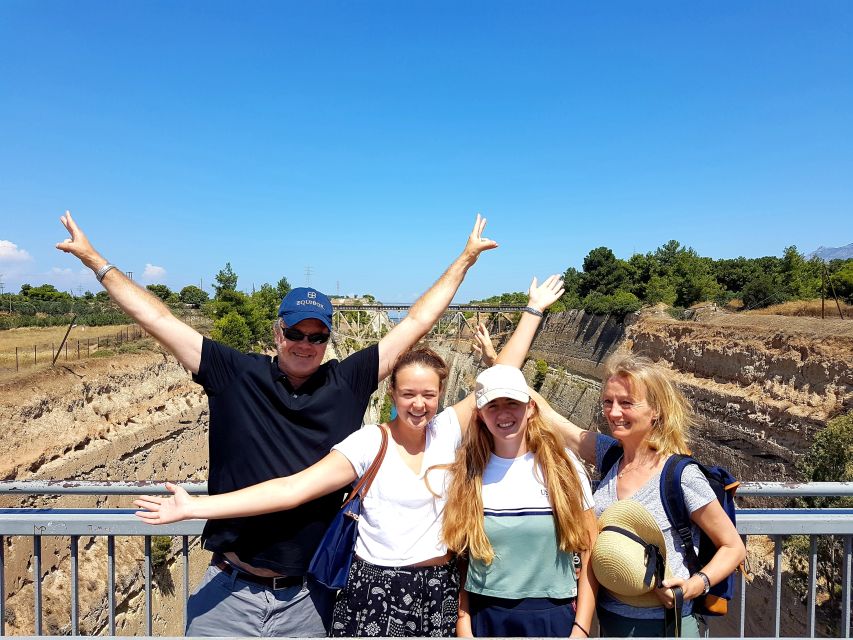
This is one of those Athens-based days that somehow does both sides of Greece. You start on high ground, where Acrocorinth’s walls were shaped by centuries of power struggles. Then you drop down to the water at the sanctuary of Heraion, where the day turns physical—comfortable shoes in the morning, swimwear later.
The main draw is seeing how layers of time stack up in one place. The hilltop fortress reads as a military story (Romans, Byzantines, and all the fortifying and re-fortifying that comes with it). Meanwhile, Ancient Corinth and the Heraion sanctuary pull you toward religion and everyday life—temples, public spaces like the Agora, and the sea as part of worship and ritual.
If you’re the type who likes your history anchored to people and names (especially St. Paul), this itinerary gives you that. If you’d rather do only museums, you might find the day better when you enjoy outdoor ruins and viewpoints.
Key Highlights You’ll Remember
- Acrocorinth’s dramatic citadel views over Corinth and the surrounding region
- St. Paul’s route in Corinth, including the places connected to his preaching and time there
- Temple of Hera at Ancient Heraion, with time to swim at the sanctuary beach
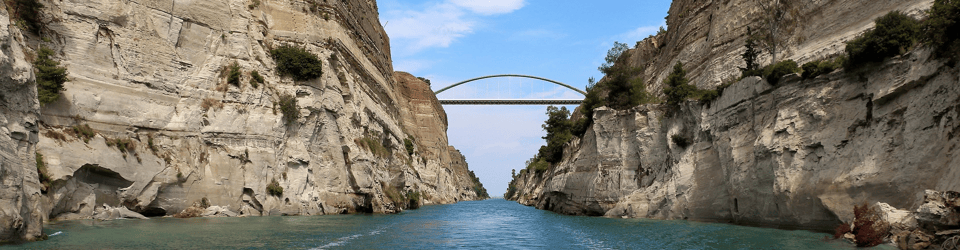
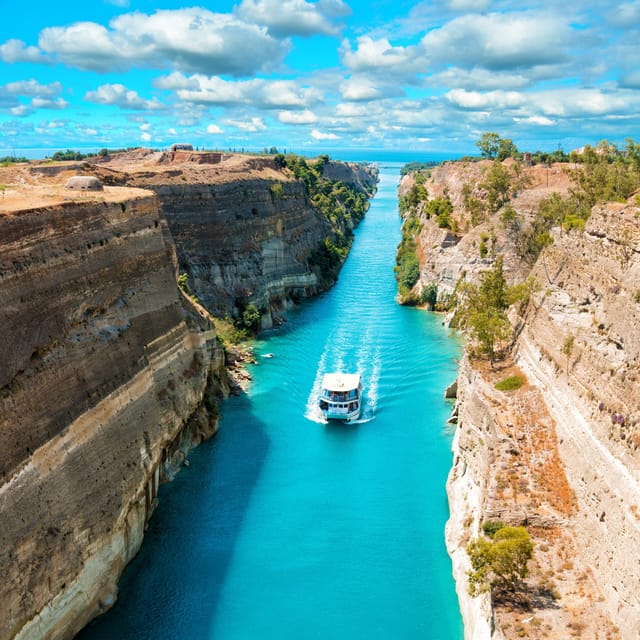
- Isthmus Canal viewpoint moments, where the Ionian Sea meets the Aegean Sea
- Malagavi Lighthouse walk and viewpoints, including the 1897 stone lighthouse still in operation
You can also read our reviews of more private tours in Athens


Leaving Athens for Corinth: Private Transport That Actually Helps
This is a full-day private experience, built around a direct drive from Athens with a modern, first-class vehicle. You get A/C, Wi‑Fi, and bottled water, which matters more than it sounds when your day is packed with outdoor stops and walking.
The big practical benefit of private transport is flexibility. You can linger at photo points, take a breather during breaks, and keep your own rhythm through the ruins. That matters here because Acrocorinth is a fortress experience—views take time, and you’ll want to pause where the horizon frames the story.
Pickup is set up for where you actually stay: hotel, Airbnb, or even the port area. Your driver meets you with a signboard when needed, so you’re not stuck in the awkward part of coordinating arrival times with maps and guesswork.
Corinth and the First Photo-Stop Moments
Your day begins with Corinth and a short block of time for breaks, photos, and sightseeing. It’s not a deep museum morning—think orientation. You’re getting your bearings for what you’ll see next: the hilltop citadel, the ruins below, and the coastal geography that made Corinth strategically valuable for trade and control.
If you’re sensitive to long days, treat this segment as your warm-up. You’ll likely want comfortable shoes right away because you’ll transition quickly from driving into uneven outdoor ground.
Acrocorinth Castle: How a Hilltop Fortress Tells a Power Story
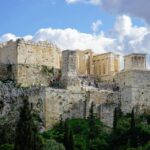
Acrocorinth is the kind of place where the view is part of the exhibit. From the citadel, you can understand why so many empires wanted control here. The itinerary gives you a focused hour to photograph and explore the castle grounds, including the imposing entrance gates and the fortress layout.
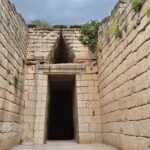
What makes this stop worth it is the historical continuity. The fortress wasn’t built for one era and abandoned. It was successively used and fortified by different conquerors, including the Romans and the Byzantines. Standing in the castle space, that layered timeline becomes visible in the way the stronghold was adapted over time.
Practical notes:
- Wear shoes you trust. Even when the paths look manageable, you’ll be on stone and uneven ground.
- Expect the day to lean on viewpoints. If you like seeing how geography affects history, this is a strong match.
Ancient Corinth Ruins: Agora Views and the Apollo Temple
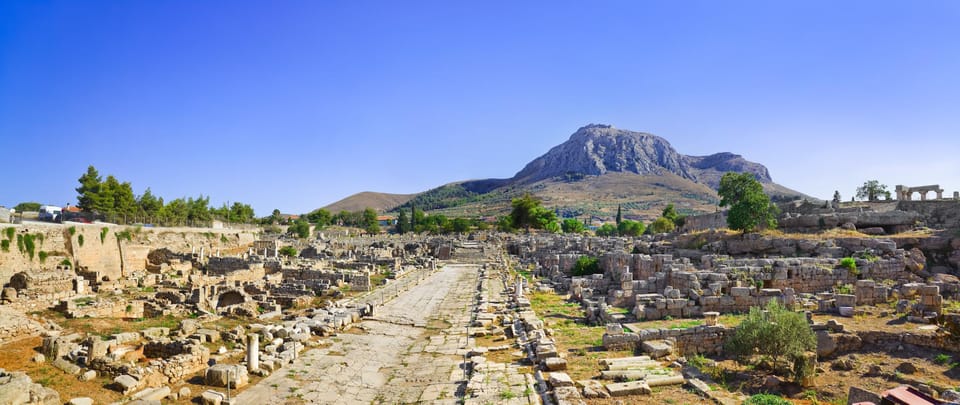
From Acrocorinth you move into Ancient Corinth, where the city’s scale starts to make sense. The itinerary gives you around two hours here, plus additional free time later, which is smart. Ruins don’t reward speed. You need a moment to look, then another moment to connect what you’re seeing to what it meant.
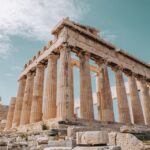
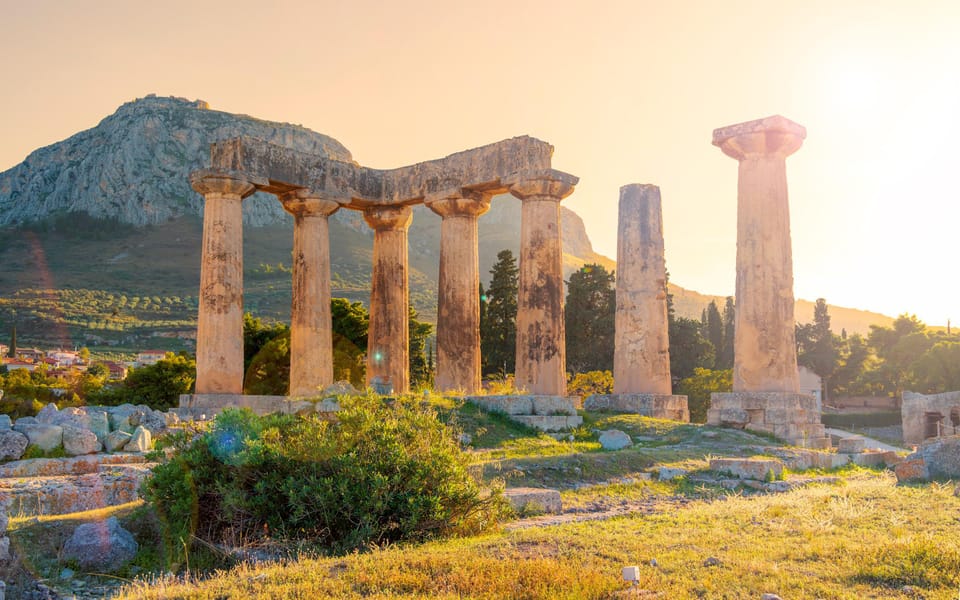
In this area you can see remains of the Agora, one of the key public spaces in the ancient city. You’ll also have a chance to see a major pre-Roman monument: the Temple of Apollo. This is where the day’s theme shifts from fortress power to daily life and civic/religious rhythm.
Then there’s St. Paul’s connection. The route highlights that St. Paul lived and preached in Corinth for about two years. That time reference does something useful: it turns “ancient Corinth” into a place with a timeline, not just a collection of stones.
If you’re curious about early Christianity, this stop is especially satisfying because you’re not treating Paul as a distant figure. You’re standing in the kind of setting where teaching, marketplaces, and religious structures overlapped.


Taking Your Time: Break and Free Time at Ancient Corinth
You get a dedicated break/free time window later at Ancient Corinth. This is the part that helps you avoid the common private-tour problem: being “on” every minute. Use it to rest your feet, snack if you brought something along, or just slow down and re-check what you saw earlier.
I also like that this free time makes the day more realistic. Ruins can be mentally tiring. You’ll probably want to linger near the areas that clicked with you—Agora spaces if you like civic life, and the Apollo Temple remains if you’re drawn to religious architecture.
One caution: this is an outdoor site. Plan for sun, wind, and the fact that you’ll likely be exposed for longer than you expect. Hat and water habits pay off.
Temple of Hera (Ancient Heraion): Swim Time at the Blue-Lake Water
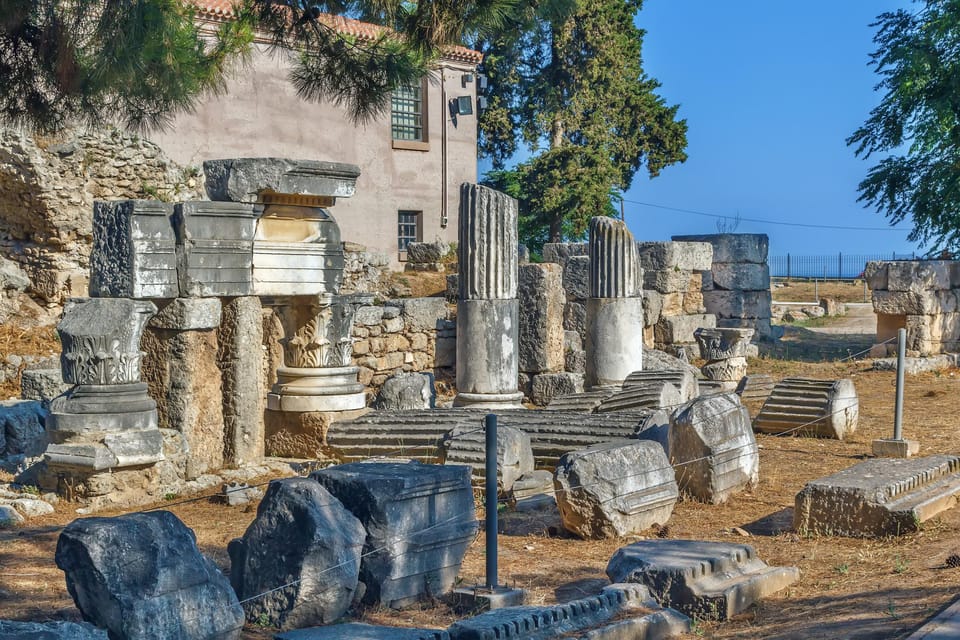
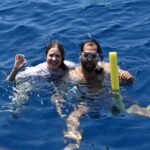
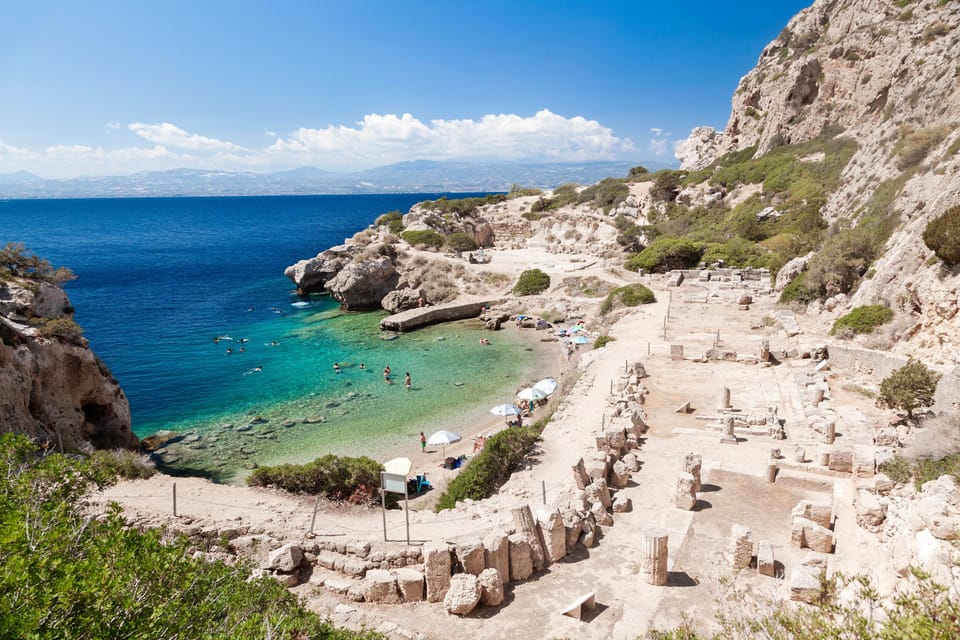
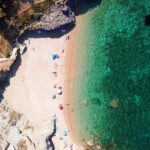
Now the tour flips from rocks to water. At Ancient Heraion, you’ll visit the sanctuary of Hera and then get time for a break and swimming at the sanctuary beach.
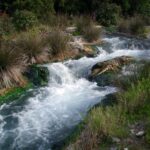
This is the part that feels most “vacation” after a full day of history. The sea here is described as deep and clear, and there’s even an option for the more adventurous—cliff-jumping from the surrounding rocks. If you’re tempted, be honest about your comfort and safety. The day offers the option, not a requirement.
To enjoy this part, pack like you mean it:
- Swimwear and a towel are specifically recommended.
- Comfortable shoes earlier in the day matter because you’re still walking to get to the water area.
Also, don’t underestimate how good a swim feels after walking hills and uneven ruins. It resets you fast.
Malagavi Lighthouse: A Short Path to Old Stone and Big Views
Above Ancient Heraion sits the Malagavi Lighthouse, on the western tip of Cape Malagavi in the Gulf of Corinth. The itinerary includes time for photo-worthy views from here, plus the small walking pathway to reach the lighthouse.
What’s neat is the detail: it’s one of the oldest stone lighthouses in Greece, built in 1897 and still in operation. That “still operating” fact makes the lighthouse more than a pretty photo spot. It’s a working piece of coastal navigation history.
From the lighthouse you get views over the Corinthian Gulf, the rugged coastline, and the Isthmus Canal area in the distance. This connects the day’s story to the region’s geography again: Corinth wasn’t just about temples and cities. It was also about routing ships and controlling passage between seas.
Isthmus Canal Viewpoints: Why This Cut Matters
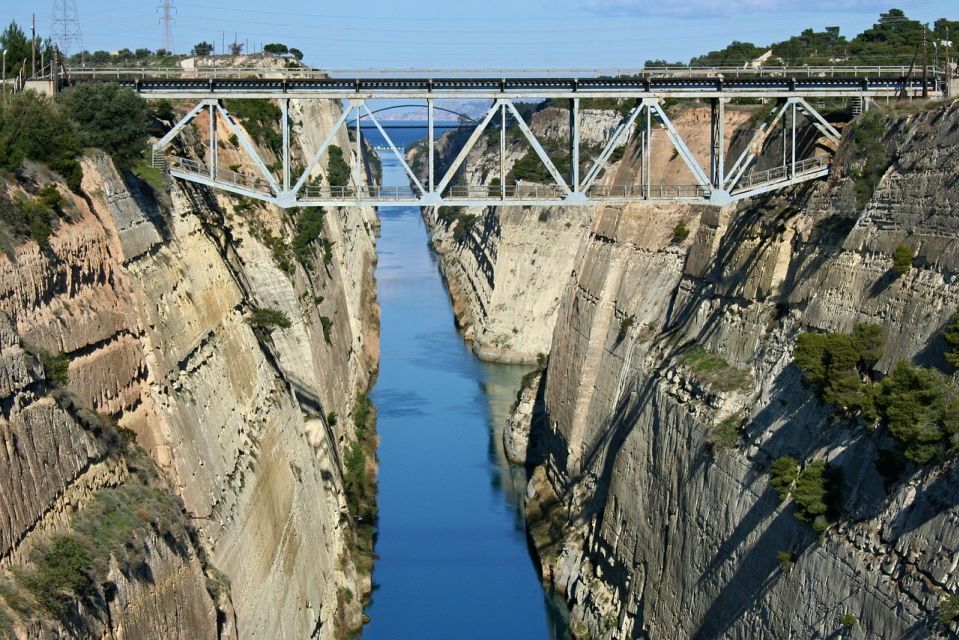
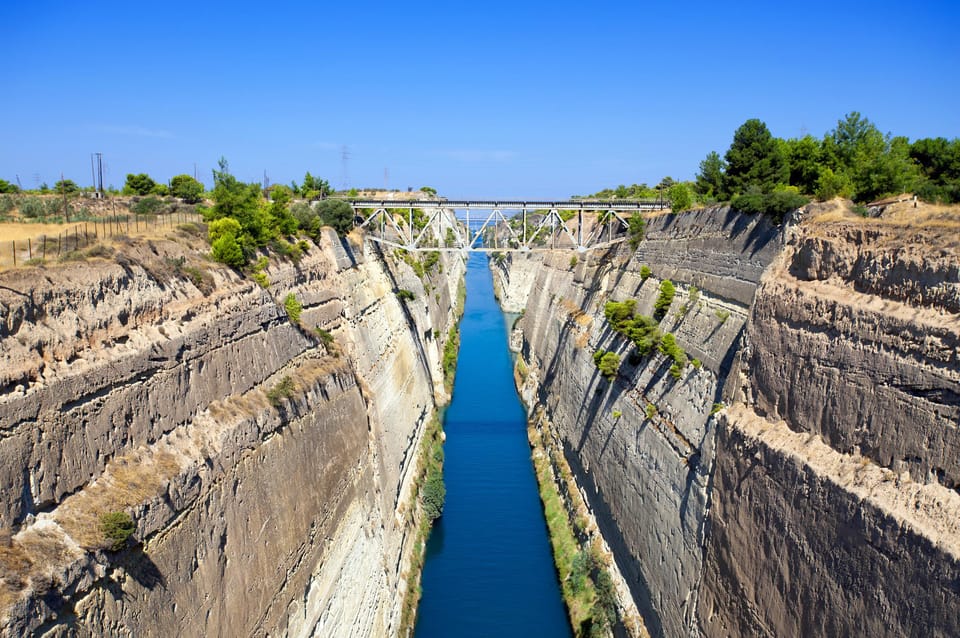
The highlights include breathtaking views at the Isthmus Canal, the link between the Ionian Sea and the Aegean Sea. Even if you’ve read about the canal before, seeing it from viewpoint angles during a day like this hits different.
Here’s what you’ll likely appreciate: the canal turns a map into a physical reality. Corinth’s power was tied to movement of goods and people, and controlling chokepoints is exactly the kind of thing that attracts empires to places like Acrocorinth in the first place.
This is also a nice “breather” segment in the day’s rhythm. It’s not as walking-heavy as the ruins, and it gives your eyes a wide view after close-up archaeological details.
Price and Value: $281 for a Private, History-and-Swim Day
The listed price is $281 per person for a 9-hour private day. To judge value, focus on what you’re getting that you can’t easily DIY without planning.
Included:
- Private full-day transportation from Athens in a modern vehicle with Wi‑Fi, A/C, and bottled water
- Skip-the-line ticket service
- A professional tour driver well versed in Greek history (they’re not licensed to enter sites)
- Pick-up and drop-off from your Athens lodging or the port/airport meeting area
- A live tour guide experience in English/Greek (with the note that licensed site entry may require an extra licensed guide)
Not included:
- Entrance fees to sites (notably Ancient Corinth at 15 EUR per person)
- Food and drinks
- Licensed guide inside sites (optional on request)
So the math is: you’re paying for convenience, time saved, and knowledgeable interpretation during the day. If you’re traveling solo or as a small group, the private format can feel like a bargain compared with splitting taxis plus trying to coordinate entry timing.
Where cost can rise:
- Entrance fees are extra, and the itinerary includes multiple sites.
- If you want a licensed guide inside museums or specific indoor areas, that’s an extra add-on request.
What It Feels Like on the Ground: Pace, Guidance, and Moments That Stick
This kind of itinerary works best when your expectations match its structure. It’s not one long guided lecture. It’s a day of shorter guided interpretation plus free time that lets you absorb the setting.
The guidance quality can make or break this experience. This route leans on your driver/guide’s storytelling, especially for St. Paul’s context and for linking what you see at Acrocorinth and Ancient Corinth to the Romans and Byzantines theme. In other words: you’ll get more out of it if you ask questions while you’re moving.
I also like that the day includes both “look” stops and “do” stops. You look at citadel walls and ruins, then you do something active later in the day with the Heraion swim.
Who Should Book This Day Trip (and Who Might Not)
You’ll probably love it if:
- You want a single-day hit of Corinth plus a meaningful connection to St. Paul
- You like outdoor ruins and viewpoints as much as museums
- You want your day to end with a swim, not another long bus ride
You might want to reconsider if:
- You dislike walking on uneven stone or steep areas (Acrocorinth is a hill fortress)
- You’re expecting food to be included (it isn’t)
- You’re tightly budgeted and don’t want extra entrance fees
One important note for mobility: the activity is listed as wheelchair accessible, but it is also marked as not suitable for people with mobility impairments. If this applies to you, you’ll want to confirm your specific needs directly with the operator before booking.
Should You Book This Private Ancient Corinth + Heraion + Lighthouse Tour?
Yes, if you want a smart mix of history and relief. This day is built for people who like connections—between Paul’s preaching setting, the civic heart of Ancient Corinth, and the fortress layers at Acrocorinth. Add in the Heraion sanctuary swim time, and the itinerary feels balanced instead of purely academic.
Before you book, do three practical checks:
- Budget for entrance fees on top of the base price.
- Bring swimwear and a towel if the water portion sounds like part of your plan.
- If you want licensed site guidance inside specific areas, ask about that extra option early.
If those boxes fit your style, this is the kind of day trip that leaves you with scenes you can picture later: fortress gates above Corinth, temple ruins in the city’s open air, and clear water at the sanctuary of Hera.
FAQ
What is the duration of the tour from Athens?
The experience lasts 9 hours.
What’s included in the price?
You get a private full-day experience, pick-up and drop-off in Athens, transportation in a modern private vehicle with Wi‑Fi, A/C, and bottled water, and skip-the-line ticket service.
Are entrance fees included?
No. Entrance fees to the sites are not included, including Ancient Corinth (15 EUR per person).
Is there a guide during the visit?
Yes. The tour includes a live tour guide in English and Greek. The professional tour driver is described as well versed in Greek history but not licensed to enter sites; a licensed guide inside sites is available on request for an additional cost.
Is swimming included at the Temple of Hera?
You’ll have free time for swimming at the Temple of Hera area, with swimming time listed as part of the stop. Bring swimwear and a towel.
Is the tour wheelchair accessible?
The activity is marked wheelchair accessible, but it is also listed as not suitable for people with mobility impairments. If that’s relevant to you, confirm your needs with the provider before booking.
You Might Also Enjoy
More Private Tours in Athens

More Tour Reviews in Athens
- All Day Cruise -3 Islands to Agistri,Moni, Aegina with lunch and drinks included
★ 5.0 · 4,958 reviews