REVIEW · ATHENS
Athens: Agora and Hephaistos Temple Entrance Ticket
Book on GetYourGuide →Operated by Key Tours · Bookable on GetYourGuide
Athens has a way of making ruins feel personal. With timed entry to the Ancient Agora, I love that you can move at your pace and still hit the two headline stops: the Temple of Hephaistos and the Church of the Holy Apostles.
You’ll also get an optional self-guided audio tour, which is handy when you want names, dates, and story hooks without being tied to a group. One catch to keep in mind: finding the correct entrance now depends on recent route changes, and the audio can feel a bit awkward if you start it at the wrong spot.
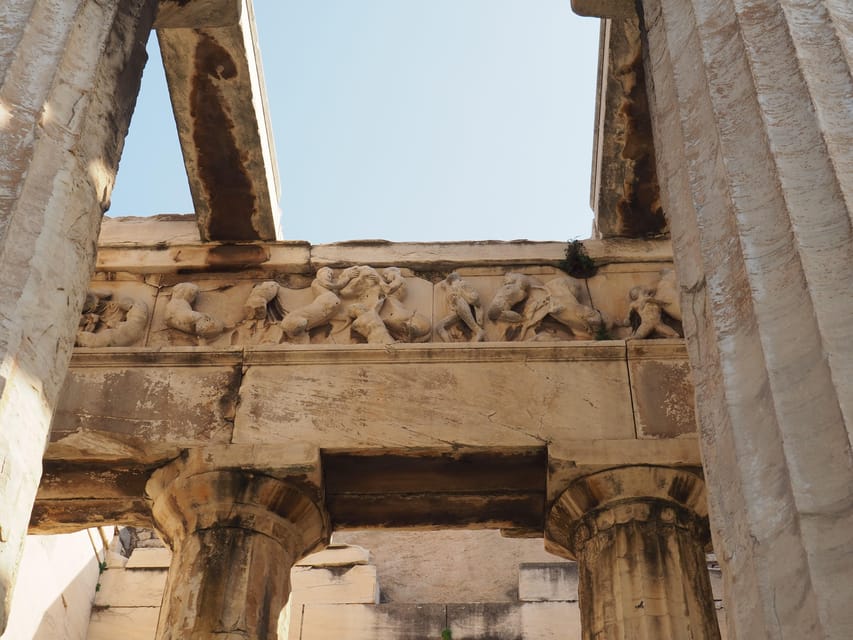
If you care about preservation, the Temple of Hephaistos is the star. It’s famously one of the world’s best-preserved ancient Greek Doric temples, so even the broken bits still read like a building.
And I like that this ticket isn’t just about stones—you’re also stepping into a place tied to St. Paul’s preaching, which adds a different layer to the same neighborhood.
My main caution: the site can be a little confusing in practice. Some people run into locked gates, mismatched signage, or audio that starts from an outdated entrance—so build in extra walking time and sanity.
In This Review
- Key points before you go
- Athens Agora entrance: Thissio Square, scan machines, and the time-slot rhythm
- Temple of Hephaistos: one of Greece’s best-preserved Doric temples
- Church of the Holy Apostles: where St. Paul’s story lives on
- Self-guided audio tour: how to use it without losing time
- Walking route tips: what to see first, and why uphill happens
- Price and value: what $30 is really buying you
- Planning your timing: entry slots, stamina, and comfort
- Pairing the Agora with the Acropolis: a smart Athens two-stop day
- Common snags to plan around (so the day stays fun)
- Should you book this Athens Agora ticket?
Key points before you go
- Timed entry rules matter: enter only in your time slot (or 15 minutes before/after).
- New entrance location until end of 2025: use the Thissio Square (Jacqueline de Romilly) entrance on Apostolou Pavlou pedestrian street.
- Temple of Hephaistos is the proof: it’s exceptionally well preserved, so it’s easier to picture how it worked.
- St. Paul’s connection adds meaning at the Church of the Holy Apostles.
- Audio helps, but use it smart: if the start point is off, you can waste time uphill.
- Bring shade-by-default items: there isn’t much shade, and you’ll be walking.
Athens Agora entrance: Thissio Square, scan machines, and the time-slot rhythm
This ticket is built around a timed entry system, so the day feels more orderly than the usual wander-into-a-line experience. You choose a time slot, receive a ticket for that slot, then go directly to the site entrance for entry checks.
Here’s the detail that can save you real frustration: visitors now enter and exit from the entrance on Thissio Square (Jacqueline de Romilly Square) on the pedestrian street of Apostolou Pavlou, and this remains in place until the end of 2025. If you plug in the wrong pin or expect the older approach, you can lose several minutes quickly—enough to make a time slot feel stressful.
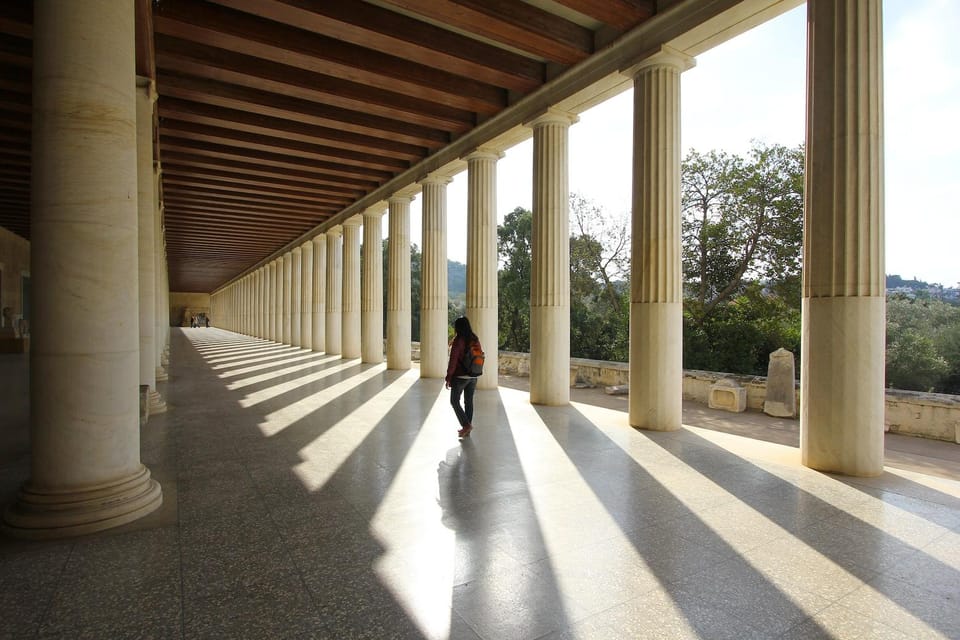
At the entrance, you’ll scan your ticket at the ticket-validating machines. Once you’re through, you’re free to wander at your own pace, and the site’s layout naturally encourages an uphill route—think more climbing than museum hallway strolling.
Plan for a simple flow: arrive near your slot, get scanned, then start walking with your first goal in mind (Hephaistos Temple). When you do it this way, even if signage is patchy, you still win.
You can also read our reviews of more tours and experiences in Athens

Temple of Hephaistos: one of Greece’s best-preserved Doric temples
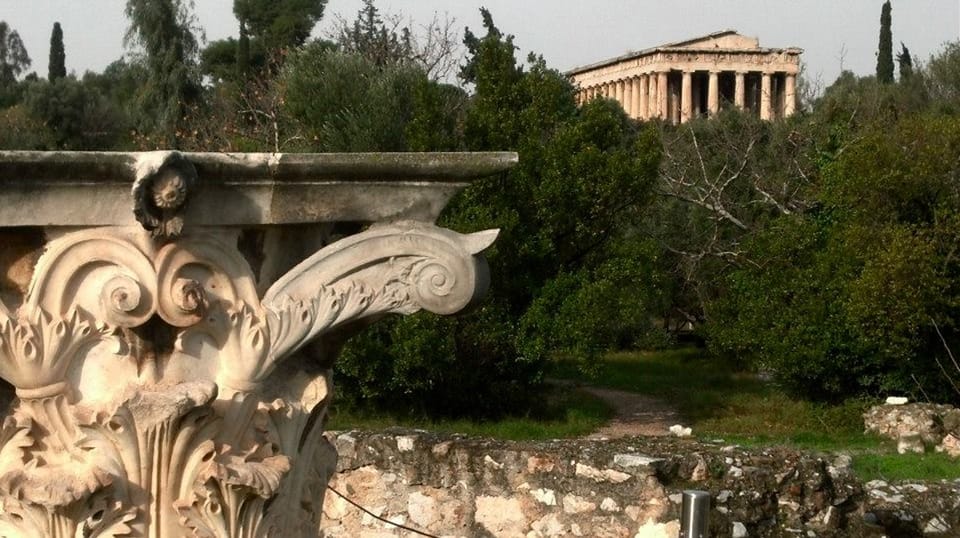
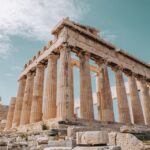
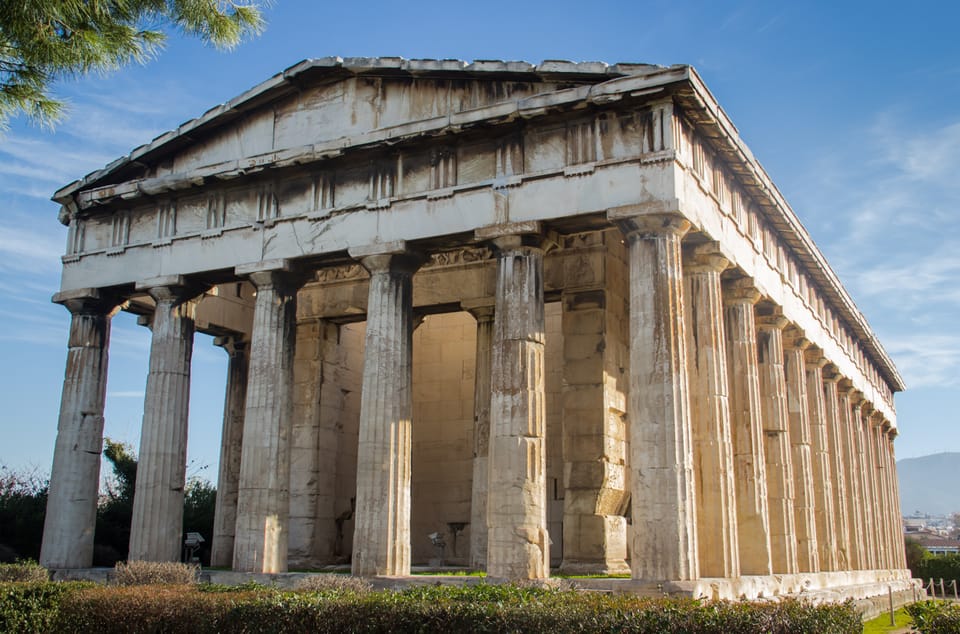
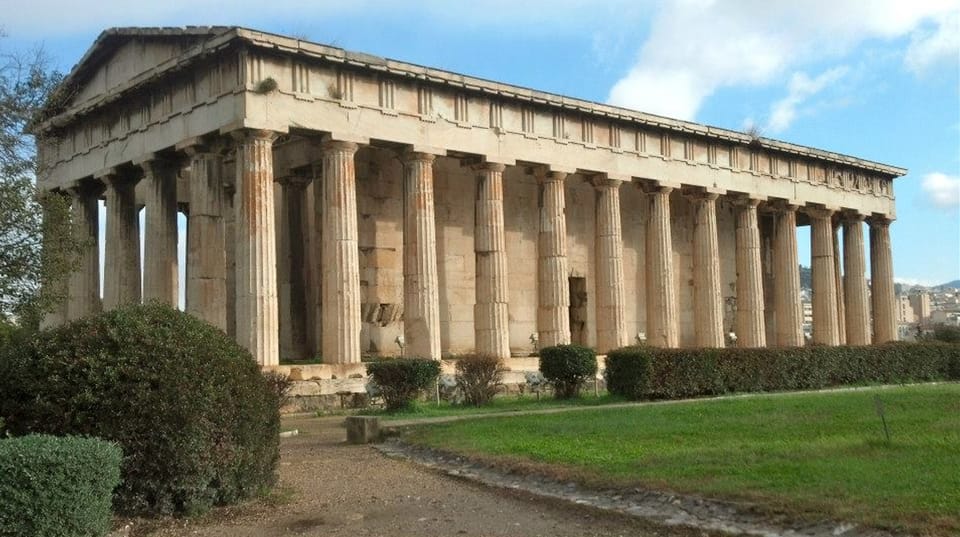
The Temple of Hephaistos is why a lot of people buy this ticket. It’s often called the world’s best-preserved ancient Greek Doric temple, and that reputation holds up when you’re standing in front of it.
What you’ll appreciate is how readable the structure is compared with many other temple ruins. You can still make sense of the columns, the proportions, and the overall shape—so your brain doesn’t have to do all the rebuilding work. That matters for value: you’re not paying for a vague pile of stones, you’re paying to see a temple that still acts like a temple.
When you walk around it, take a few minutes for the practical stuff. Look for how the temple sits within the Agora area, because it helps you understand why this site mattered as a living civic space—not just a sacred landmark.
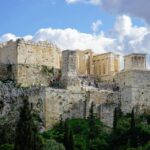
If you like photography, this is one of the places where your effort pays off. One review mentioned the view from the Acropolis area nearby, and the general hilltop positioning of this zone makes it feel connected to Athens’ big monuments even when you’re not on the Acropolis itself.
Church of the Holy Apostles: where St. Paul’s story lives on
After the temple, the Church of the Holy Apostles brings a very different tone to the same archaeological space. This church is where St. Paul used to preach, so it layers early Christian tradition onto an ancient civic landscape.
What I like about this stop is the contrast. You start in the world of Doric stone and civic worship, then you move into a setting tied to preaching and teaching—an obvious shift in mood, even if you’re just moving your feet through the space.
In practice, the church also helps you slow down. It’s easy to treat ruins like a checklist, but a place with a human story (and one associated with St. Paul by tradition) changes the way you walk. You’re more likely to look around and actually read details instead of just passing through.
If you want your visit to feel more complete, make this second stop rather than rushing it. Your brain connects the Agora’s public role to the later religious role of Athens, and the overall day starts to feel like a narrative instead of two separate sights.
Self-guided audio tour: how to use it without losing time
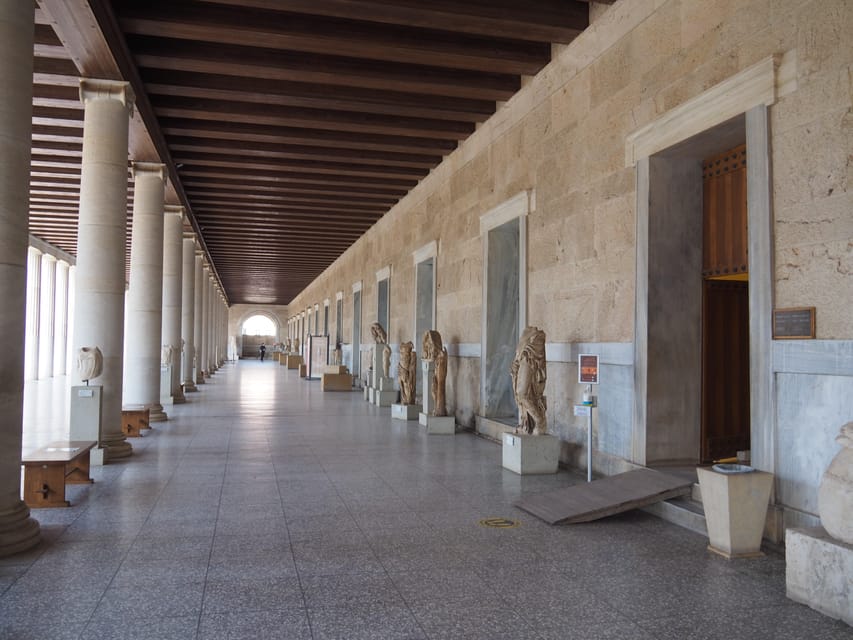
You can add a self-guided audio tour to your ticket, and it’s available in multiple languages: English, German, Spanish, Italian, and French. The audio is narrated by professional, licensed guides and experts, with original handpicked storytelling designed to guide you while you walk.
I recommend treating the audio like a companion, not your boss. Use it when you’re at a stop where the story will matter—like when you’re facing the temple or standing near the church—then pause when you just want to look.
Here’s the key operational caution from real-world experience: some people found the audio guide hard to follow because it began from an entrance that isn’t used anymore. In one case, the app map placed the start point far from where people had to enter, which turned a simple visit into extra uphill walking.
So do this instead:
- Make sure you start the audio once you’re already inside the site near the correct entrance area.
- If the audio seems to be leading you in the wrong direction, trust your surroundings and look for the temple first.
When audio works, it’s excellent for giving context quickly. You’ll get names, purpose, and story hooks so the Agora doesn’t feel like random foundations.
Walking route tips: what to see first, and why uphill happens
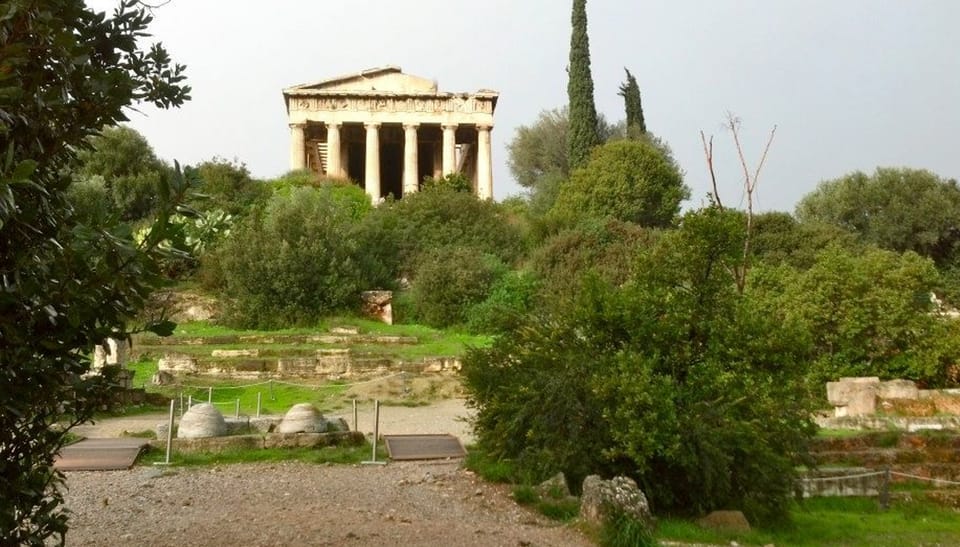
This experience is self-paced, but the terrain still tells a story. Once you’re scanned in, you’ll be wandering through the archaeological area, and many paths naturally take you uphill as you move between major points.
If you want your day to feel easy, I’d set an order: Hephaistos Temple first, then the Church of the Holy Apostles. The temple is a clear focal point, and getting it early helps because the site involves walking that can wear you down.
A few practical points based on how the site feels:
- Bring comfortable shoes. You’ll walk more than you think.
- Wear sunscreen and a hat. One review specifically mentioned overheating due to limited shade.
- Carry water, especially in warmer months.
Also, don’t rely on your first instinct for the entrance. Several people said the entrance was difficult to find, even when pre-ordering helped with lines once they got in. That’s why I keep repeating the Thissio Square detail: it’s the difference between a smooth start and a frantic detour.
Finally, if you’re the type who likes “just one more stop,” remember the ticket is valid for 1 day and your time-slot window is only for entry. After that, your pace is yours.



Price and value: what $30 is really buying you
At about $30 per group (up to 1), the value here is mostly about avoiding friction. This ticket isn’t a live guided tour. It’s a well-structured entry package for two major highlights—Hephaistos and the Church of the Holy Apostles—plus optional audio if you add it.
So you’re paying for:
- Timed access to the archaeological site (not a random free-for-all).
- Entrance to the Temple of Hephaistos and the Church of the Holy Apostles.
- Optional self-guided audio narration in several languages.
In real terms, that tends to work best when you’re traveling independently and want control. One review noted that pre-ordering made it easier to breeze past long lines, which matches what you’d hope timed entry delivers.
If you’re the type who needs a person to answer questions on the spot, you might feel like something is missing. But for most people who can handle a self-guided day, the combination of a top preserved temple and a meaningful church story is a strong payoff.
Planning your timing: entry slots, stamina, and comfort
This isn’t a quick “drop by for 30 minutes” kind of site. People reported spending hours walking and seeing everything, and the layout is spacious, so give yourself time to breathe.
You also have a real scheduling constraint: you can’t amend the travel date or entry time slot after booking. Entry is permitted only at the selected time slot or within 15 minutes before or after.
That means you should avoid over-tight itineraries on the same day. If you’re also visiting the Acropolis, you don’t want Agora to become a stressful connector you rush through.
What I’d do:
- Choose a slot that matches your energy level for uphill walking.
- Arrive a bit early so you can find the correct entrance without watching the clock like a hawk.
- Wear your heat plan: hat, sunscreen, water, and shoes you can walk in all day.
If it’s hot, you’ll want to accept that shade may not be your best friend here. Build in breaks whenever you feel your pace getting slower.
Pairing the Agora with the Acropolis: a smart Athens two-stop day
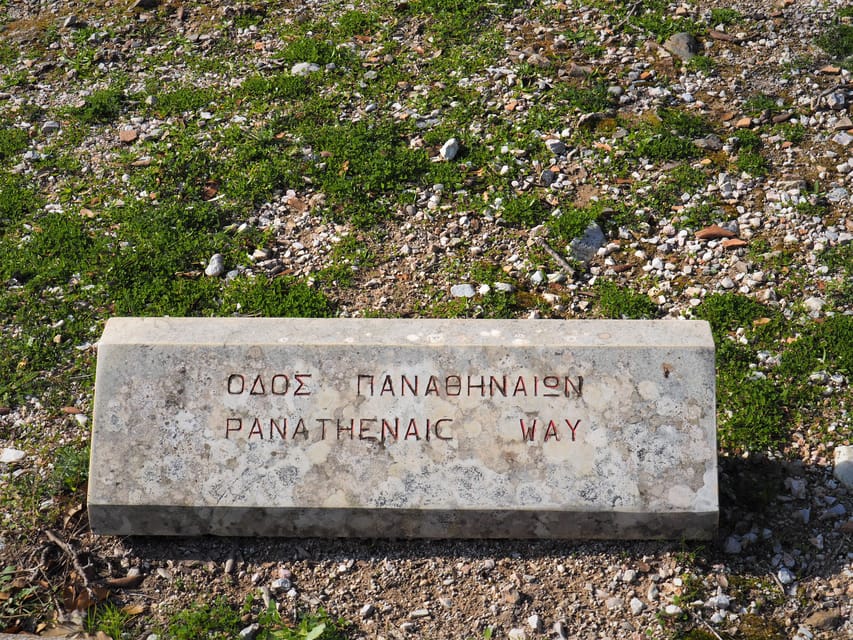
One reason this ticket stands out in an Athens plan is that it pairs naturally with the Acropolis area. You’re not stuck across town in some separate universe. The Agora site sits close enough that the day can feel coherent.
A practical rhythm that works:
- Do the Acropolis highlights first (or second, depending on your morning energy).
- Use the Agora ticket as a deeper city-side experience between major monuments.
- Let the temple and church provide contrast after you’ve been surrounded by the grandeur of the Acropolis.
The big win is perspective. Seeing the Acropolis gives you Athens at its most monumental. Visiting the Agora and its preserved temple gives you Athens as a place where politics, worship, and everyday civic life intersected.
If you have energy left, you might also want to check the museum on site noted by some visitors. The ticket you buy focuses on the temple and church entrances, but having that nearby context can make the foundations feel more grounded.
Common snags to plan around (so the day stays fun)
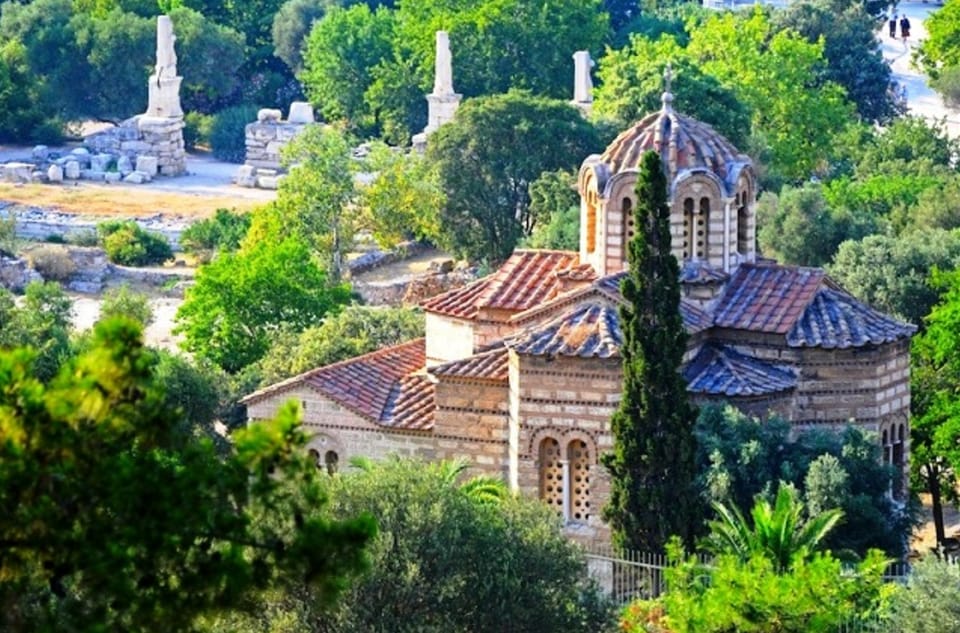
Even when the sightseeing is excellent, logistics can trip you up. Here are the snags I’d actively plan for.
First: entrance confusion. People reported needing to walk extra after finding gates locked or following coordinates that weren’t accurate. The fix is simple: navigate to the entrance on Thissio Square (Jacqueline de Romilly Square) on Apostolou Pavlou pedestrian street.
Second: audio starting point mismatch. If your audio begins at a now-unused entrance, you can waste time walking uphill the wrong way. If that happens, pause, reset, and physically orient yourself toward Hephaistos.
Third: heat and stamina. Limited shade means you can overheat before you feel you’re done. One review mentioned overheating and needing to cool down, so take that seriously and bring the basics.
Fourth: time slot pressure. Because you can’t change your time, it’s worth building in buffer time for walking from where you arrive to the entrance.
If you handle those four items, the experience tends to become straightforward: scan, walk, see the temple, then connect to the church story, then wander as long as your energy holds.
Should you book this Athens Agora ticket?
I’d book this if you want a high-value, independent visit to two of the most meaningful landmarks in the Ancient Agora—the best-preserved Doric temple and a church linked to St. Paul’s preaching. If you like structured entry (without needing a live guide), timed access and the optional audio make a lot of sense.
Skip it or rethink it if you’re expecting a live guide who can fix problems on the fly, or if you know you hate self-guided apps when you’re trying to orient at a new entrance. For most people, that risk is easy to manage: plan for the Thissio Square entrance and start audio only after you’re clearly inside the site.
If you like old Athens to feel real instead of abstract, this ticket hits the sweet spot—stone that still reads like a building, plus a story layer that goes beyond ruins.
You Might Also Enjoy


More Tickets in Athens

More Tour Reviews in Athens
- All Day Cruise -3 Islands to Agistri,Moni, Aegina with lunch and drinks included
★ 5.0 · 4,958 reviews